18 Small Entryways 2026
Small entryways in 2026 are no longer treated as forgotten transition zones but as expressive, functional micro-spaces that set the entire mood of a home. I focus on smart storage, layered lighting, slim furniture, and confident color choices to make compact halls feel intentional and elevated. Each idea below blends practicality with modern aesthetics, proving that even the narrowest corridor can feel curated, welcoming, and surprisingly spacious when designed with clarity and purpose.
1. Storage Ideas for Slim Entry Halls
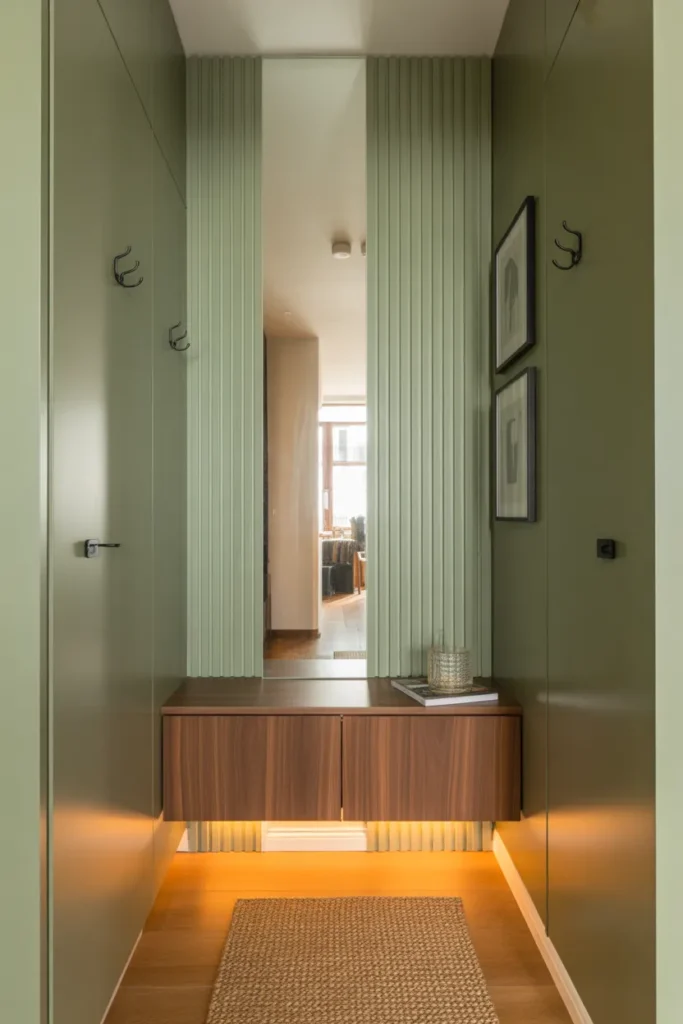
I rely on vertical space whenever I design a slim entry hall, especially when floor area is limited. Floating cabinets in warm walnut paired with fluted panels instantly add texture while keeping the walkway open. Slim hooks mounted above the cabinet allow coats and bags to hang neatly without overwhelming the wall. Subtle LED strips underneath create a soft glow that makes the corridor feel deeper and more intentional.
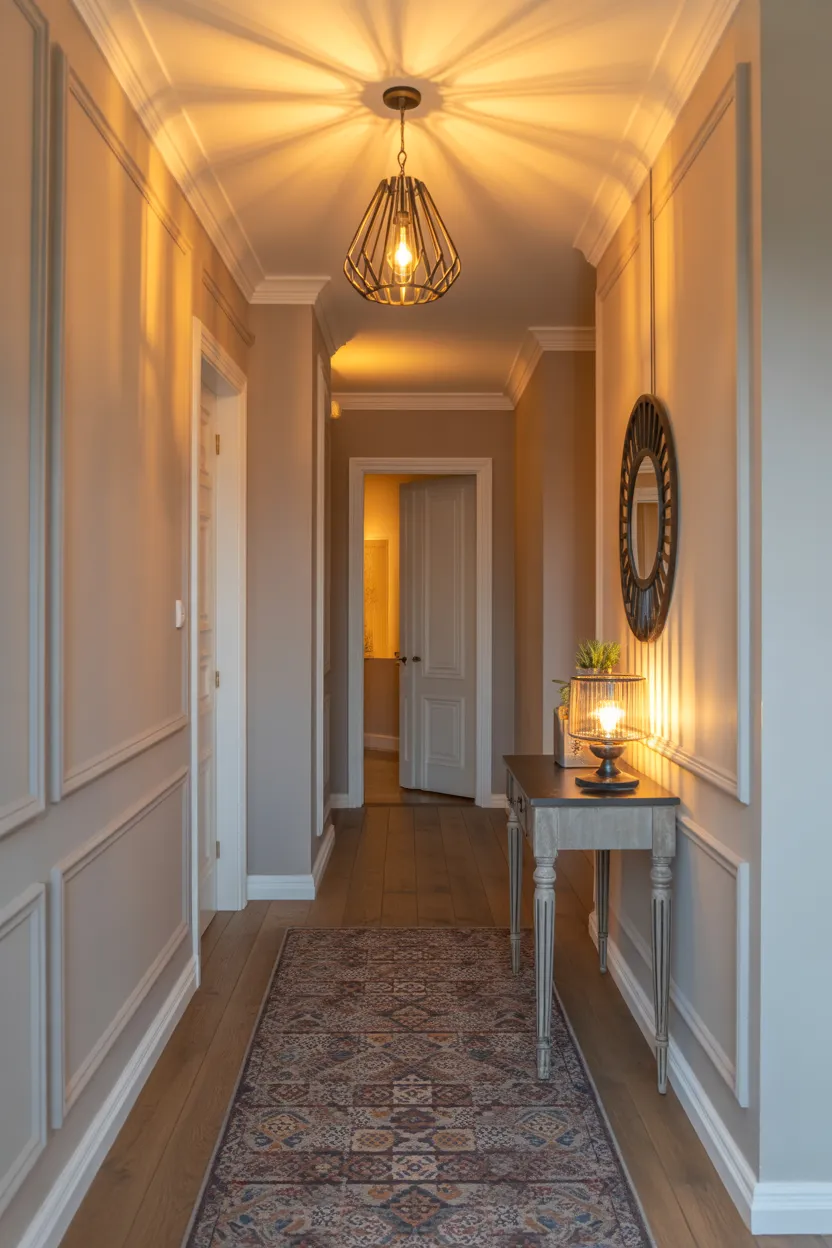
Color plays a powerful role in preventing the space from feeling tight. I prefer muted greens or dusty blues on one accent wall to introduce personality without closing the room visually. A tall mirror placed opposite the light source reflects brightness and visually doubles the width. Finishing the layout with a narrow woven runner keeps the design cohesive while subtly guiding movement through the hall.
2. Organization Methods for Small Entryways
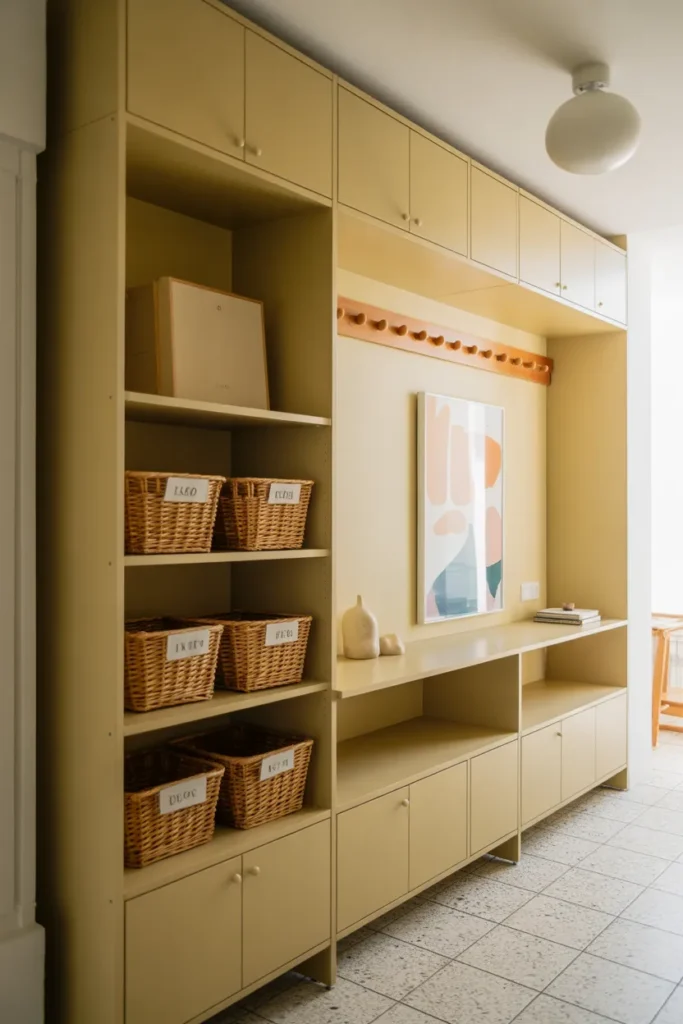
Instead of bulky furniture, I organize small entryways with modular wall cubes that can shift as needs change. Cream-toned storage boxes keep visual noise minimal while still holding daily essentials like gloves, keys, and mail. A wooden peg rail system adds flexibility for hanging hats and lightweight bags. Keeping everything elevated off the floor makes cleaning easier and prevents the hallway from feeling crowded.
Layered organization always improves daily routines. I separate items by frequency of use, placing everyday pieces within arm’s reach and seasonal accessories higher up. Labeled woven baskets bring subtle texture while keeping clutter invisible. Soft spotlights above the storage wall create depth and highlight the organized display, transforming practical storage into a refined design feature.
3. Ideas for Narrow Entry Hallways
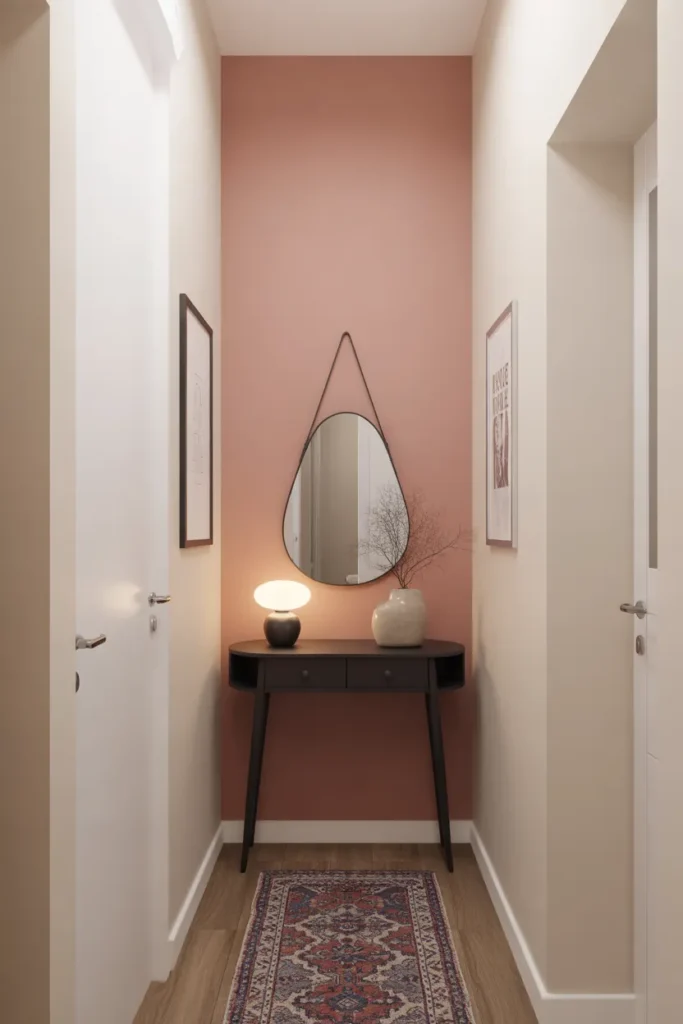
Whenever I face a narrow hallway, I treat one wall as a visual anchor using color. A soft blush or muted coral instantly energizes the corridor without overwhelming it. I pair this with a slim black console that hugs the wall closely, leaving comfortable walking space. An oval mirror above the table softens the linear layout and reflects both natural and artificial light.
Texture keeps the space from feeling flat. I like adding a patterned runner to elongate the perspective and introduce subtle movement. Small ceramic lamps on the console provide warm evening lighting that prevents harsh shadows. By keeping furniture streamlined and décor minimal, the hallway feels intentional, colorful, and balanced rather than confined.
4. Table Decor Concepts for Small Entryways
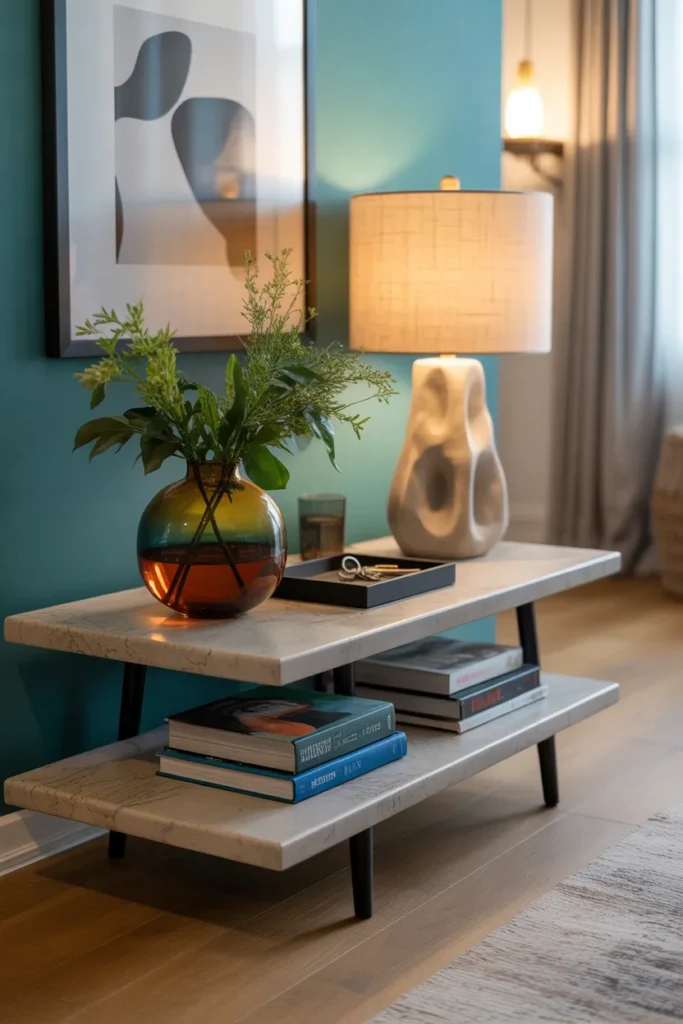
Styling a small entry table requires restraint and personality at the same time. I usually begin with stacked design books to add height variation and then layer a colorful glass vase filled with fresh greenery. A small tray keeps keys contained while preventing clutter from spreading. Choosing a sculpted lamp with a fabric shade introduces warmth and a welcoming glow.
Balance is essential in compact layouts. I avoid overcrowding the tabletop by limiting decorative elements to three or four intentional pieces. Adding framed abstract art above the console ties the palette together and reinforces the chosen color theme. The combination of texture, light, and controlled styling creates a polished yet approachable first impression.
5. Ideas With Stairs for Compact Entry Halls
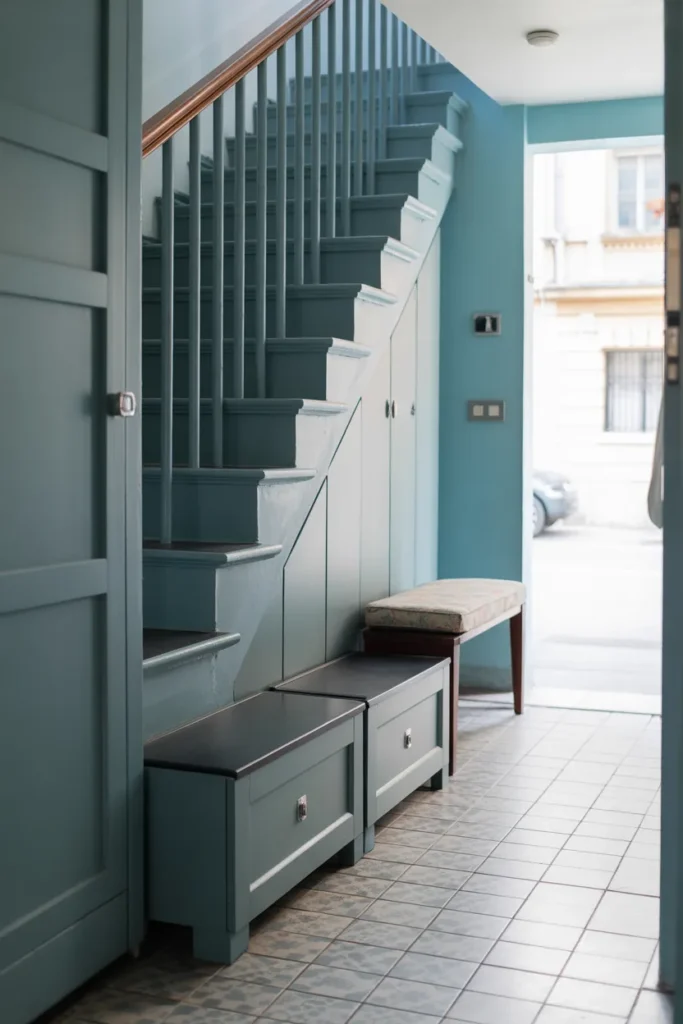
In entry halls that include stairs, I treat the underside as prime storage real estate. Built-in drawers beneath the staircase keep shoes and accessories hidden while maintaining a seamless look. Painting the wall in a soft blue or muted green prevents the area from feeling heavy. Recessed lighting along the stair edge adds safety and a subtle architectural glow.
Seating near the stairs enhances daily comfort. I prefer a narrow bench with a textured cushion placed against the wall to create a practical dressing spot. Patterned floor tiles introduce character and help define the entry zone. With thoughtful integration, stairs become an asset rather than a visual obstacle in compact spaces.
6. Bench Ideas for Tight Entry Spaces
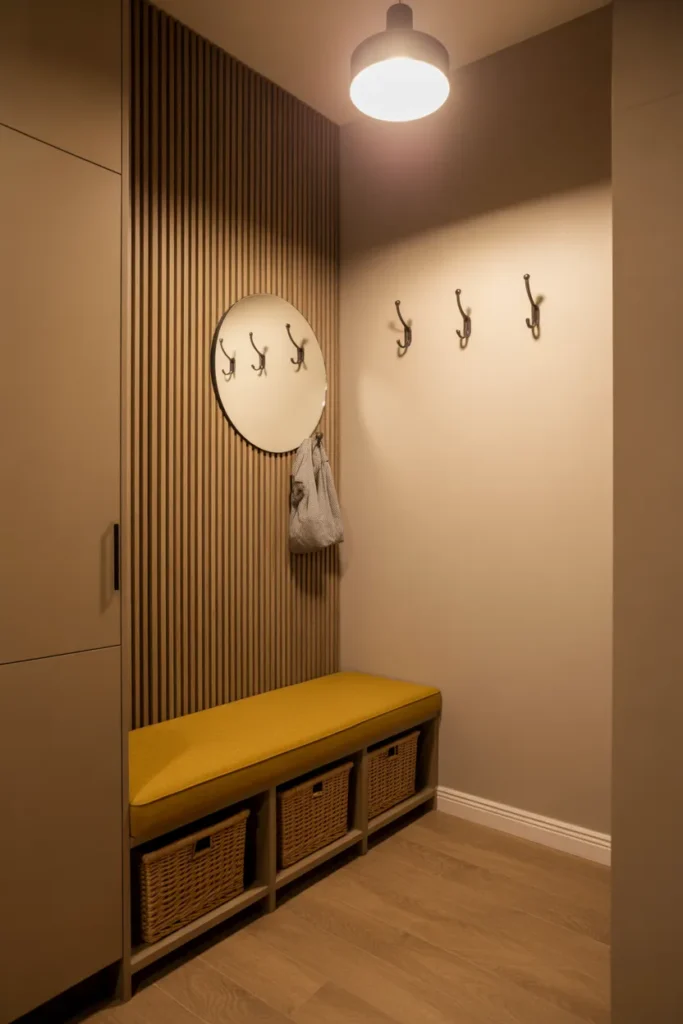
Adding a bench to a tight entry instantly increases functionality without sacrificing style. I often choose a slim upholstered design in a bold shade like mustard or deep teal to energize the neutral surroundings. Vertical wood slats behind the bench add texture and subtly elongate the wall. Hooks above keep outerwear organized without needing extra floor space.
Storage beneath the bench is equally important. I slide woven baskets underneath to hide shoes while maintaining airflow. The combination of soft upholstery and structured wall elements creates a balanced aesthetic. With proper proportions, even the smallest entry can comfortably include seating without feeling overcrowded.
7. Design Inspiration for Small Entryways 2026
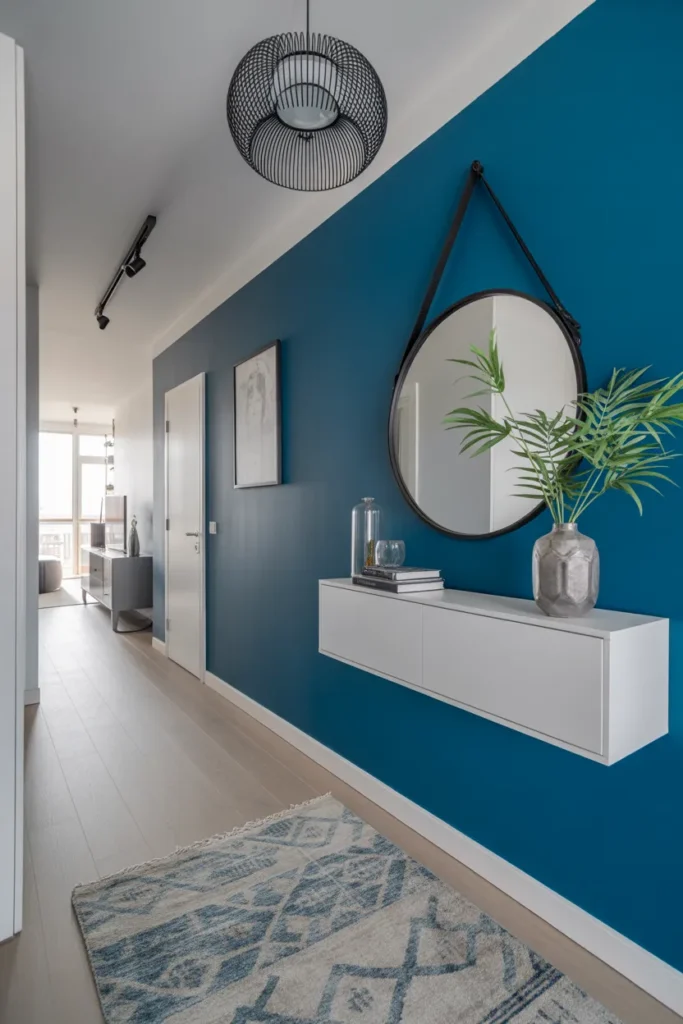
Looking ahead to 2026 trends, I see stronger color statements defining small entryways. A bold cobalt or emerald accent wall paired with a floating white console creates instant contrast. Oversized round mirrors remain essential for expanding visual space. I prefer geometric rugs to introduce pattern while keeping the overall composition clean and structured.
Lighting choices feel more sculptural this year. A statement pendant adds character without overwhelming the ceiling height. Mixing metal finishes, such as brushed brass and matte black, creates depth and a layered aesthetic. Through confident color and refined shapes, compact entries feel curated and contemporary rather than purely functional.
8. Decor Ideas for Small Entryways
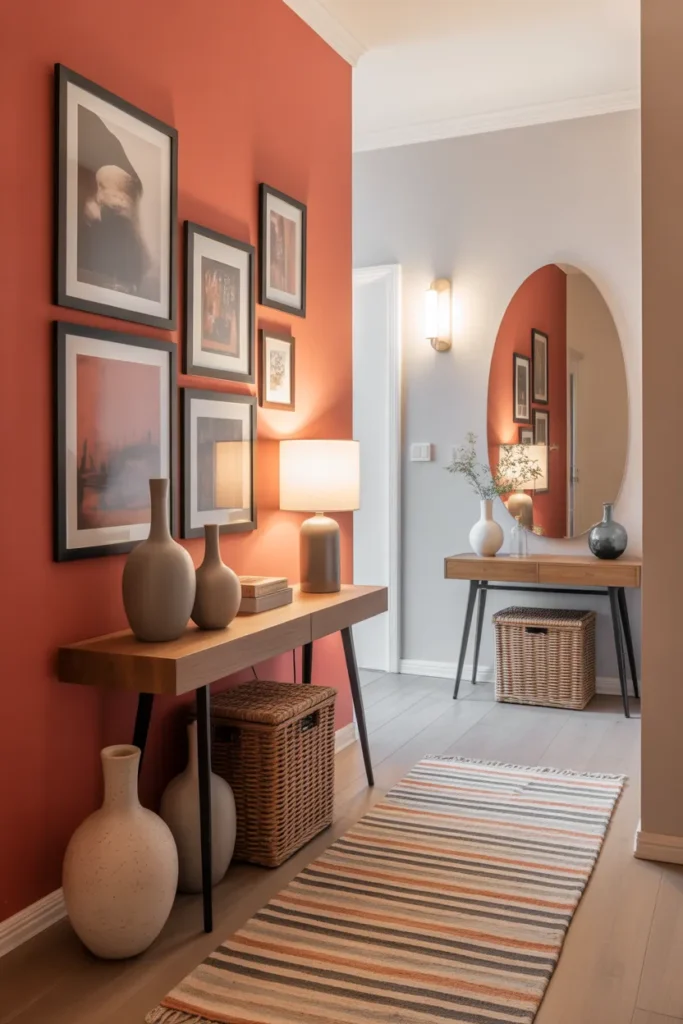
Decorating a small entry becomes an opportunity to express personality. I enjoy layering framed art in varied sizes to create a compact gallery wall above a slim console. Coral or terracotta accents warm up neutral walls and immediately brighten the space. Mixing ceramic vases in different heights keeps the tabletop visually dynamic.
Restraint ensures the design stays breathable. I leave negative space around artwork to prevent visual overload. A striped runner introduces playful energy while guiding the eye forward. Soft table lamp lighting enhances warmth in the evenings, making the entry feel welcoming and thoughtfully composed.
9. Wall Decor Concepts for Small Entry Halls
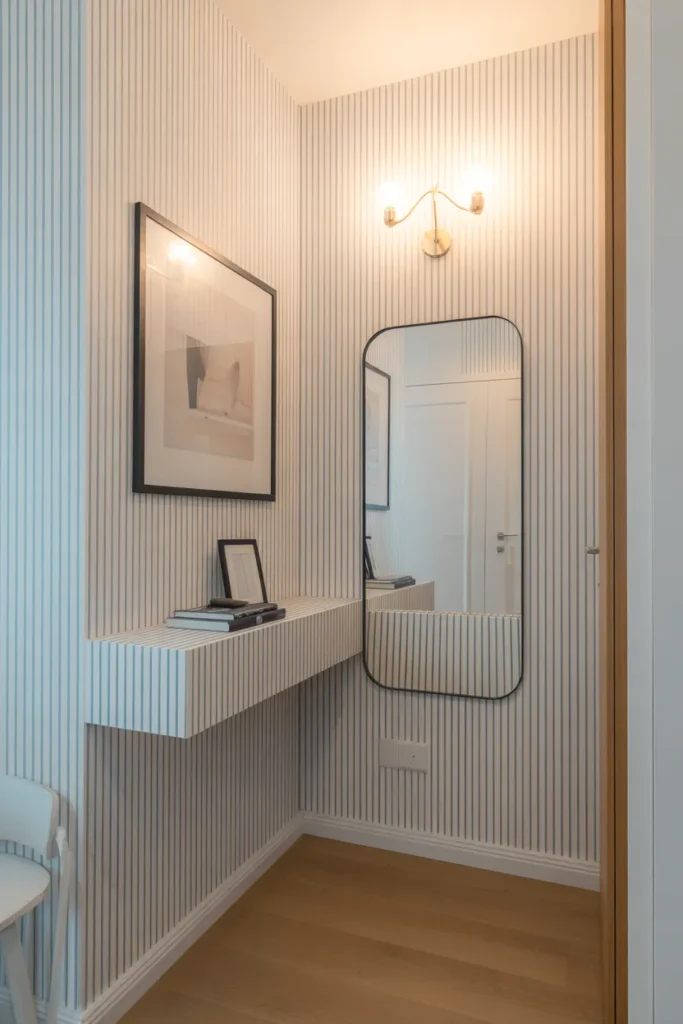
Walls carry most of the design weight in small entry halls. I like using vertical striped wallpaper in subtle blue and white tones to visually lift the ceiling. A slim floating shelf offers room for small decorative objects without obstructing movement. Minimalist art frames add character while maintaining a refined look.
Lighting integrated into the wall elevates the atmosphere. Warm sconces positioned beside a mirror create flattering illumination and depth. By concentrating decoration on vertical surfaces, the floor remains clear and functional. This strategy keeps compact halls feeling open, organized, and thoughtfully styled.
10. Ideas for Apartments With Small Entryways
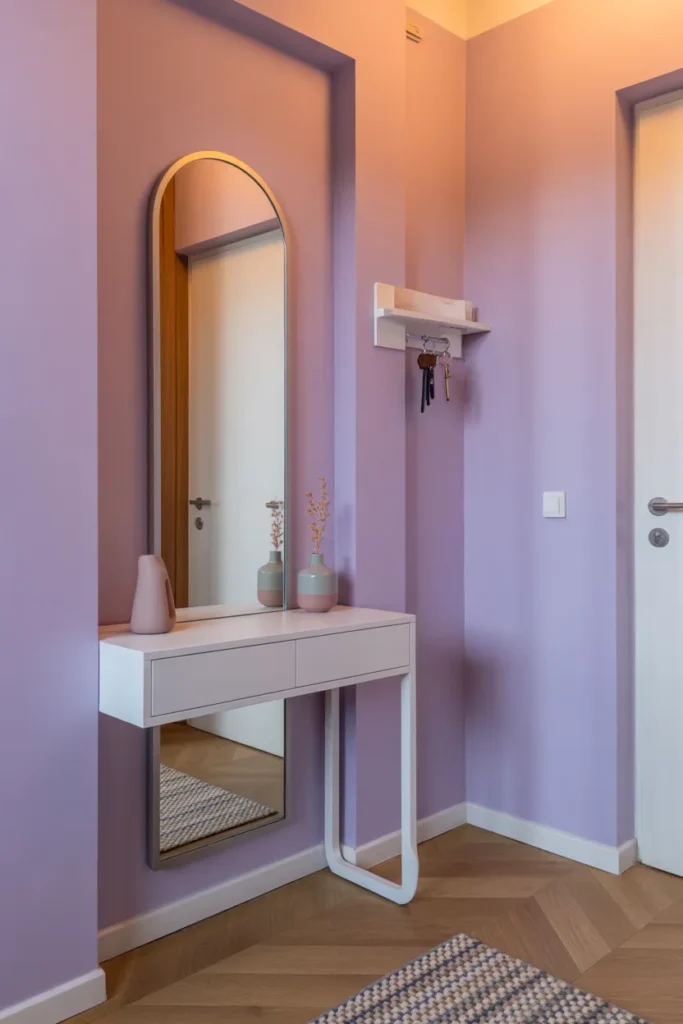
Living in an apartment often means working with a narrow entrance directly connected to the main living area. I prefer defining the zone using a soft lavender or muted peach accent wall that gently separates it visually. An ultra-slim console keeps the walkway clear while still offering surface space for essentials. An arched mirror enhances height and reflects surrounding light beautifully.
Creating separation without walls requires thoughtful layering. I use textured runners to anchor the entry and subtly signal a transition. A tiny wall-mounted shelf near the door keeps keys accessible without cluttering the console. Soft ambient lighting prevents harsh shadows and ensures the entrance feels cozy rather than compressed.
11. Closet Solutions for Compact Entry Areas
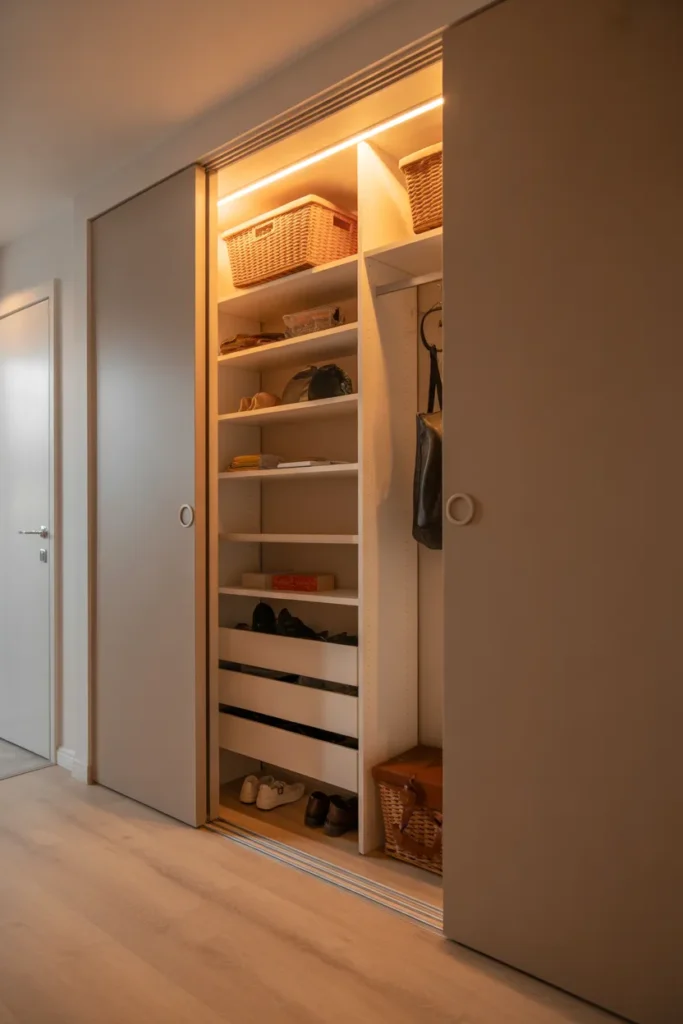
Whenever a compact entry includes a closet, I maximize every inch with custom shelving. Sliding doors save precious clearance space while keeping the façade streamlined. Inside, vertical dividers organize bags and backpacks so they remain upright and accessible. Pull-out shoe drawers prevent piles from forming and make daily routines smoother.
Lighting inside the closet transforms usability. I install warm LED strips under shelves to illuminate darker corners. Overhead bins store seasonal accessories without interfering with everyday items. By designing the closet as a fully optimized system rather than a simple hanging rod, the entire entryway feels calmer and more efficient.
12. Stairs and Entryway Integration Ideas
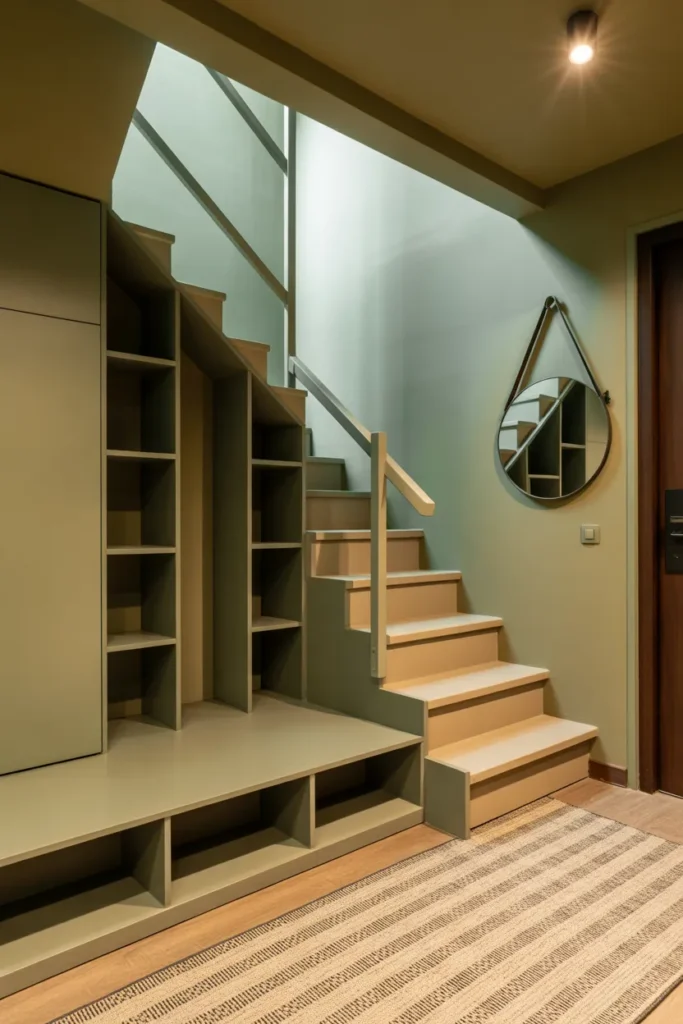
Blending stairs with the entry requires visual continuity. I extend the wall color up along the staircase to unify the vertical surfaces. Integrated side shelving along the stair wall offers room for baskets and décor without protruding into the walkway. Beneath the steps, built-in cubbies neatly store shoes and everyday accessories.
Railings can double as design elements. I favor slim black or brushed metal railings to keep the structure visually light. A round mirror near the base of the stairs balances sharp architectural lines. When lighting is carefully placed overhead, the entire composition feels open and intentionally integrated.
13. Table Ideas for Small Entry Spaces
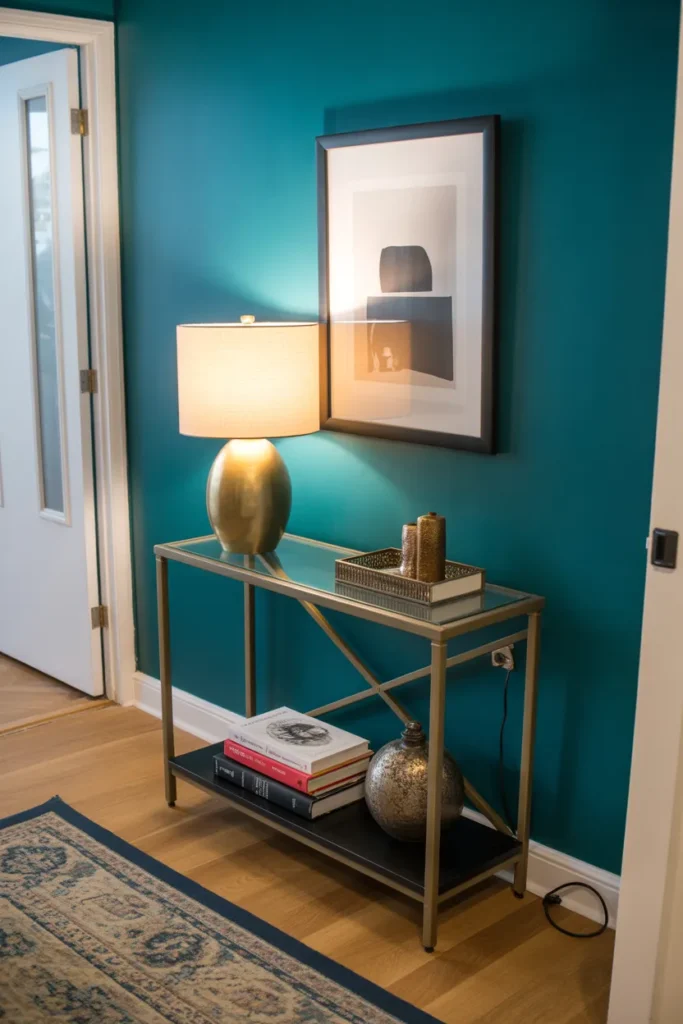
Choosing the right table for a small entry determines how functional the area becomes. I often select a narrow glass-top console with a slim metal frame to keep the space visually light. The transparency prevents heaviness while still offering practical surface area. A bold teal or deep green backdrop elevates the overall mood instantly.
Styling remains simple but deliberate. I layer stacked books beneath a sculptural lamp to create height contrast. A small decorative tray keeps essentials contained. Framed abstract art above ties the palette together, ensuring the compact area feels cohesive rather than cluttered.
14. Wallpaper Ideas for Small Entryways
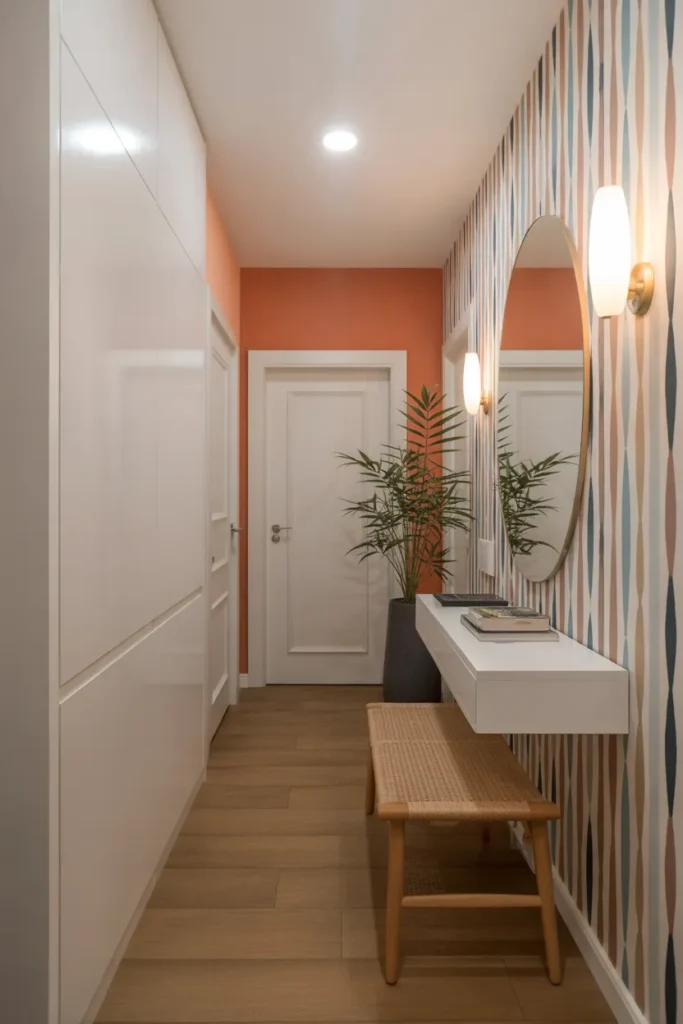
Wallpaper can dramatically transform a small entry without requiring extra furniture. I gravitate toward colorful geometric or subtle botanical prints that introduce personality. Keeping surrounding elements simple allows the pattern to shine without overwhelming the hall. A slim white console balances bold walls and maintains breathing space.
Scale selection is crucial in tight areas. I prefer medium-sized patterns that energize the wall without shrinking it visually. Soft wall sconces enhance the design and highlight texture in the paper. Through thoughtful coordination, wallpaper becomes a vibrant yet controlled focal point.
15. Shoe Storage Solutions for Tiny Entry Halls
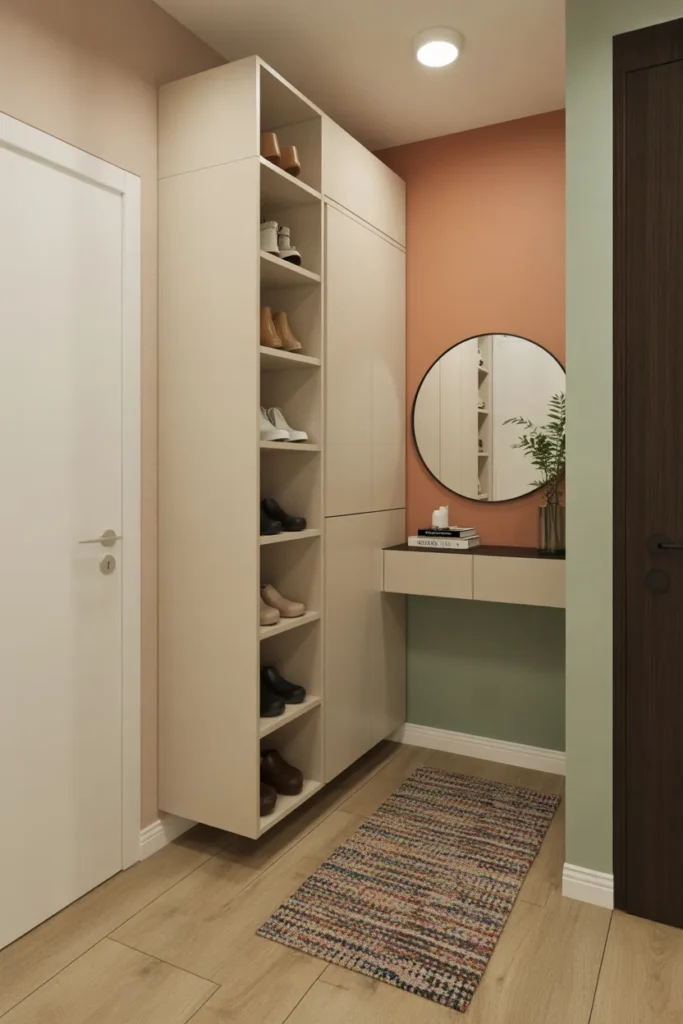
Managing shoes in a tiny entry requires vertical thinking. I install slim wall-mounted cabinets that tilt outward, allowing multiple pairs to fit within a shallow depth. A matte cream finish blends seamlessly with light walls, keeping the corridor airy. Mounting the unit slightly above the floor creates visual lightness.
Introducing color through textiles keeps the design lively. A pastel runner softens the area while defining the walking path. A round mirror above the cabinet reflects natural light and enhances depth. Organized storage combined with thoughtful styling ensures the space feels controlled yet welcoming.
16. Coat Rack Ideas for Small Entryways
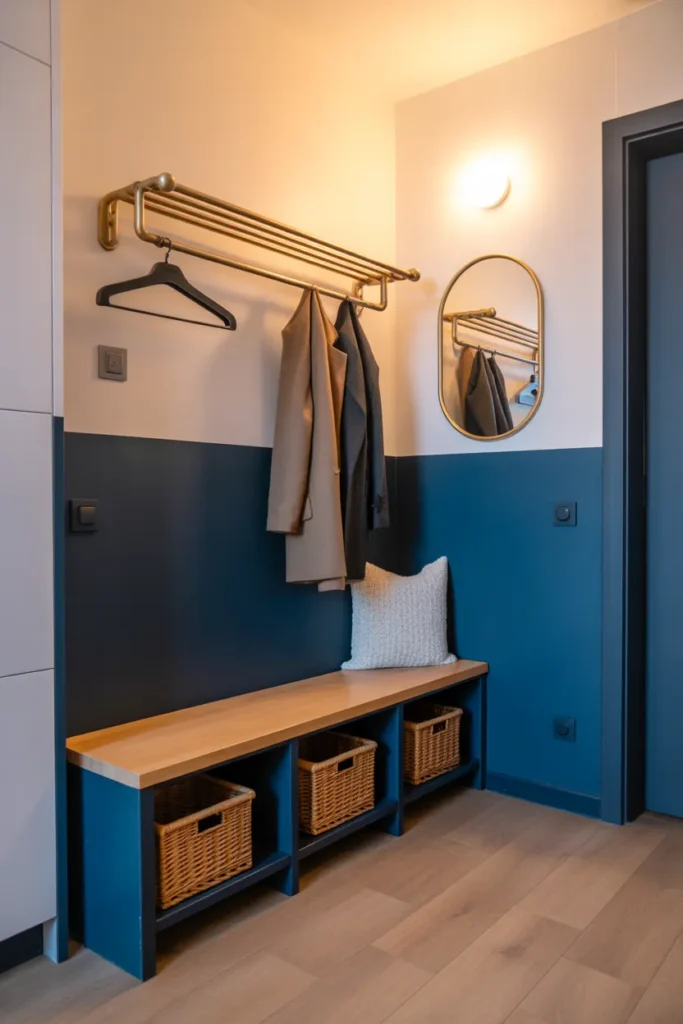
Wall-mounted coat racks save valuable floor area in small entries. I prefer brushed brass or matte black finishes to introduce subtle contrast against colorful walls. Installing the rack at varying hook heights increases functionality while adding visual rhythm. Pairing it with a narrow wooden bench enhances practicality.
Color strengthens the design impact. A deep blue or forest green wall makes metallic hooks stand out elegantly. Baskets tucked beneath the bench hide scarves and accessories neatly. Balanced lighting above the rack ensures coats remain visually tidy rather than casting heavy shadows.
17. Ideas for Apartment Entrance Doors in 2026
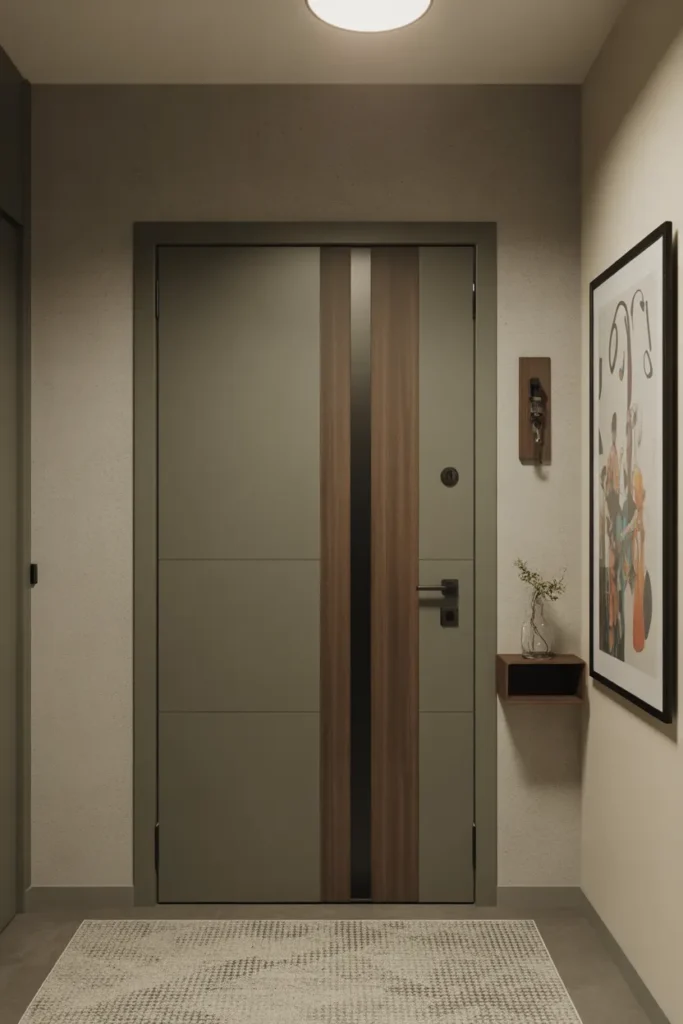
Entrance doors are becoming design statements in 2026. I often paint them in muted charcoal, olive, or dusty navy to contrast with lighter walls. Adding a slim vertical wood panel detail introduces warmth and texture. Matte black hardware complements contemporary interiors and keeps the palette cohesive.
Enhancing the area around the door improves functionality. A small wall-mounted shelf nearby keeps mail organized without crowding the entry. Coordinated artwork and a patterned rug reinforce the chosen color scheme. Treating the door as part of the décor elevates the entire entrance experience.
18. Wall Ideas for Small Entry Spaces
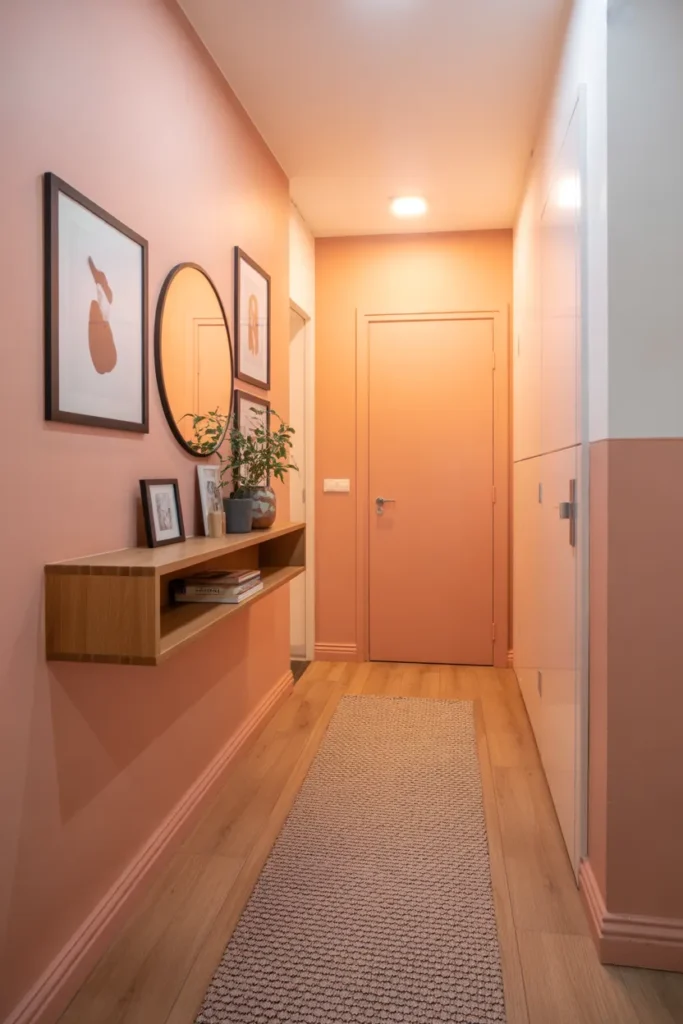
Two-tone walls can visually expand a small entry when applied thoughtfully. I paint the lower portion in a warm peach or sage tone while keeping the upper section white to reflect light. This subtle division adds depth without requiring structural changes. A floating shelf between tones creates a seamless transition.
Layering décor on vertical surfaces preserves floor space. Framed art prints arranged in a tight cluster provide personality without overwhelming the wall. A round mirror enhances brightness and balance. Through color blocking and careful placement, even the most compact entry feels expressive and refined.