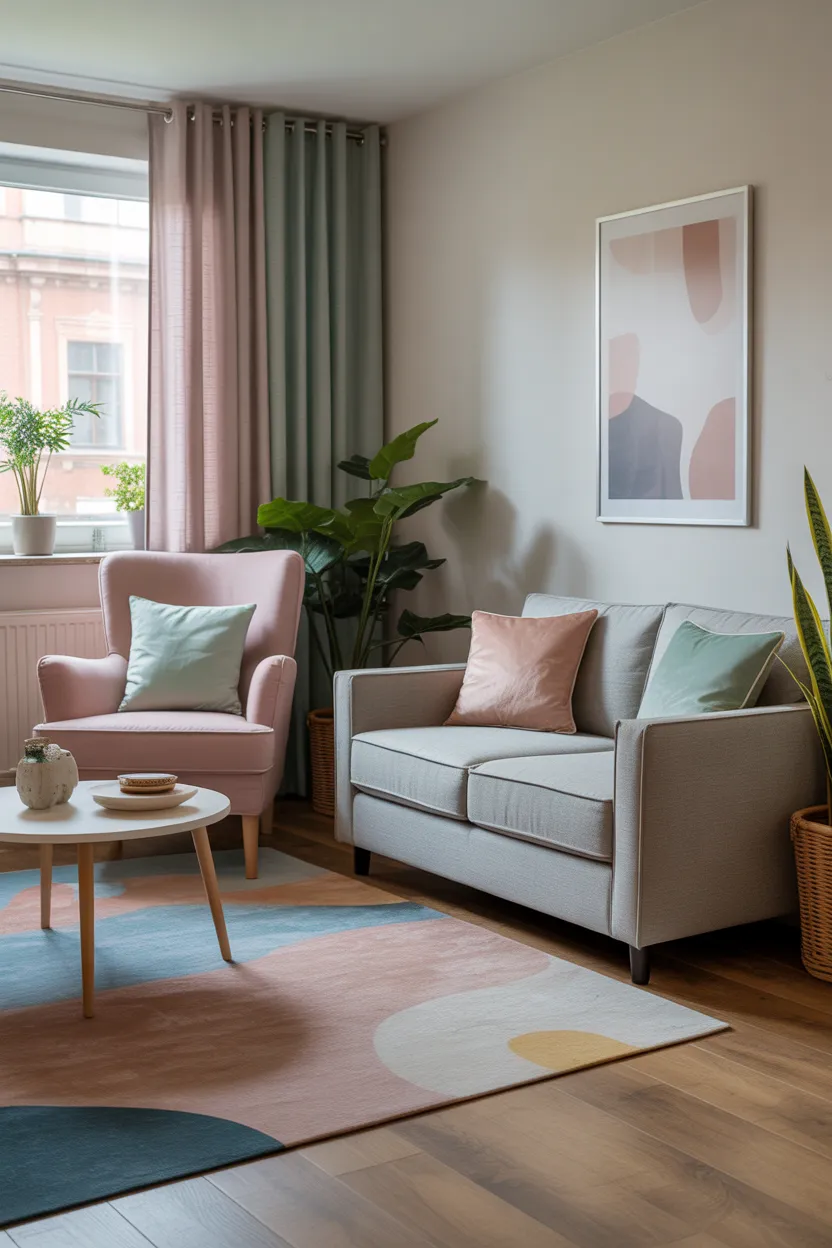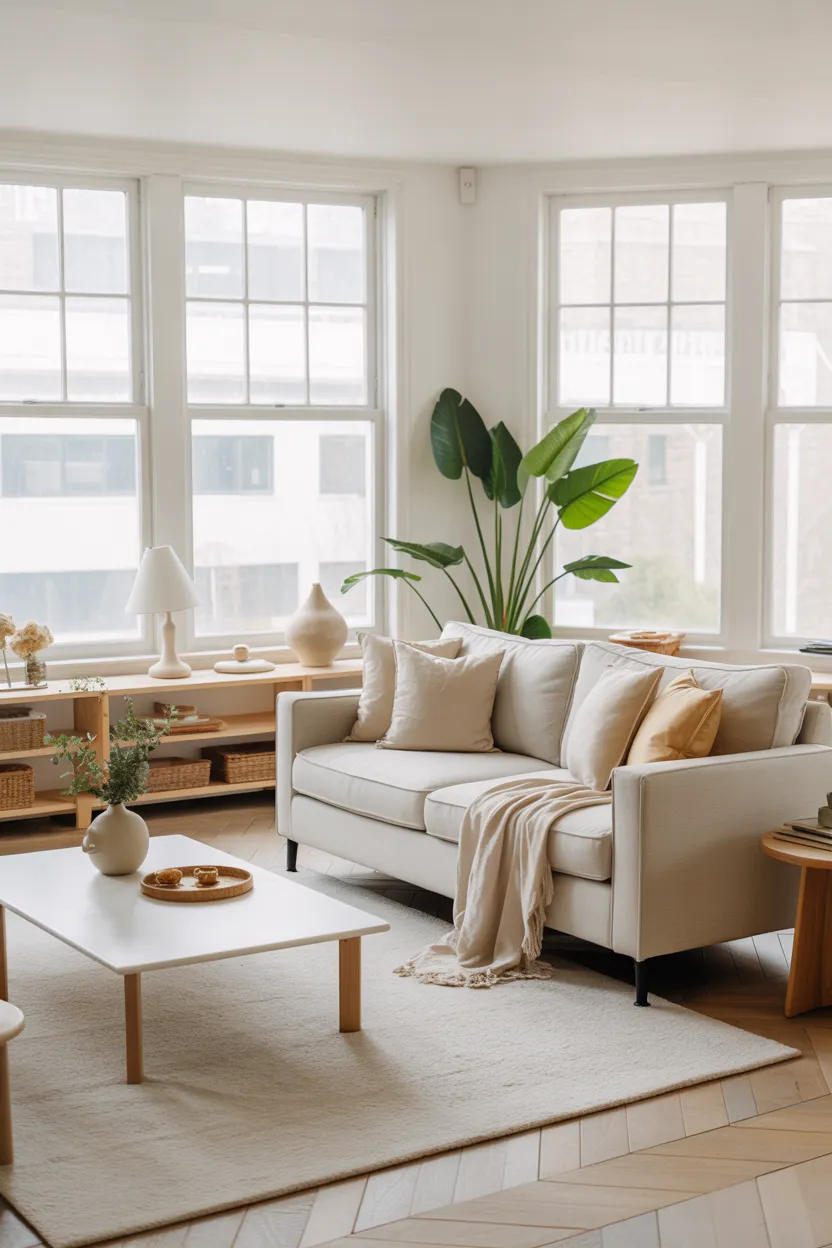
20 Tiny Living Room Design Ideas for 2026
Small living rooms in 2026 lean toward warmth, color, and intentional comfort, blending practical layouts with expressive details. Instead of stripping spaces down, modern tiny rooms embrace layered textures, soft lighting, and personality-driven palettes. These ideas focus on making compact areas feel inviting and visually rich through smart furniture placement, color accents, and thoughtful styling that reflects real, livable homes rather than showpieces.
Soft Neutrals With Warm Color Accents
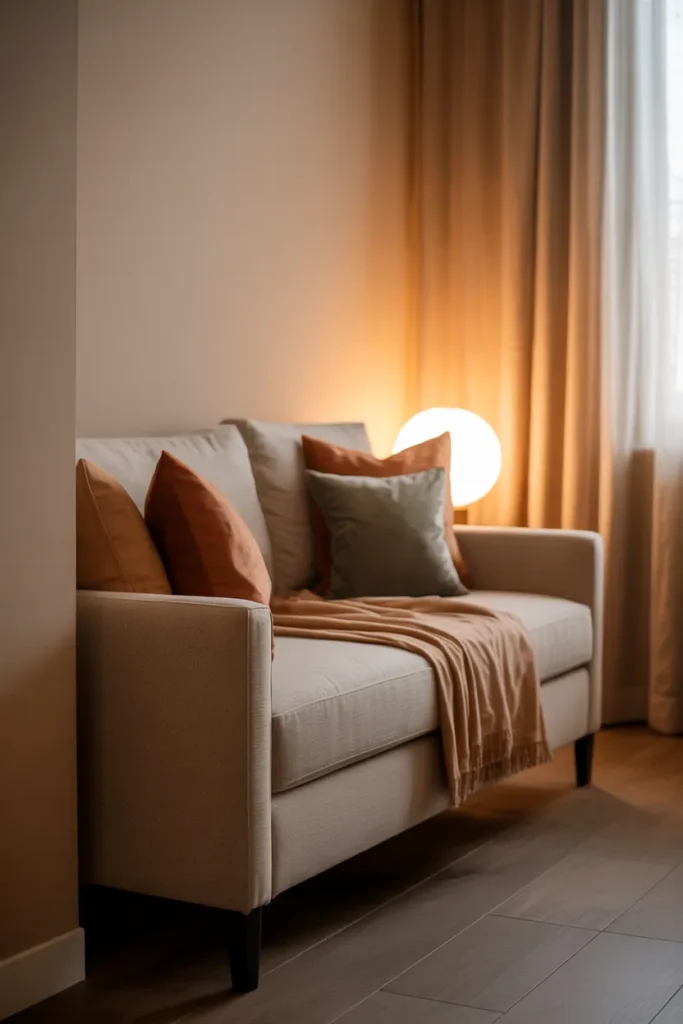
Built around a calm neutral base, this layout introduces warmth through subtle color accents. Cushions, throws, and artwork add soft contrast without overwhelming the space. The compact sofa anchors the room while keeping sightlines open. Light wood tones and woven textures enhance comfort, making the room feel welcoming despite its size. This approach suits small homes that need visual softness and gentle color variation.
Rather than relying on bold furniture, the design layers color thoughtfully. Accent hues appear in repeat, creating cohesion instead of clutter. Lighting remains warm and diffused, avoiding harsh contrasts. The room feels lived-in and relaxed, proving that tiny living spaces can feel emotionally rich without being visually heavy or crowded.
Color-Blocked Tiny Living Room Layout
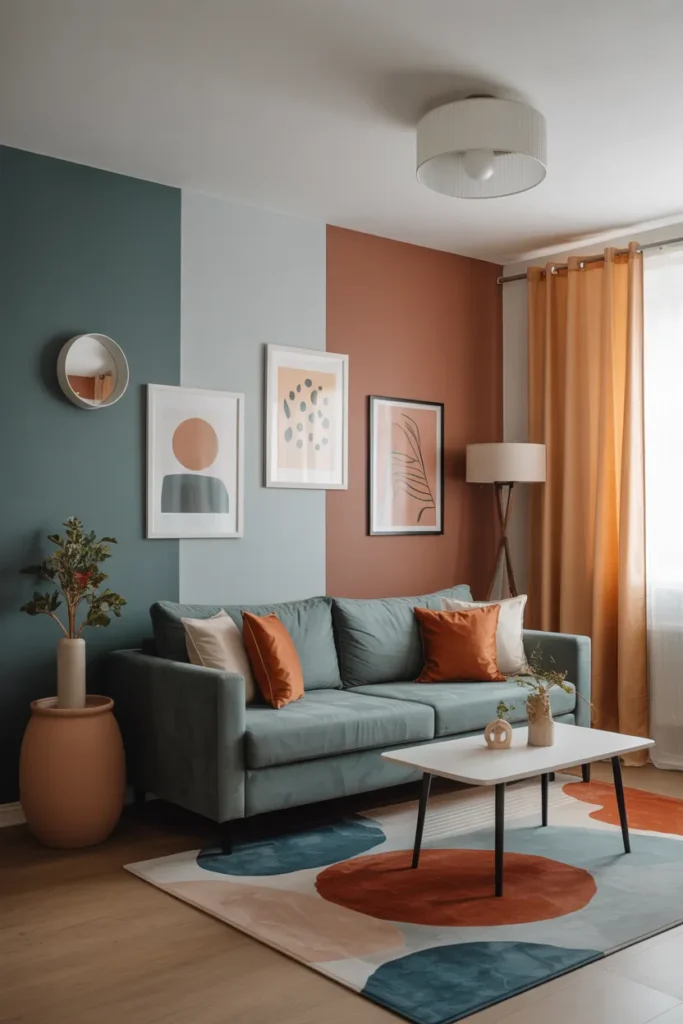
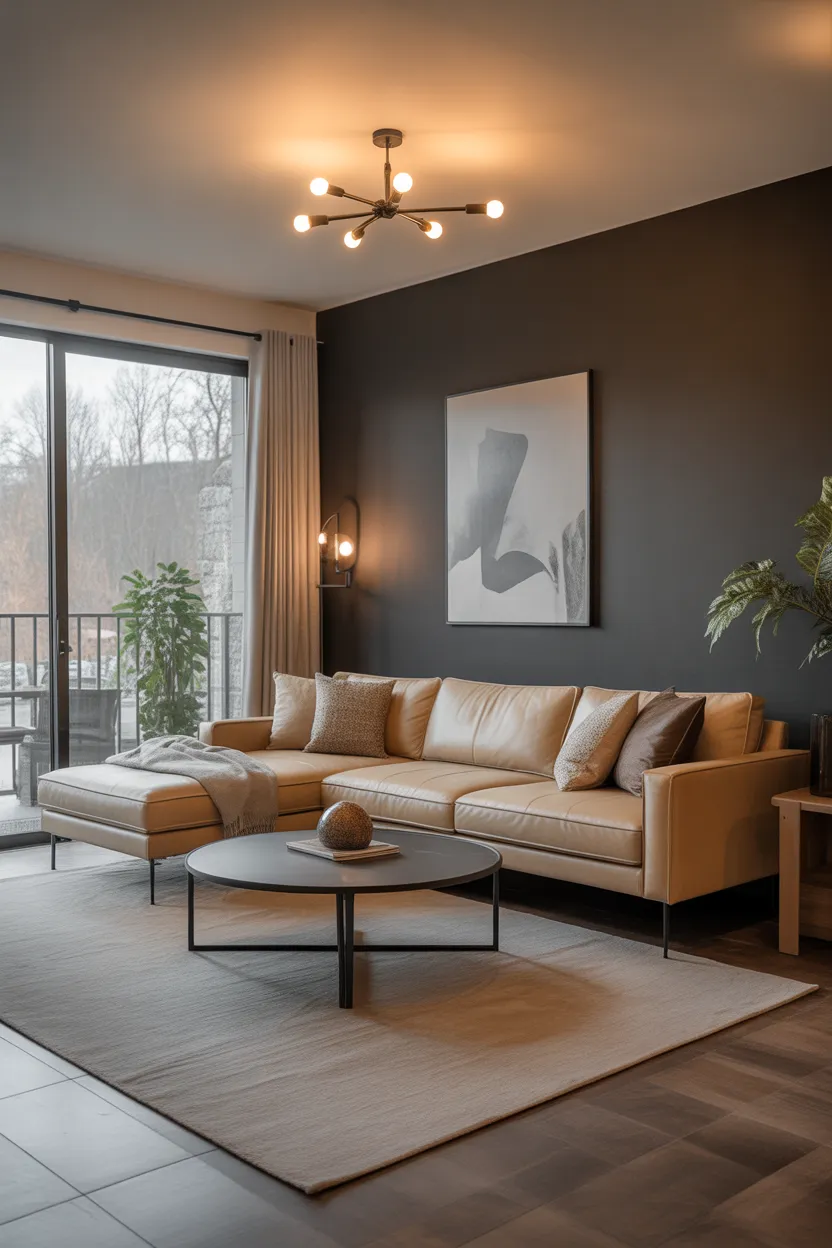
Defined by strategic color placement, this layout uses color-blocking to give the room structure. One wall anchors the space visually, while the remaining surfaces stay lighter to maintain openness. A simple sofa and minimal furniture prevent visual overload. The result feels energetic yet controlled, offering personality without sacrificing balance or flow in a compact footprint.
Color-blocking helps separate zones in tiny rooms without physical dividers. Artwork and textiles echo the wall tones, creating harmony. This method works especially well for renters or apartments where layout changes are limited. The space feels modern, expressive, and thoughtfully composed rather than decorative for decoration’s sake.
Cozy Corner Layout With Layered Lighting
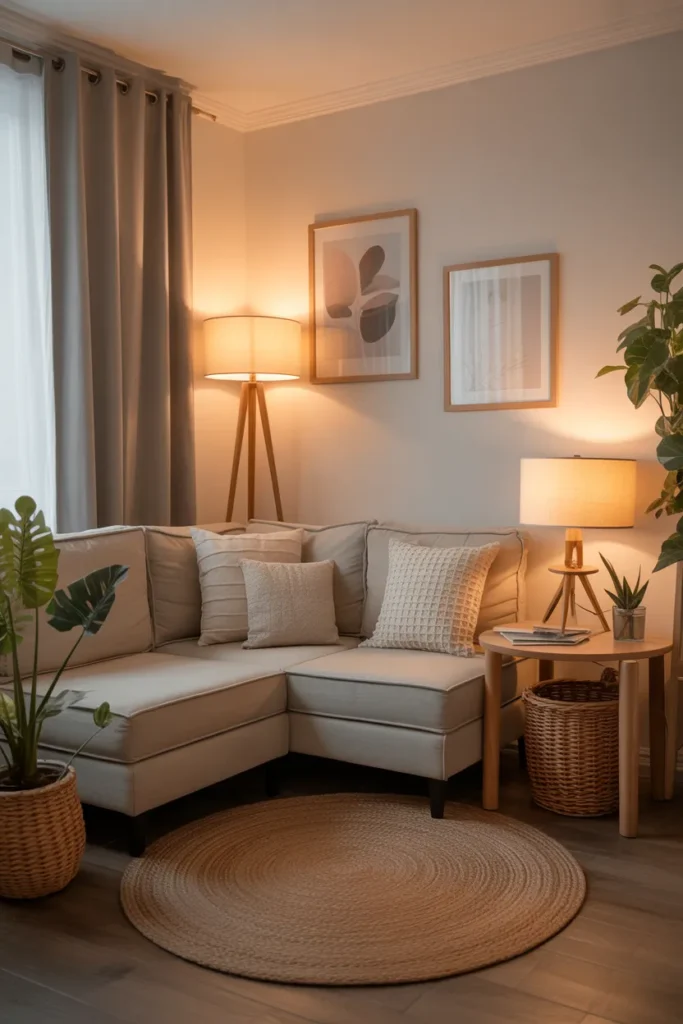
Tucked into a corner, this layout maximizes usable floor space while creating a cozy focal point. A compact sofa pairs with layered lighting to add depth and warmth. The arrangement keeps the center open, improving movement. Textured fabrics and plants soften the edges, making the room feel intentional rather than compressed or temporary.
Layered lighting transforms the mood throughout the day. Soft lamps replace harsh overhead fixtures, adding intimacy. The corner placement encourages relaxation without isolating the seating area. This idea suits tiny living rooms where comfort is prioritized, proving that thoughtful lighting and placement can outweigh square footage limitations.
Compact Living Room With Earthy Color Palette
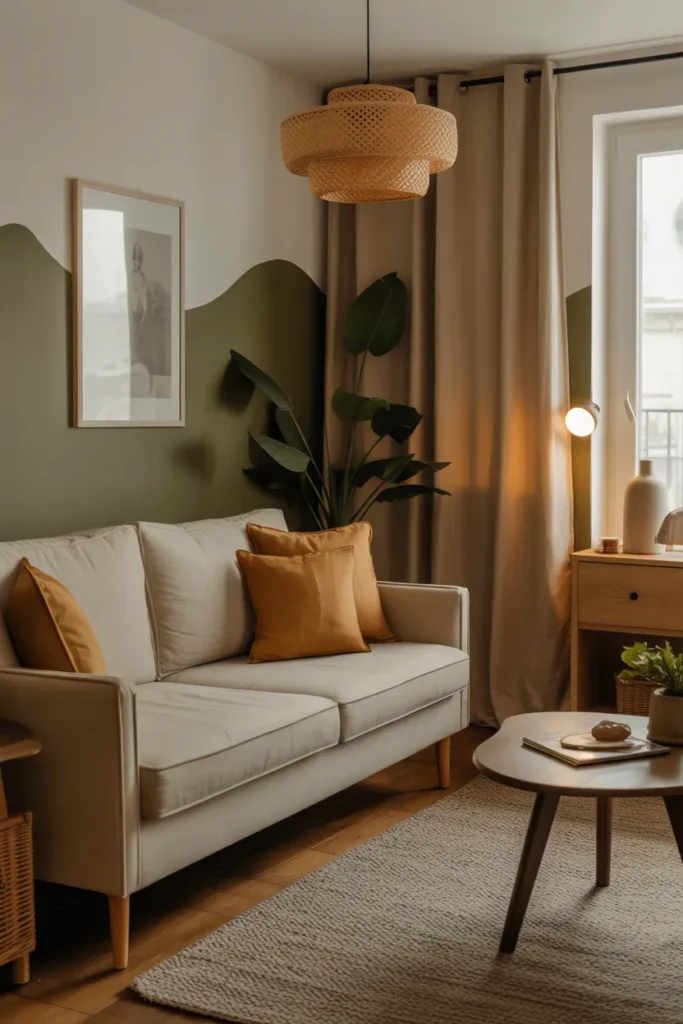
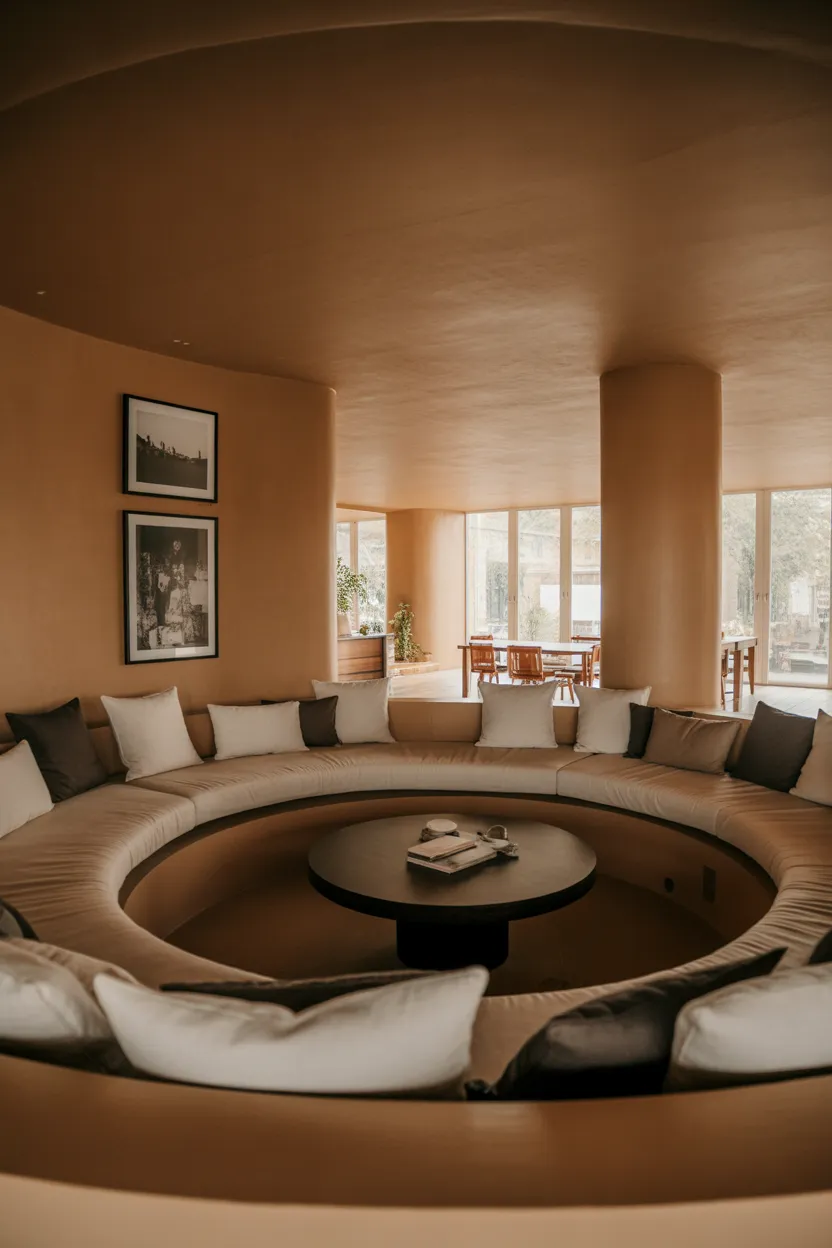
Grounded in earthy tones, this layout creates warmth and depth in a limited area. A neutral sofa forms the base, while greens and warm browns add richness. Natural materials dominate the space, preventing the palette from feeling flat. The room feels calm and balanced, offering visual interest without sharp contrast.
Color is introduced through repetition rather than volume. Accessories remain minimal, allowing textures to carry the design. Daylight enhances the warmth of the palette, making the room feel open and comfortable. This approach works well for tiny spaces that benefit from a soothing, nature-inspired atmosphere.
Small Living Room With Pastel Color Layers
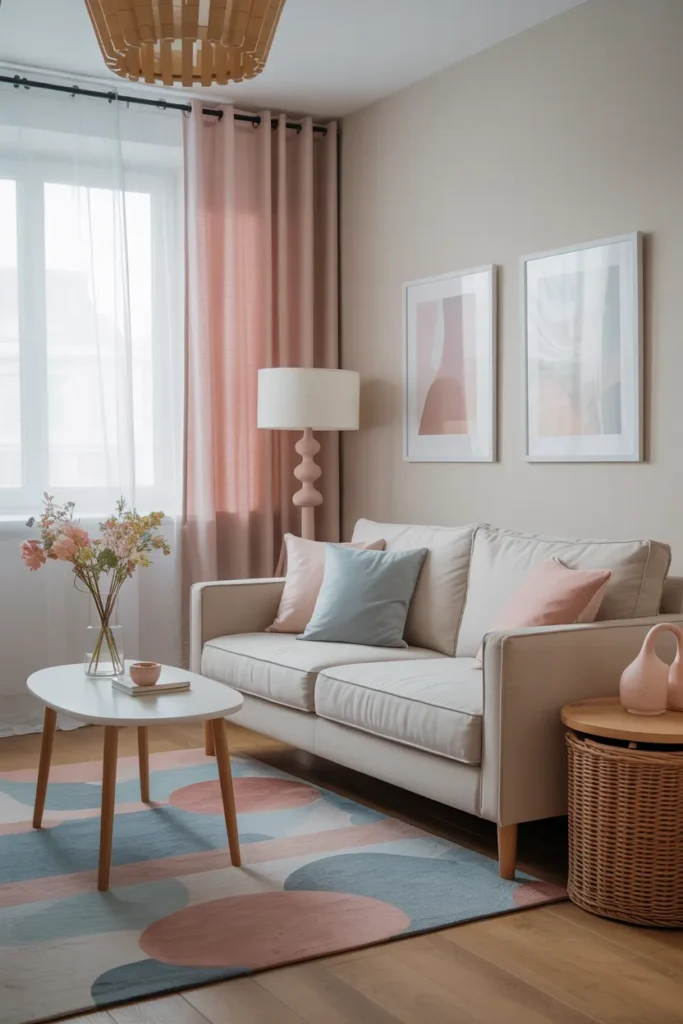
Pastel layers add color without overwhelming the room. Soft hues appear in textiles and artwork, keeping the base furniture neutral. The light palette enhances brightness, making the room feel larger than it is. Clean-lined furniture ensures the colors feel modern rather than playful or overly decorative.
By limiting pastels to controlled areas, the room maintains sophistication. The balance between color and space keeps the design breathable. This layout suits small apartments where brightness and softness help offset limited square footage, creating a relaxed yet contemporary living area.
Tiny Living Room With Natural Texture Focus
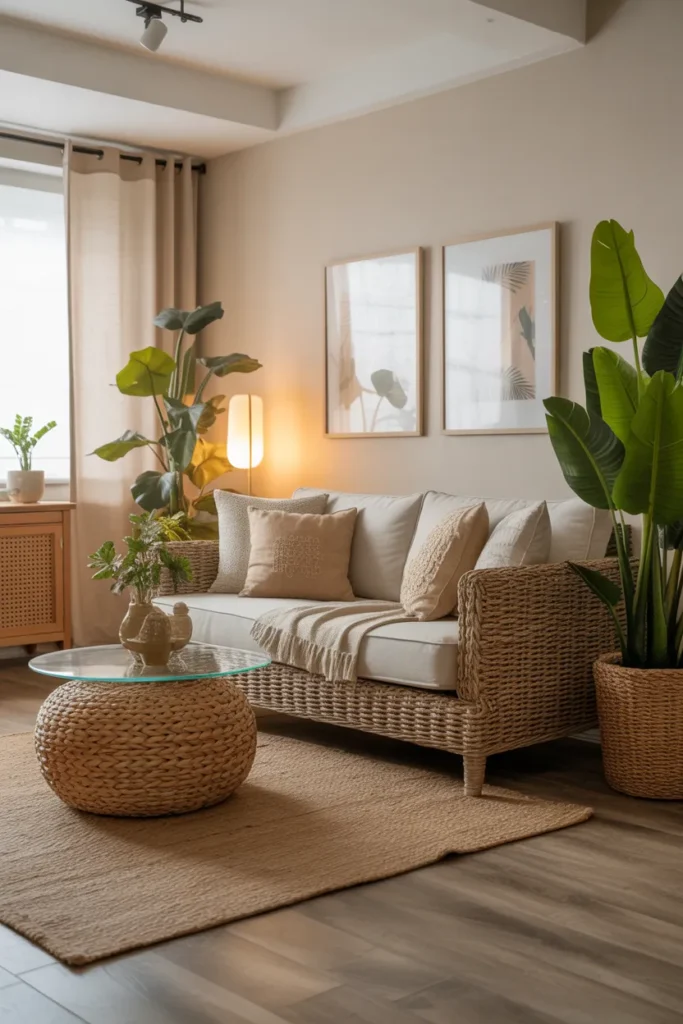
Texture becomes the star in this compact layout. Woven materials, layered fabrics, and soft finishes add dimension without relying on bold color. A simple sofa allows textures to stand out while keeping the room visually light. The arrangement feels grounded and comfortable, ideal for everyday living.
Natural textures prevent the space from feeling flat or unfinished. Plants reinforce warmth and softness, enhancing the lived-in feel. This idea works especially well for tiny rooms where visual complexity must come from material choice rather than furniture quantity.
Bright Tiny Living Room With Colorful Artwork
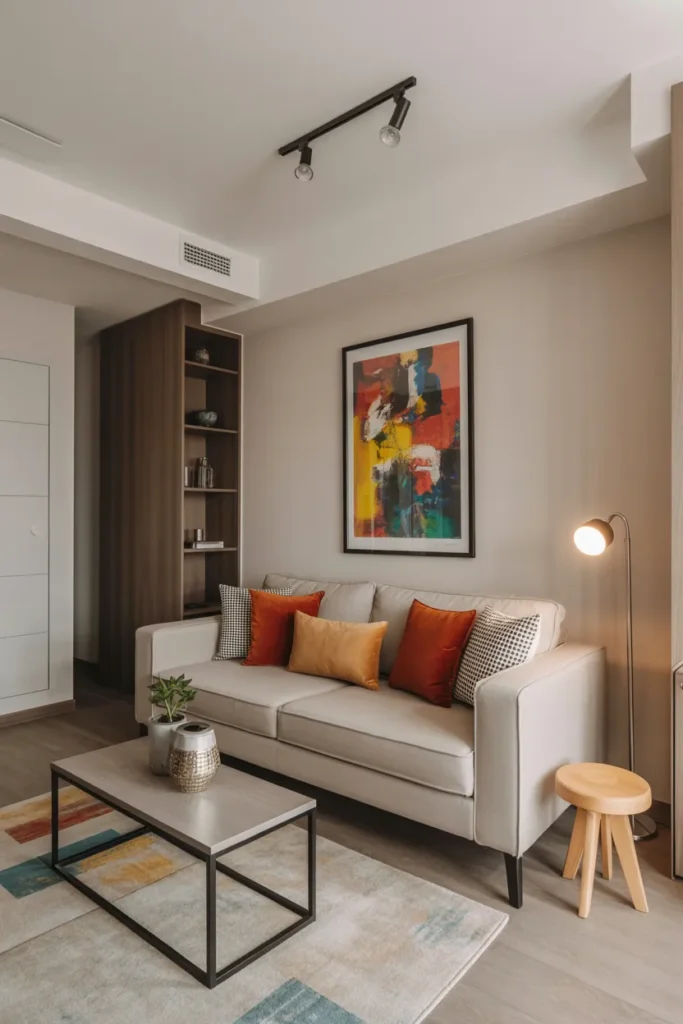
Artwork takes center stage in this design, bringing color and personality into a small room. A neutral sofa keeps the base calm, allowing bold art to energize the space. Accessories subtly echo the artwork’s colors, creating a cohesive look without visual clutter.
This approach allows flexibility over time. Swapping artwork refreshes the room without major changes. The layout stays simple, ensuring the space remains functional. It’s ideal for tiny living rooms that need personality without sacrificing openness or comfort.
Compact Living Room With Soft Blue Tones
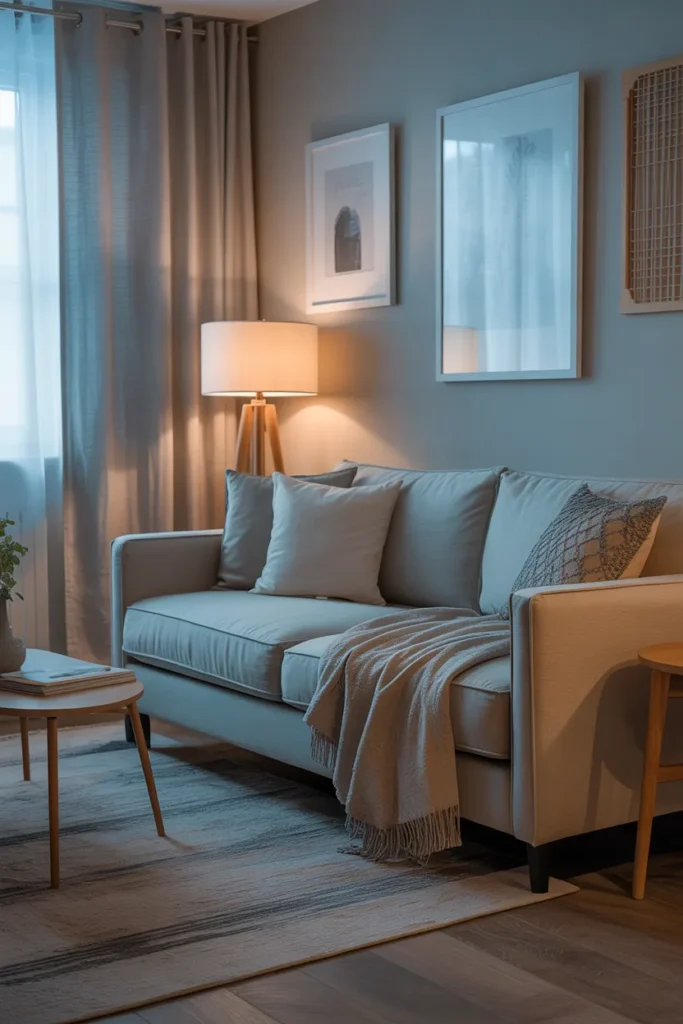
Soft blue tones introduce calm while maintaining brightness. The color appears in controlled doses, keeping the space serene rather than cold. A light sofa anchors the room, while textiles add depth. The overall effect feels fresh and airy, ideal for compact interiors.
Lighting plays a key role, warming the palette and preventing it from feeling flat. The layout remains open, supporting easy movement. This design suits small rooms where tranquility and visual clarity are priorities.
Tiny Living Room With Mixed Warm Colors
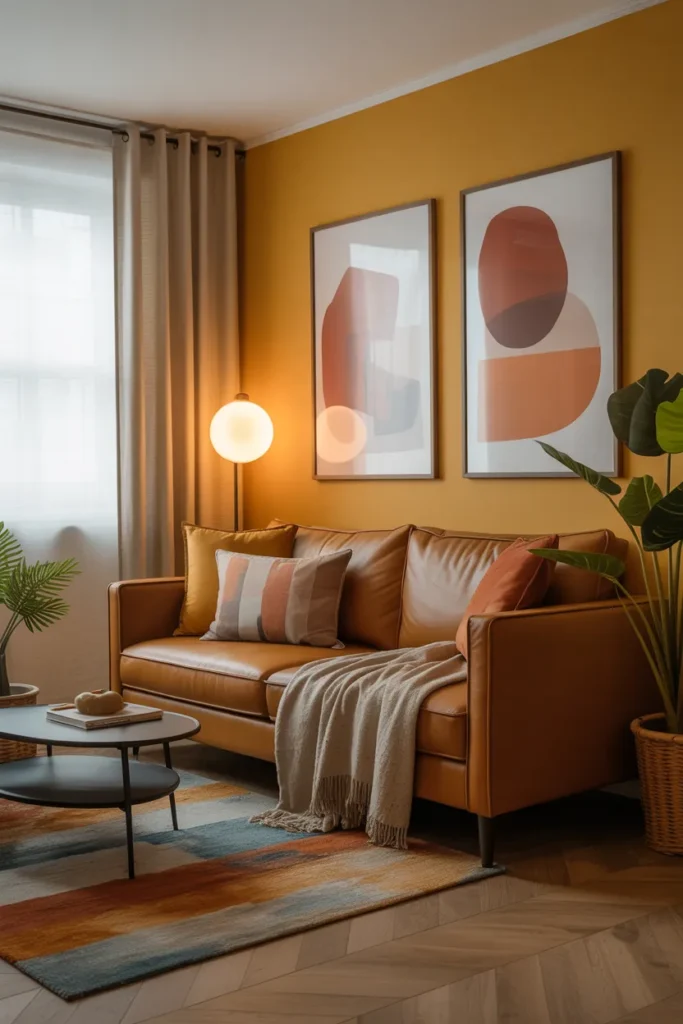
Warm colors layered together give this tiny room energy without chaos. Muted tones prevent the palette from becoming overpowering. The compact sofa and limited furniture keep the room functional. Color appears mostly through soft elements, maintaining flexibility.
The mix feels intentional through repetition and balance. Lighting enhances warmth, tying the palette together. This layout works well for those wanting color without committing to bold furniture, offering personality while staying adaptable.
Small Living Room With Botanical Color Accents
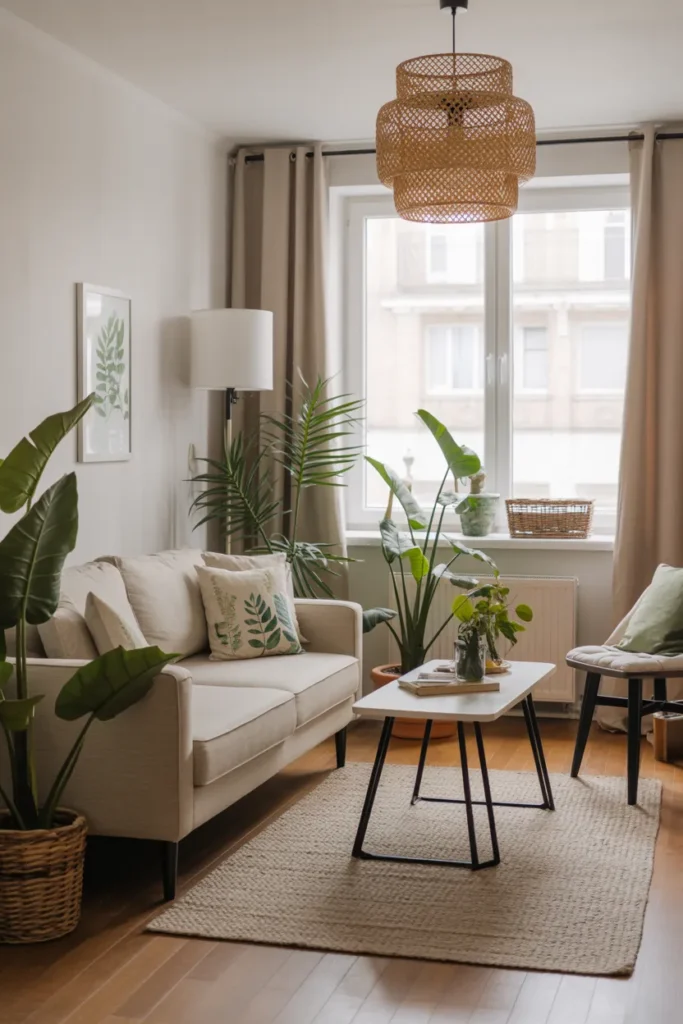
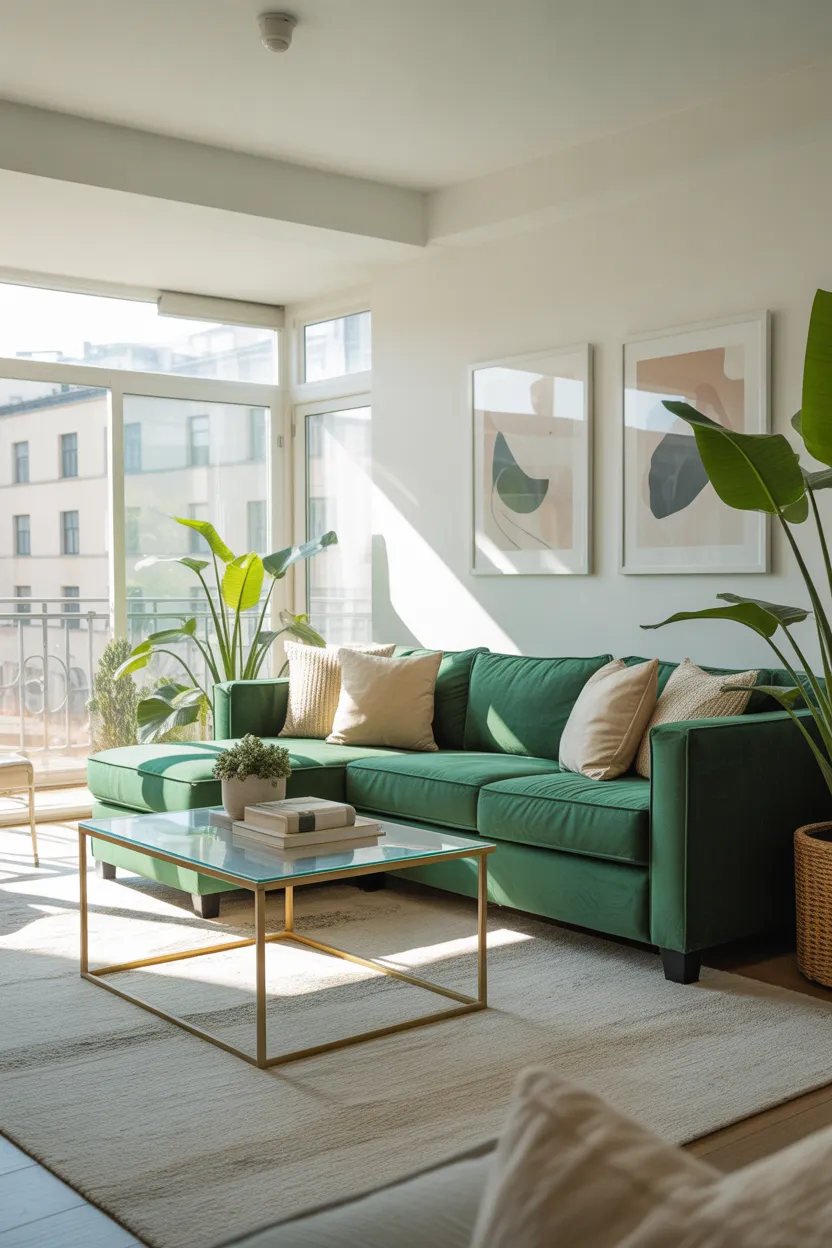
Botanical accents bring freshness into a compact living room. Green appears through plants and soft furnishings, adding life without overwhelming the space. The neutral base keeps the layout flexible and bright. The room feels breathable and inviting.
Plants act as visual anchors, softening corners and edges. Natural light enhances the effect, making the space feel larger. This idea suits tiny rooms that benefit from organic color and a relaxed, everyday atmosphere.
Tiny Living Room With Warm Sunset Tones
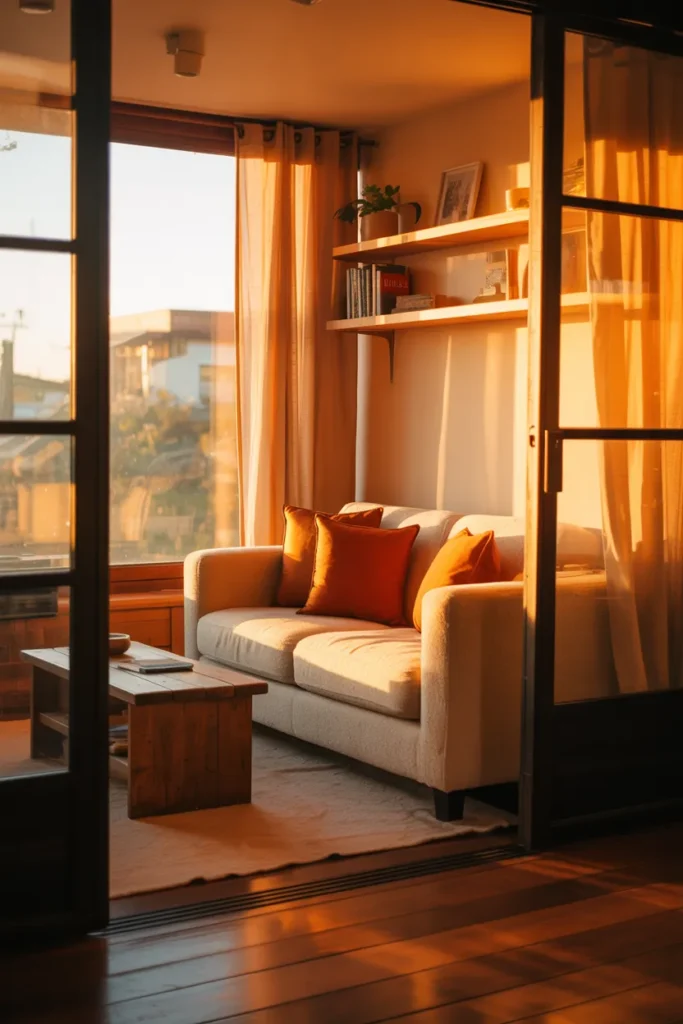
Inspired by sunset hues, this layout introduces warmth through peach and coral accents layered over a neutral base. The compact sofa keeps proportions in check while textiles add depth and softness. The room feels comforting and cheerful without becoming overpowering, making it ideal for small spaces that benefit from emotional warmth.
Color appears in balanced repetition, preventing visual clutter. Warm lighting enhances the palette, creating a soft glow in the evenings. The overall arrangement feels approachable and lived-in, proving that tiny living rooms can feel expressive while remaining calm and functional.
Compact Living Room With Muted Jewel Accents
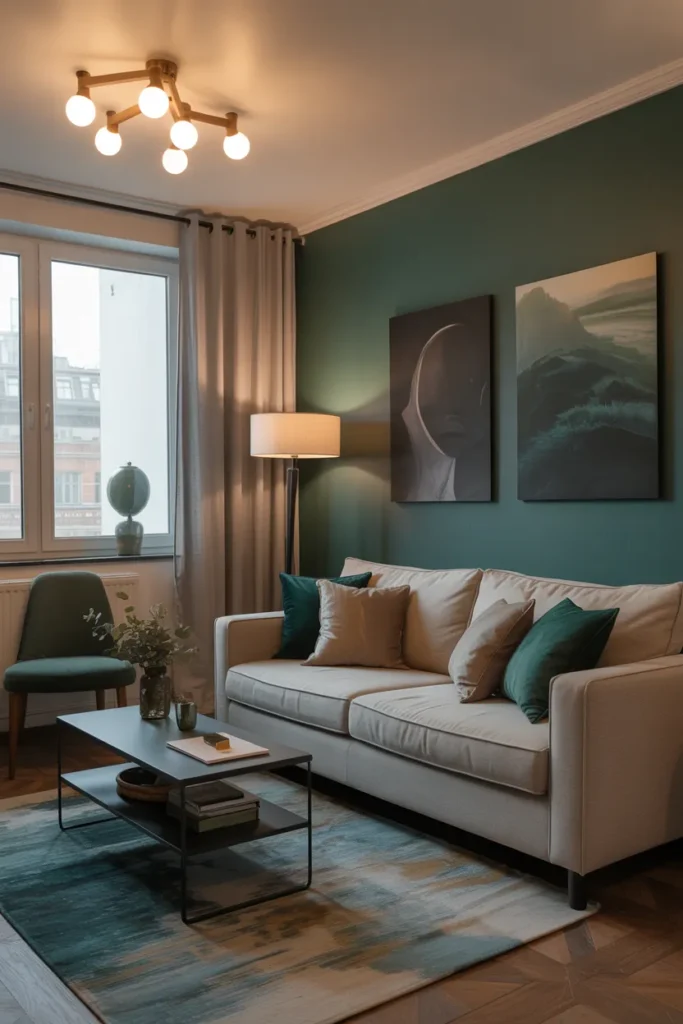
Muted jewel tones bring richness to this compact layout without overwhelming it. A neutral sofa anchors the space, allowing deeper colors to appear in controlled doses. The result feels sophisticated yet cozy, offering visual depth within a small footprint.
The balance between dark accents and light surroundings keeps the room from feeling heavy. Textures soften the jewel tones, ensuring comfort remains central. This idea works well for small living rooms seeking elegance without excess furniture or bold wall colors.
Small Living Room With Playful Color Pops
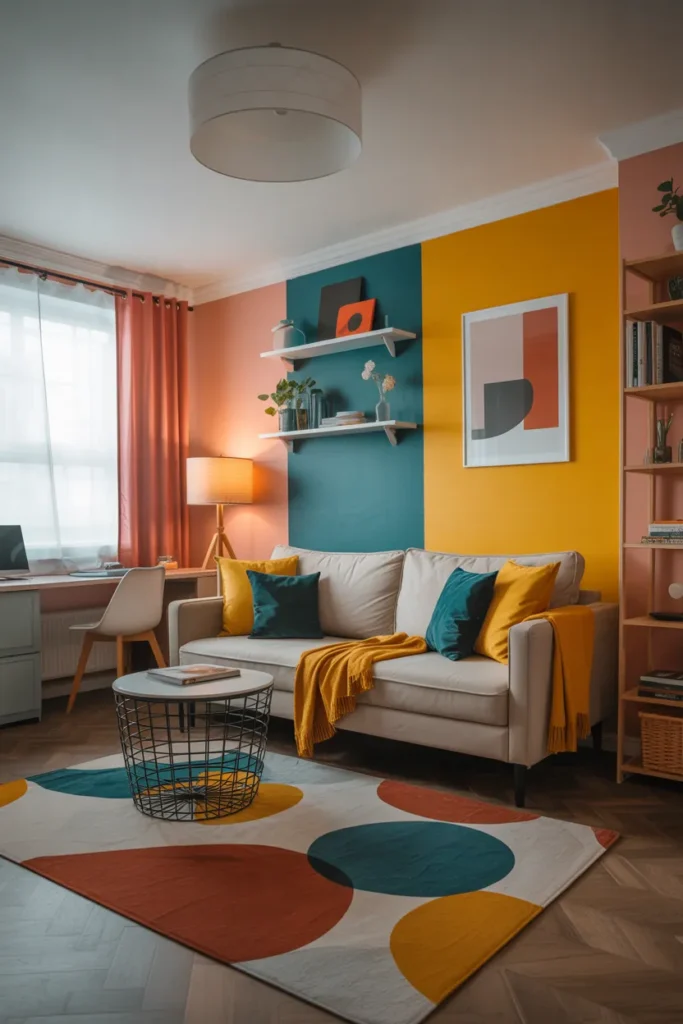
Playful accents energize this small living room while maintaining structure. Bright cushions and decor contrast with a neutral base, keeping the room visually light. The compact furniture layout ensures functionality remains intact despite the added color.
Rather than scattering color randomly, accents appear intentionally. This approach keeps the space lively yet composed. The design suits small homes that want personality and cheer without committing to large, colorful furniture pieces.
Tiny Living Room With Soft Lavender Accents
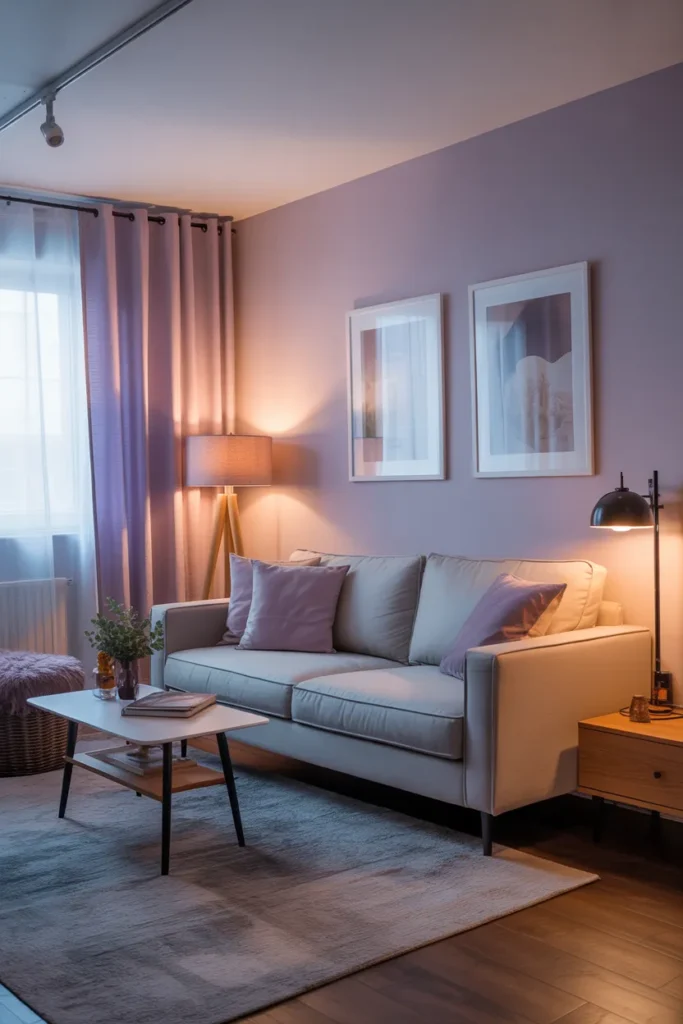
Lavender introduces subtle color while preserving calm. The light hue pairs effortlessly with neutral furniture, enhancing brightness. The room feels soothing and open, ideal for tiny living rooms where visual softness helps expand the sense of space.
Lighting warms the palette, preventing the color from feeling cool or distant. Accessories remain minimal, allowing the hue to breathe. This layout works well for those seeking gentle color without bold contrast.
Compact Living Room With Terracotta Highlights
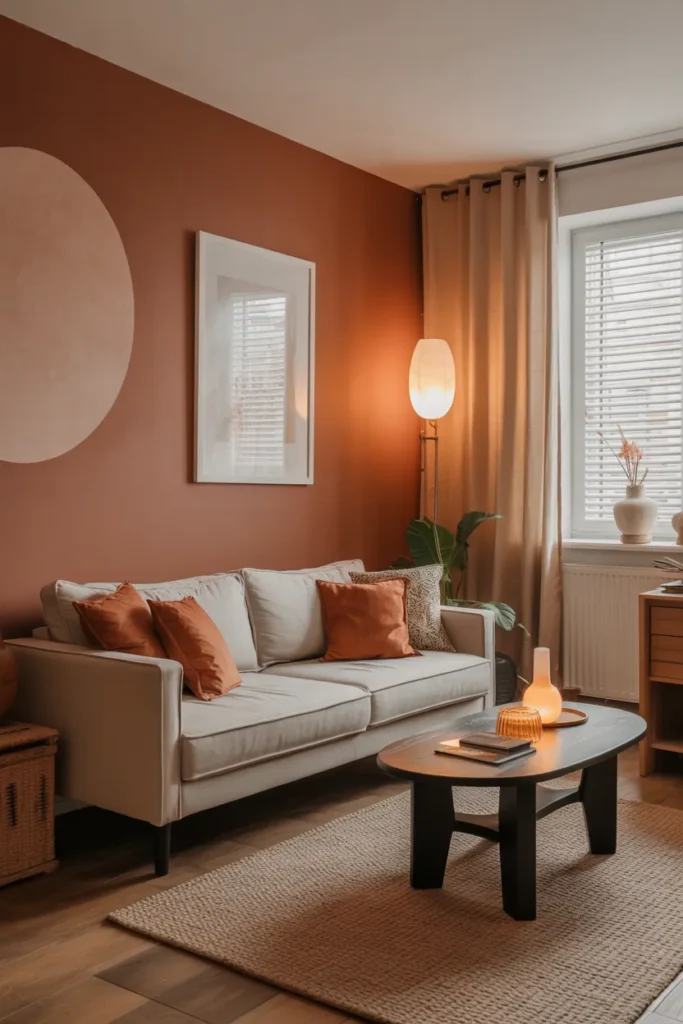
Terracotta highlights add grounded warmth to this compact room. The color appears through textiles and decor, complementing natural materials. A simple sofa keeps the space balanced, ensuring comfort remains the focus.
The palette feels cohesive through repetition and texture. Warm lighting enhances the earthy tones, creating a relaxed atmosphere. This idea suits tiny living rooms that benefit from warmth and depth without visual heaviness.
Tiny Living Room With Layered Neutral Colors
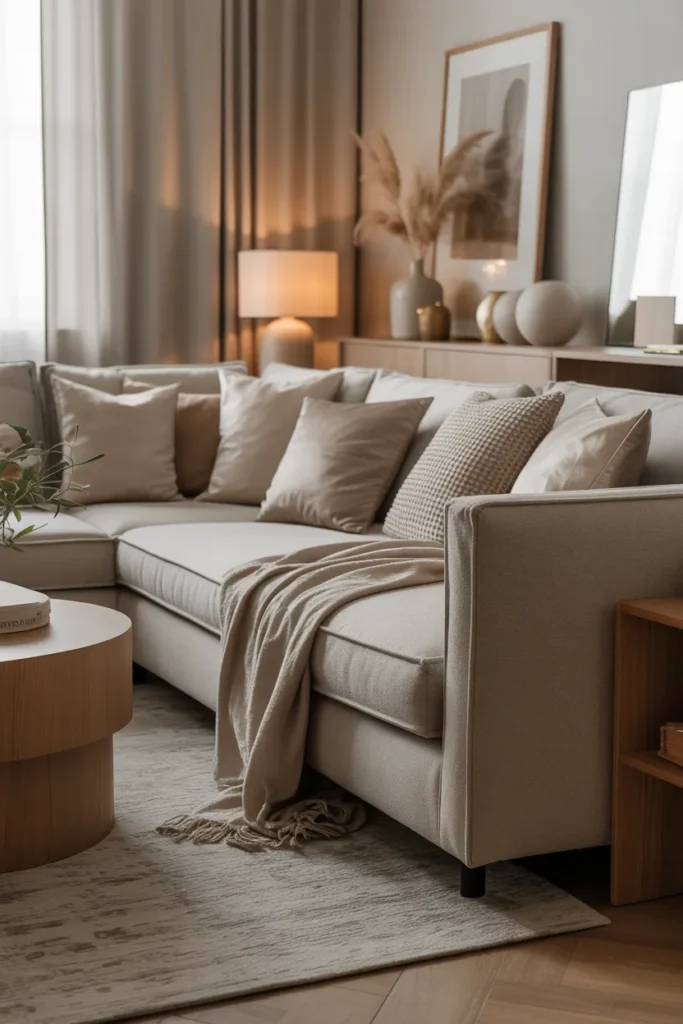
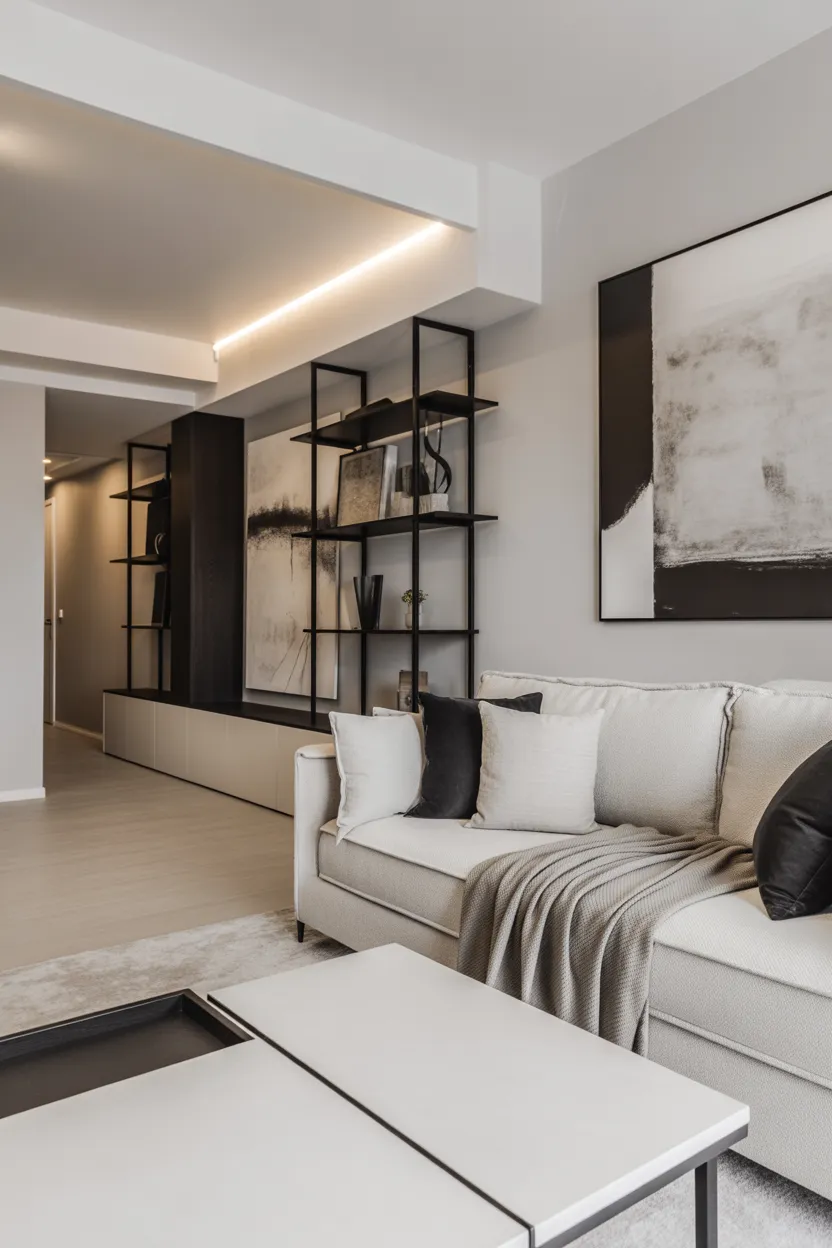
Layered neutrals create depth without relying on bold color. Subtle variations in tone add interest while maintaining cohesion. The compact layout feels calm and refined, making the room feel larger and more intentional.
Texture plays a key role, preventing monotony. Lighting softens transitions between tones, enhancing warmth. This approach works well for small living rooms that prioritize timeless design and flexibility.
Small Living Room With Colorful Textiles Focus
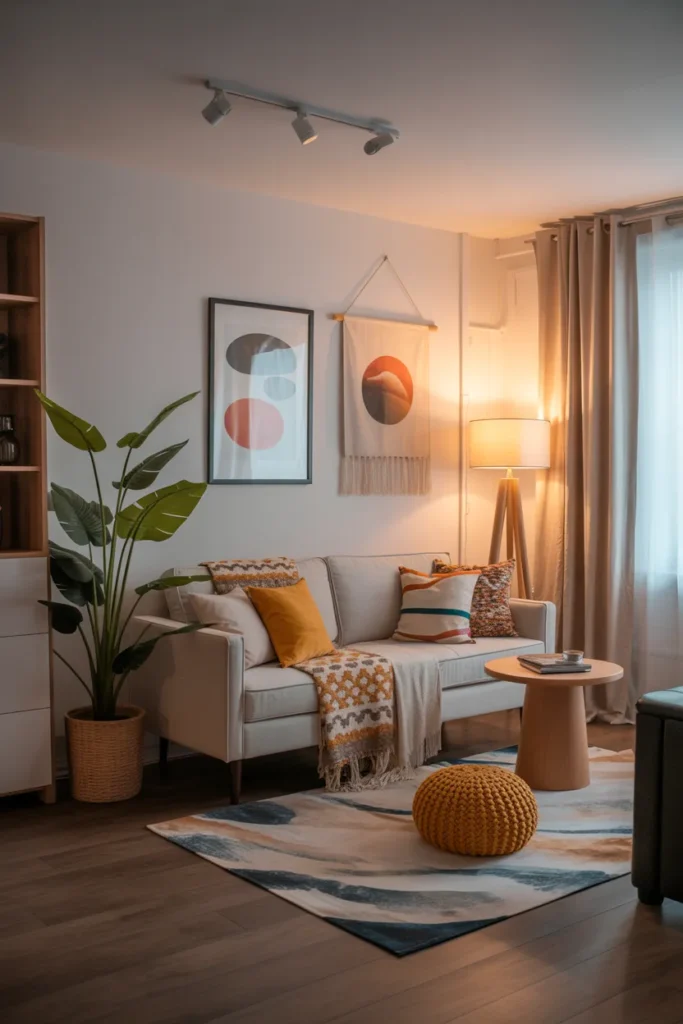
Textiles take center stage in this vibrant small living room. Color appears through cushions and throws, allowing easy updates over time. The neutral sofa supports the look without competing for attention.
Patterns add energy while remaining controlled through scale. The layout stays simple, ensuring function is never compromised. This idea suits tiny rooms where adaptability and personality are equally important.
Tiny Living Room With Soft Yellow Accents
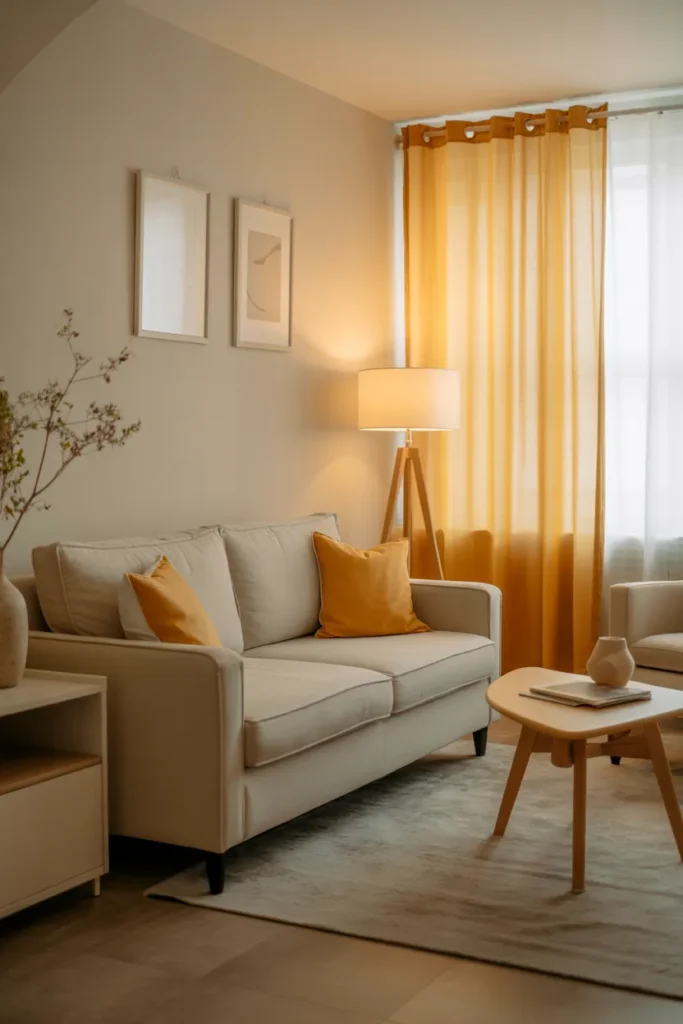
Soft yellow accents brighten this small living room without overwhelming it. The color appears sparingly, adding optimism and warmth. Neutral furniture ensures the room stays grounded and flexible.
Lighting reinforces the cheerful tone, enhancing comfort throughout the day. The layout feels open and approachable, ideal for compact spaces that benefit from subtle brightness and warmth.
Compact Living Room With Deep Blue Highlights
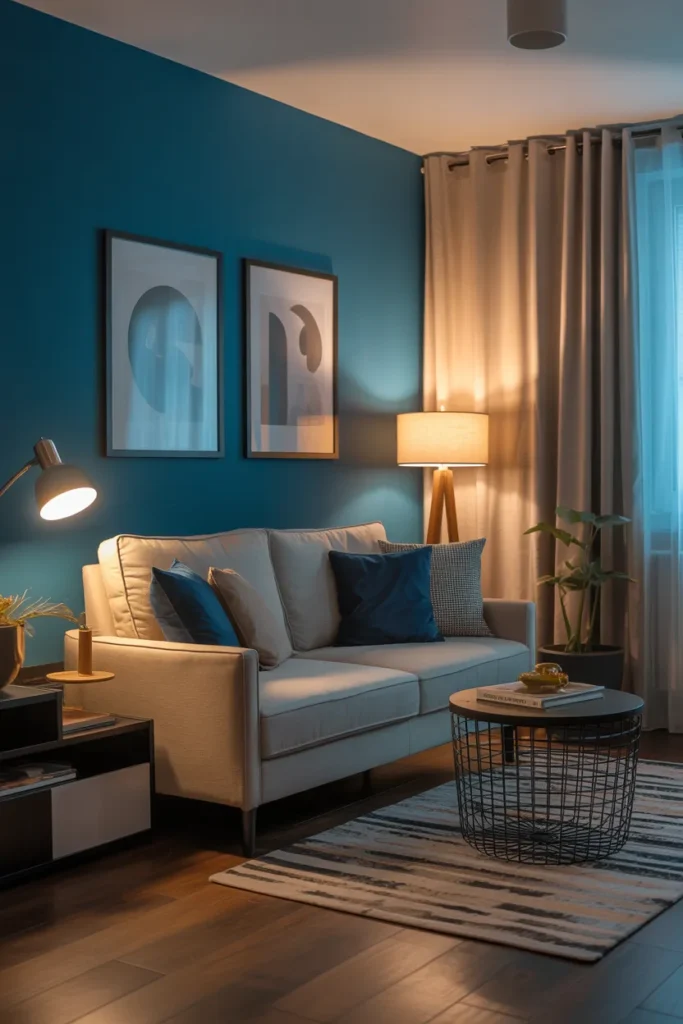
Deep blue highlights add contrast and depth to this compact room. The color remains controlled, preventing the space from feeling closed in. A neutral base ensures balance and comfort.
Warm lighting softens the contrast, keeping the room inviting. The layout remains simple and functional. This approach suits small living rooms seeking visual interest without overwhelming their scale.
Small Living Room With Mixed Soft Colors
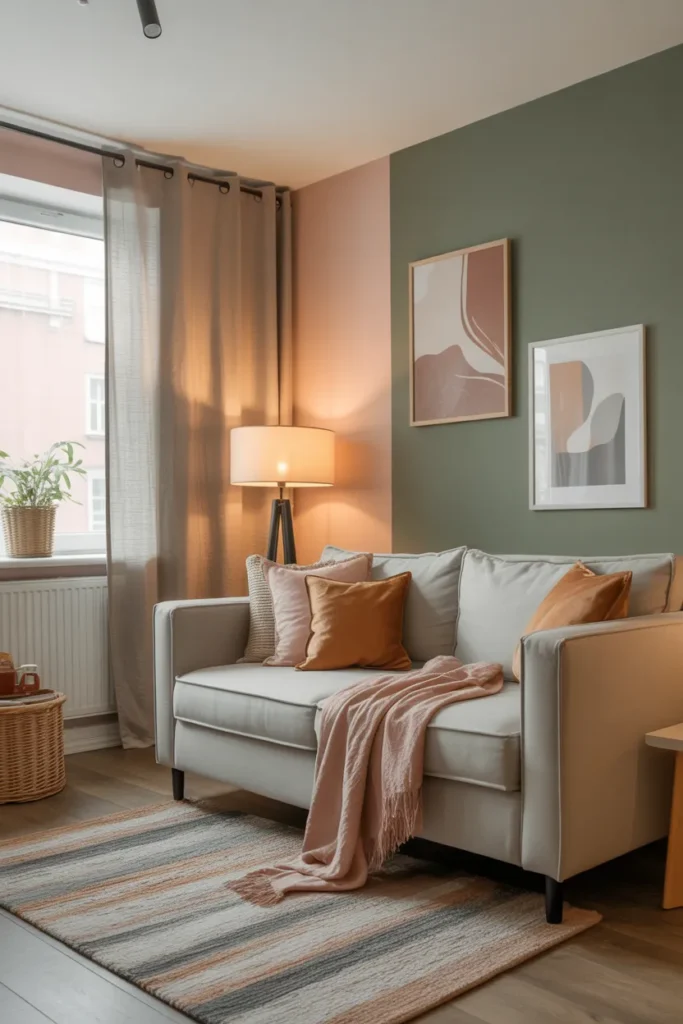
Mixed soft colors create a layered yet calm atmosphere. Each hue appears in moderation, preventing visual overload. The compact sofa anchors the layout while allowing color to shine through accessories.
The palette feels harmonious due to consistent warmth. Lighting enhances cohesion, tying the colors together. This design works well for tiny living rooms that want gentle variety while maintaining a modern, cohesive look.