18 Outdoor Area Ideas for Kids 2026
Designing outdoor play spaces for kids in 2026 feels more exciting than ever, especially with a focus on creativity, color, and flexible layouts. I approach each space as a blend of fun and function, making sure every corner encourages movement, imagination, and comfort. From compact backyards to larger play zones, these ideas focus on vibrant materials, thoughtful layouts, and engaging features that evolve with children while keeping the environment visually appealing and practical.
1. Colorful Climbing Corner
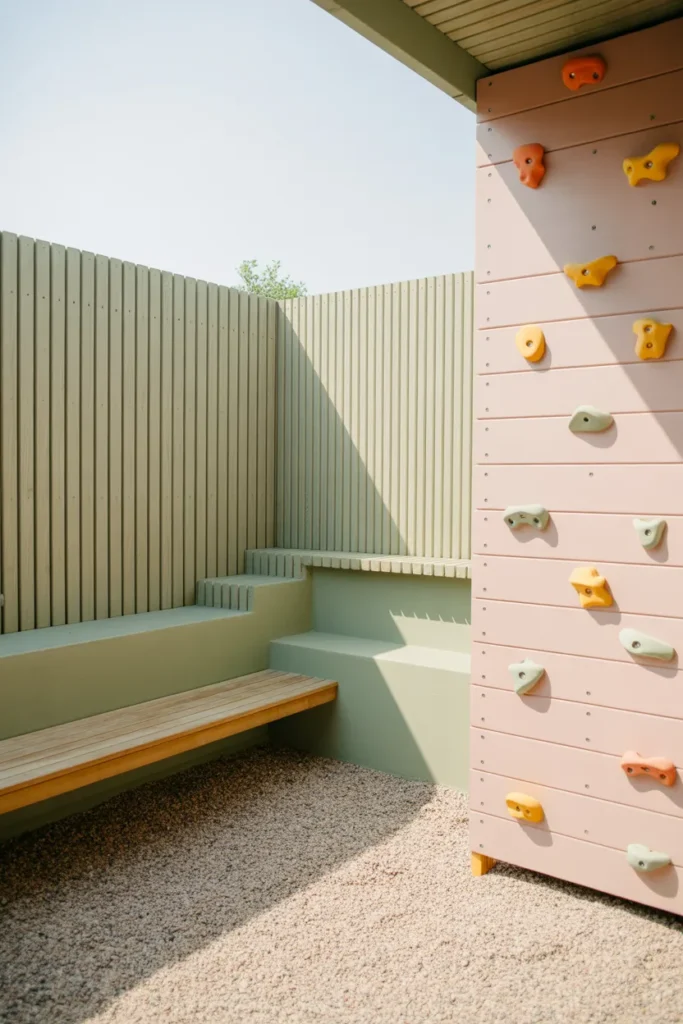
I like to start with a climbing corner that instantly draws attention through color and structure. Using a vertical wall with bright handholds creates both a playful and active zone while keeping the footprint small. The addition of soft flooring underneath ensures safety without compromising aesthetics, making the space feel polished and intentional.
Creating balance in this setup matters just as much as the climbing feature itself. I usually pair it with a simple bench or low shelf to ground the design visually. Soft pastel tones mixed with natural wood textures help maintain a calm yet cheerful environment that encourages kids to explore movement confidently.
2. Swing and Sandbox Combo Zone
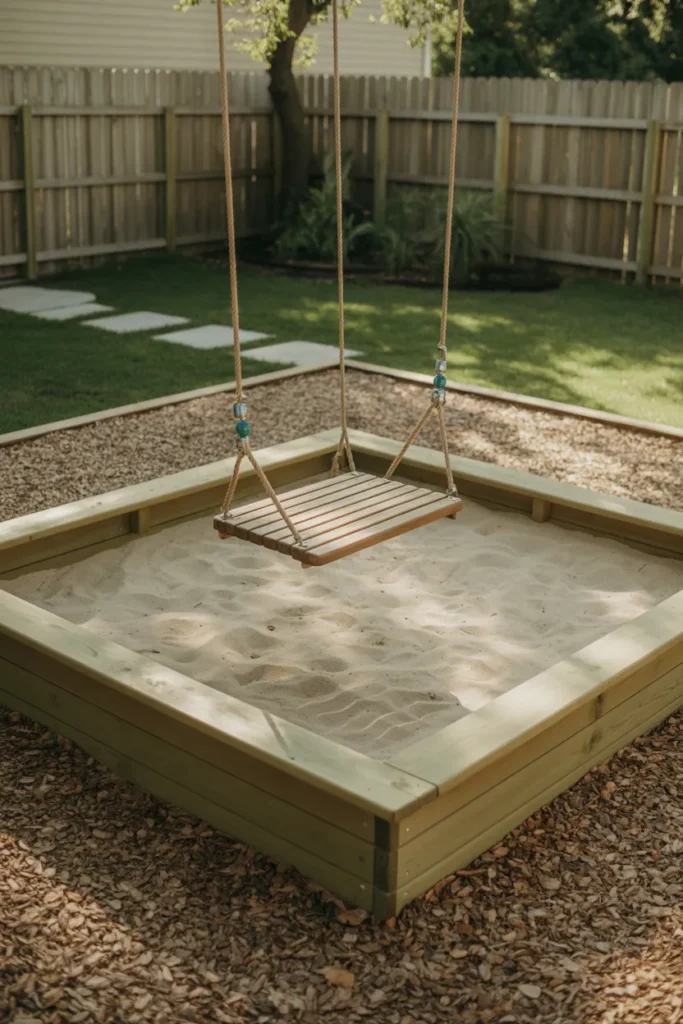
Combining a swing set with a sandbox is one of my favorite ways to maximize engagement in a single area. The gentle motion of the swing paired with the tactile play of sand creates a dynamic experience that keeps children entertained for hours without overwhelming the space visually.
Positioning these elements together also makes supervision easier and the layout more efficient. I prefer using natural wood finishes to keep the design warm and timeless, while surrounding the area with mulch or soft ground covering helps define the play zone clearly and safely.
3. Mini Adventure Playground
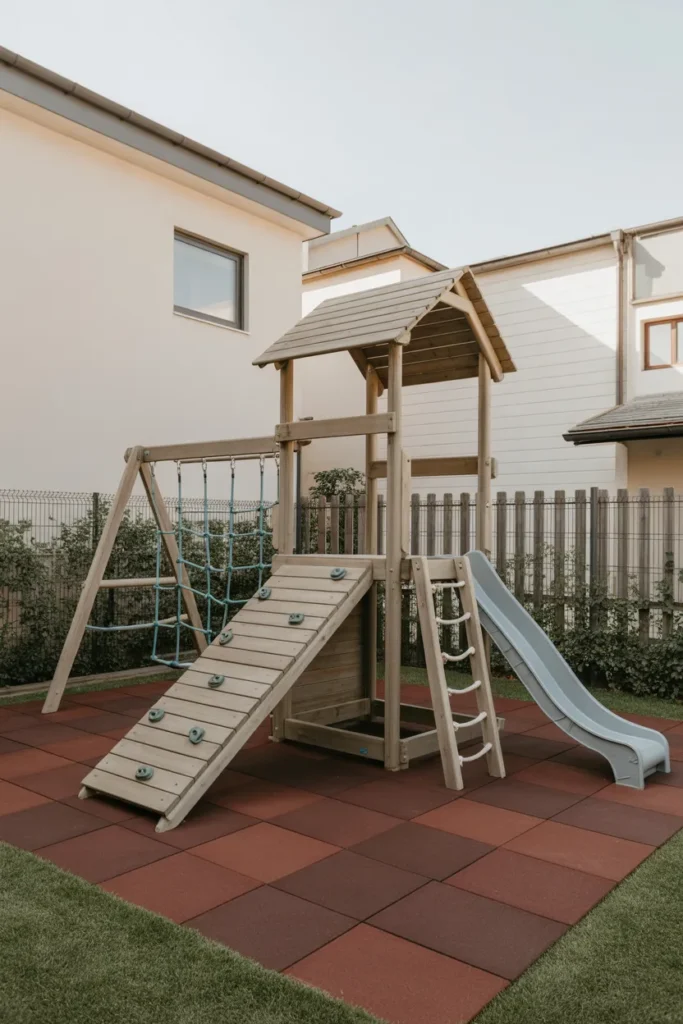
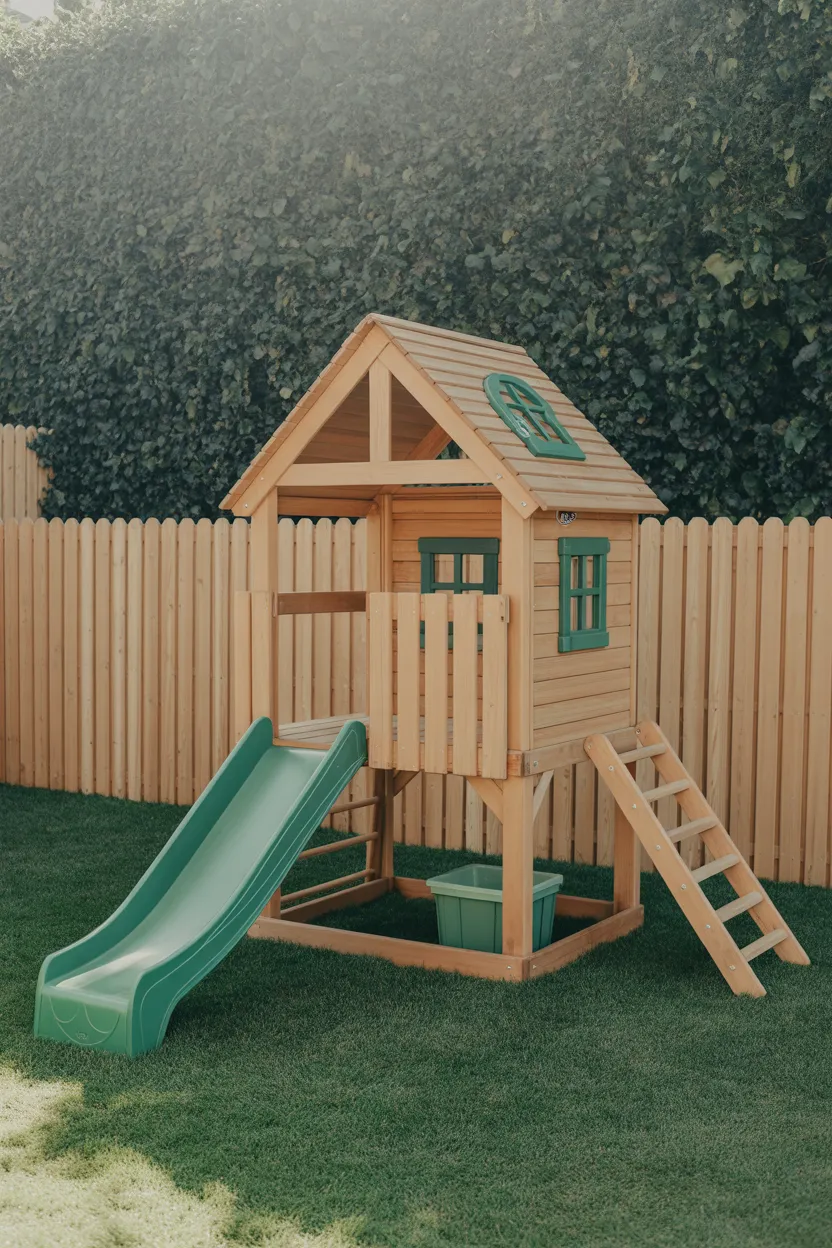
Designing a mini adventure playground allows me to bring multiple activities into one cohesive structure. I often include a climbing ramp, a small platform, and a slide to create variety while keeping the scale appropriate for younger children and limited spaces.
Arranging these features thoughtfully ensures smooth movement from one activity to another. I focus on clean lines and muted base colors, then add subtle pops of color through grips or accessories. This keeps the playground visually appealing without feeling cluttered or overly busy.
4. Creative Chalkboard Play Wall
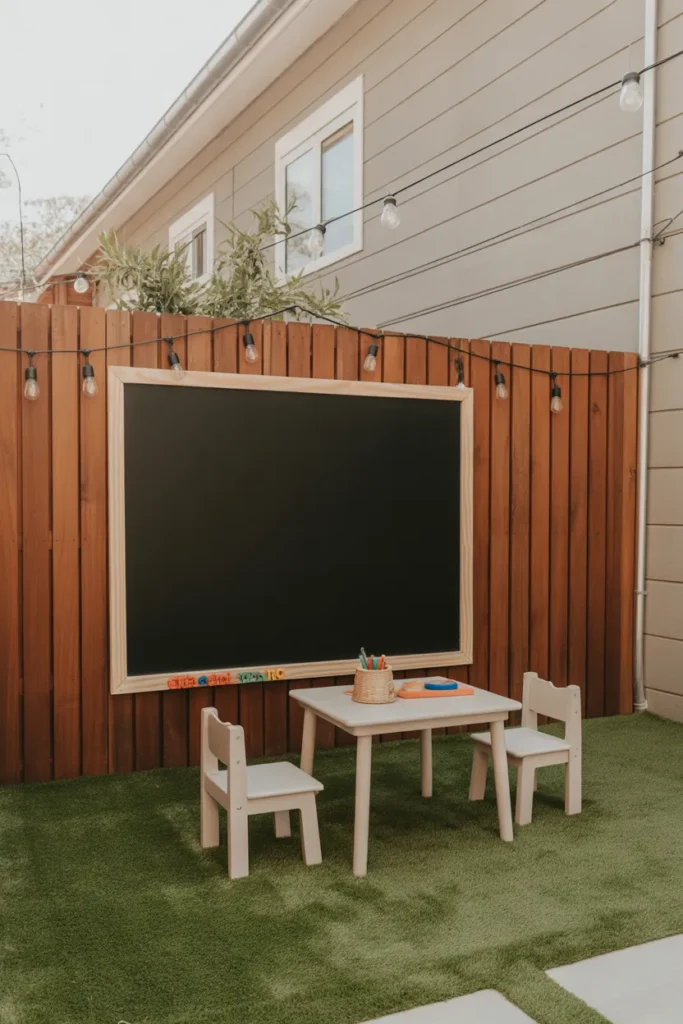
Adding a chalkboard wall introduces a creative outlet that feels both simple and endlessly engaging. I like placing it in a shaded corner where kids can sit comfortably and draw, write, or play games without direct sunlight interfering.
To make the area feel complete, I include a small table and seating arrangement nearby. This setup transforms the space into a mini outdoor studio where imagination can flow freely, while soft lighting elements like string lights add charm and usability into the evening.
5. Nature Path Play Area
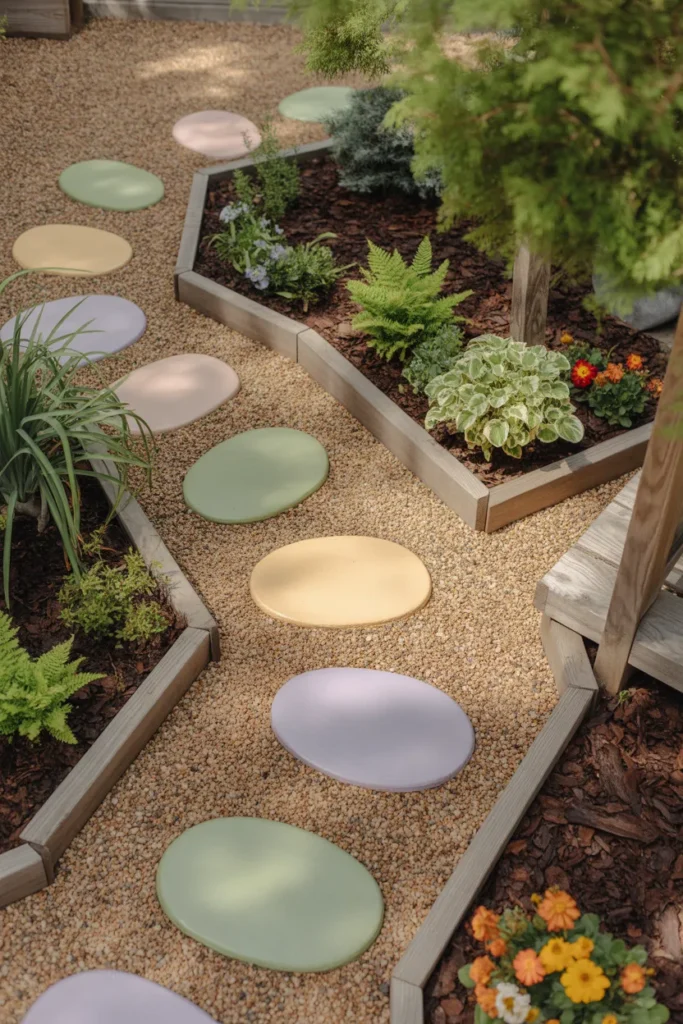
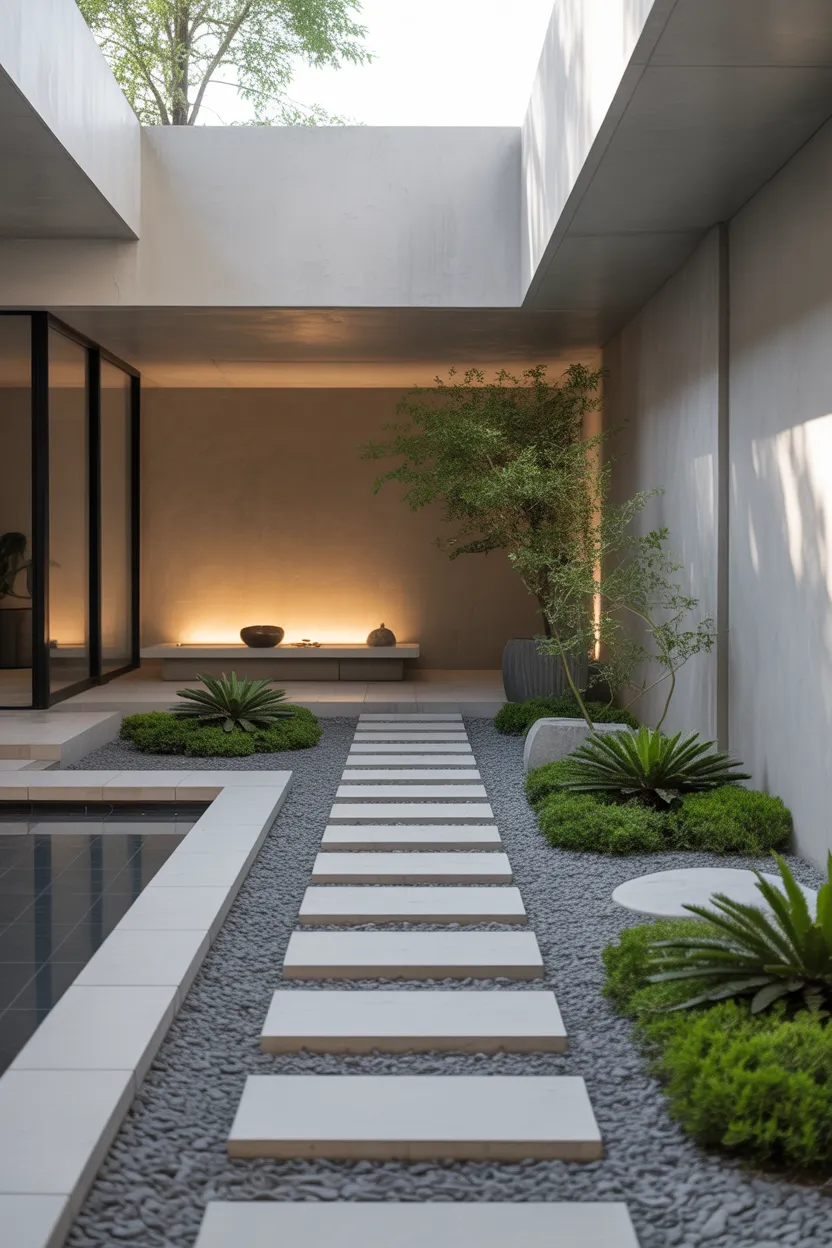
Designing a nature path encourages exploration in a subtle and calming way. I enjoy arranging stepping stones in playful patterns that guide movement while allowing kids to create their own routes and games.
Blending textures like gravel, mulch, and wood enhances the sensory experience without needing bold structures. I focus on keeping the palette earthy with hints of color in the stones, creating a peaceful environment that still feels interactive and engaging.
6. Slide and Platform Play Deck
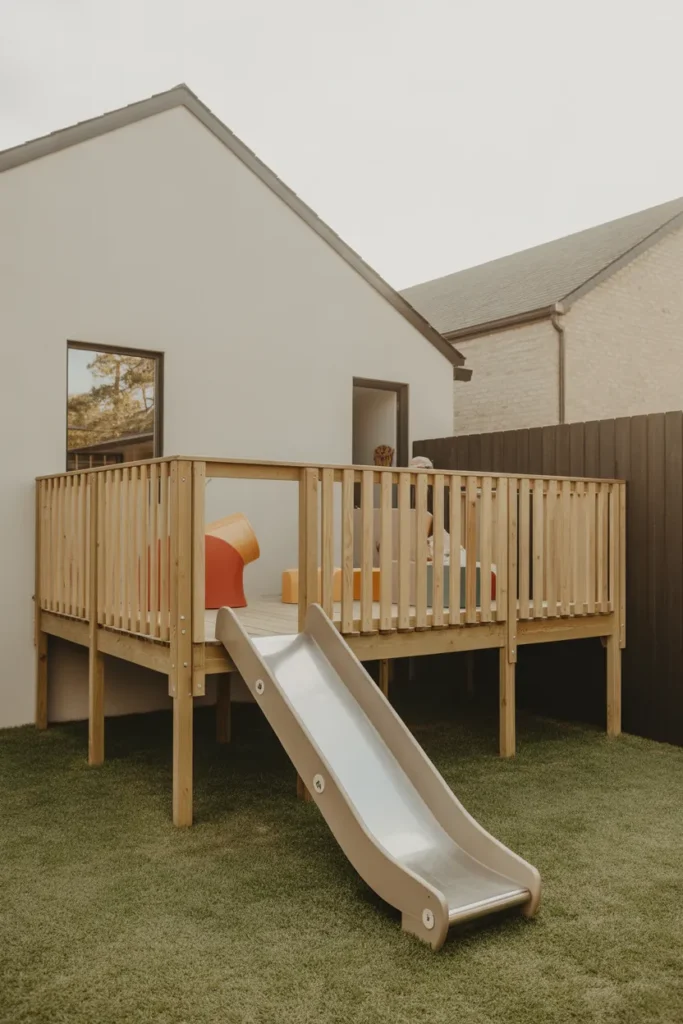
Elevating a portion of the play area with a small deck instantly adds dimension and excitement. I like incorporating a simple slide connected to the platform, giving kids a fun way to move between levels without requiring a large structure.
Keeping the design minimal ensures it blends seamlessly with the rest of the backyard. I often use neutral wood tones and add color through accessories or flooring, maintaining a modern look that still feels lively and child-friendly.
7. Bright Rubber Tile Play Zone
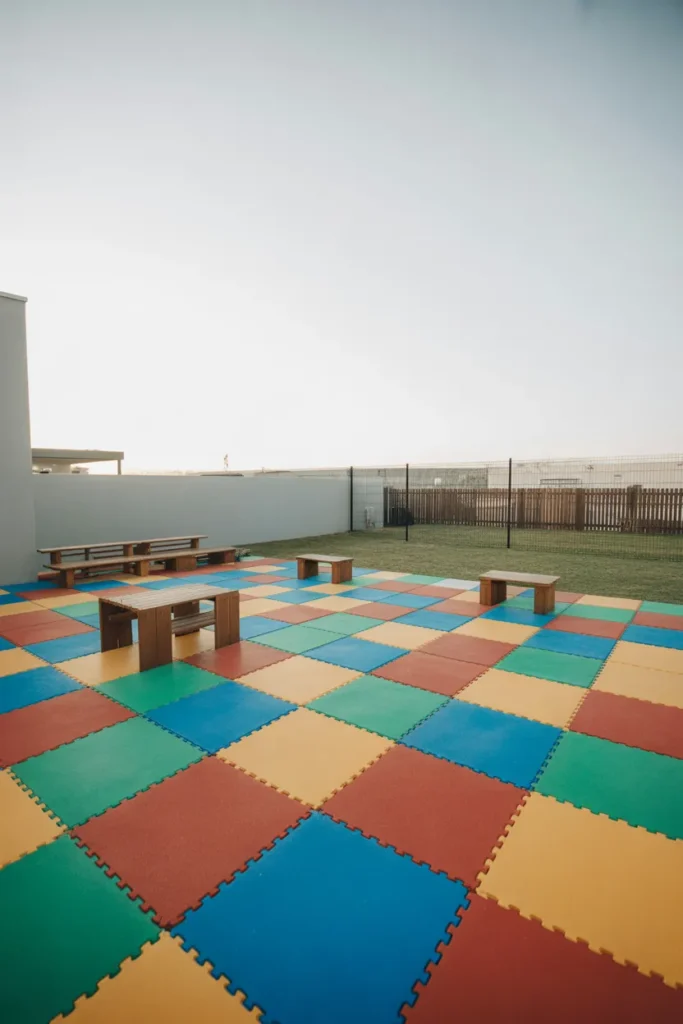
Starting with colorful rubber tiles instantly transforms a simple outdoor area into a lively and safe play zone. I like arranging tiles in geometric patterns to create visual interest while also clearly defining the play space within the yard. The softness underfoot makes it ideal for active play without constant worry.
Adding low wooden structures keeps the area functional without overwhelming the design. I usually balance bold flooring with neutral elements like wood and greenery so the space feels energetic but not chaotic. This combination makes the area feel both modern and welcoming for everyday use.
8. Cozy Garden Play Nook
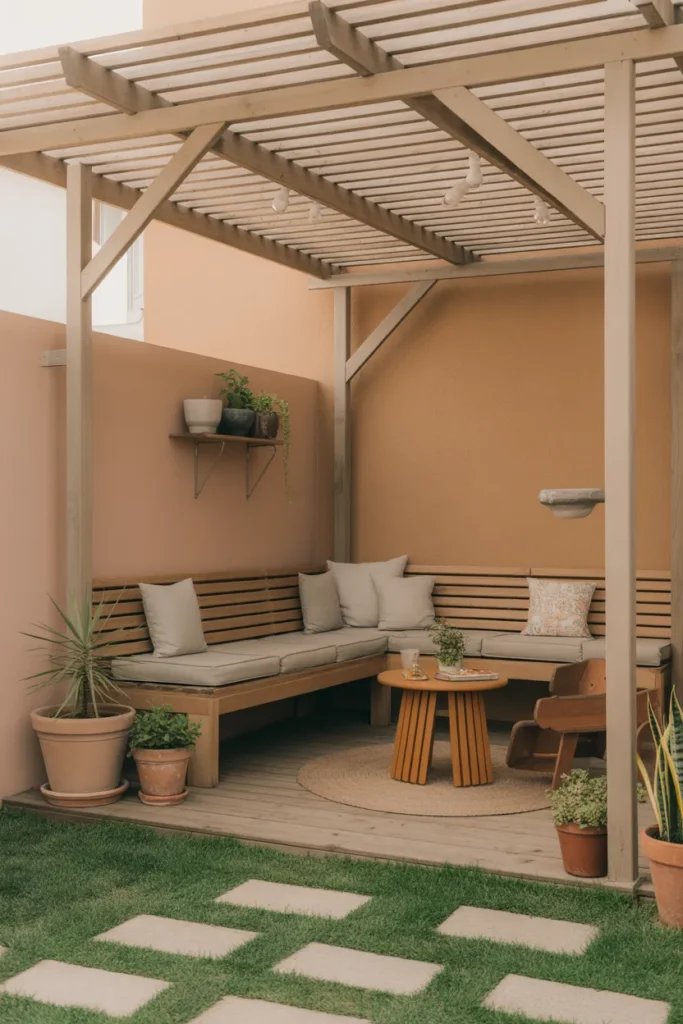
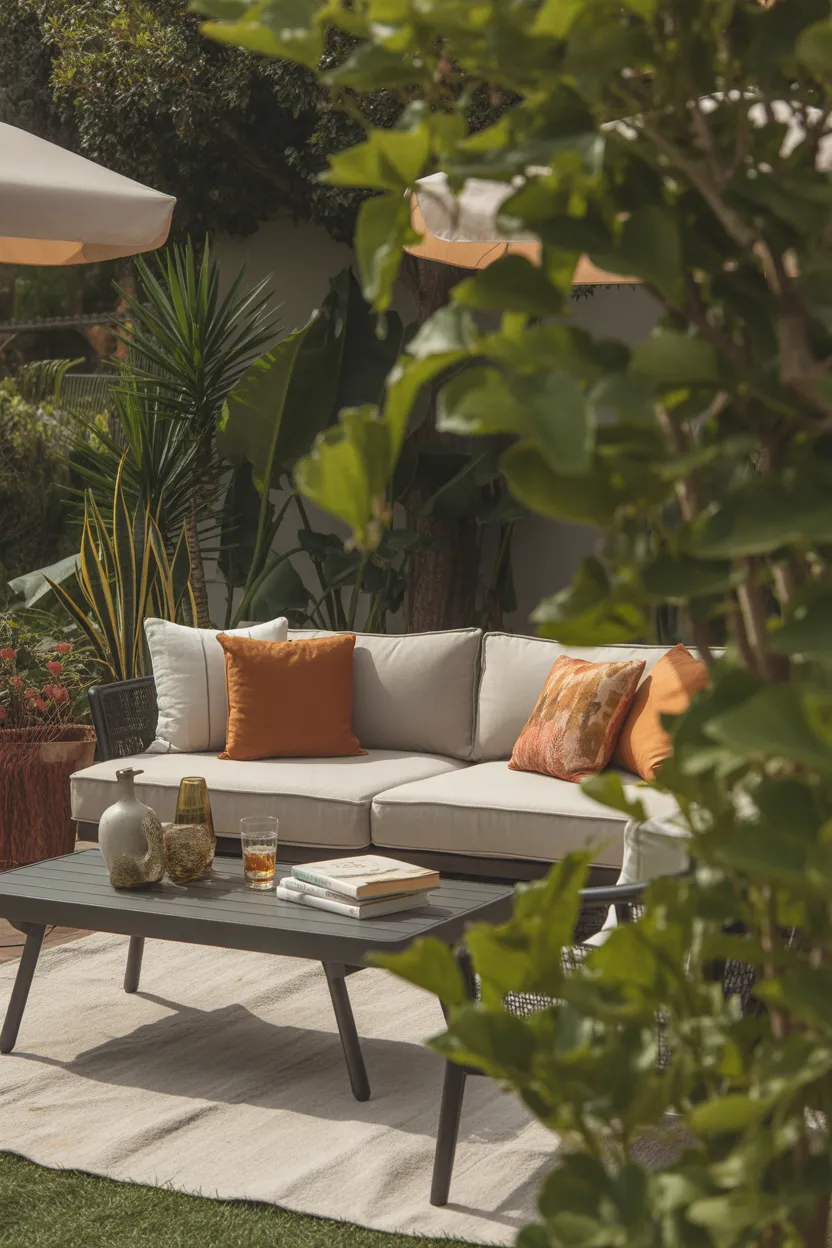
Creating a cozy nook in the garden offers a quiet retreat within an active play area. I often design this space with comfortable seating and a small table, allowing kids to relax, read, or engage in calm activities after more energetic play.
Layering textures like grass, cushions, and wood helps make the nook feel warm and inviting. I also like incorporating plants around the edges to create a gentle sense of enclosure, making the area feel special while still connected to the rest of the outdoor space.
9. Simple Water Play Station
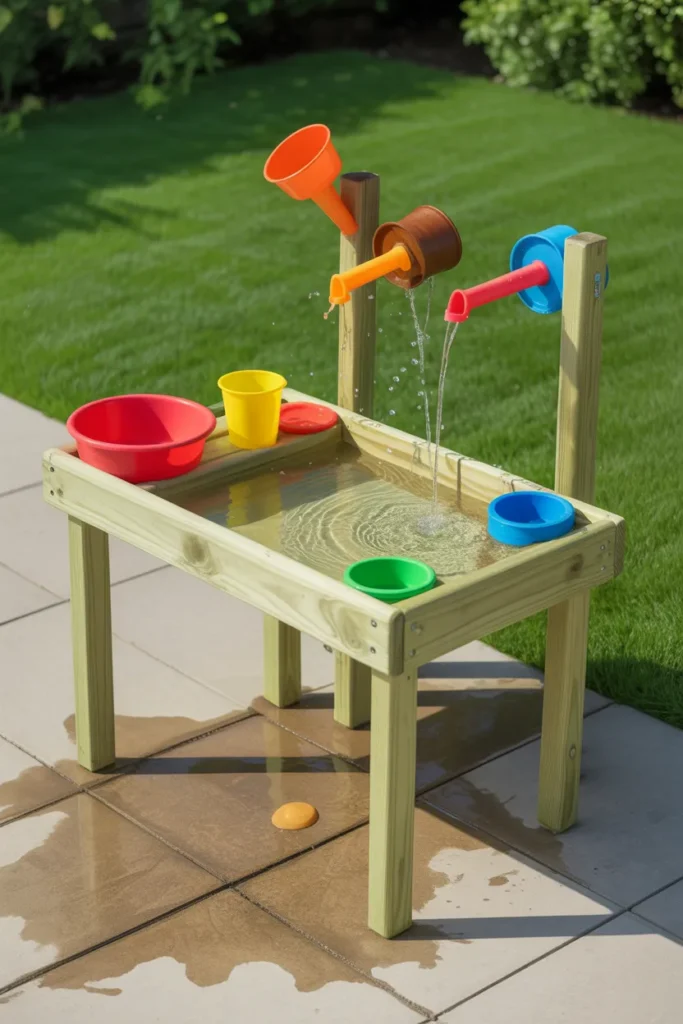
Introducing a water play station adds a refreshing and sensory-rich element to the backyard. I prefer keeping the setup simple with a sturdy table and a basin, allowing kids to experiment with pouring, splashing, and imaginative play.
Placing this feature on a splash-friendly surface helps keep maintenance easy while protecting surrounding areas. I like adding colorful cups and tools to enhance engagement, creating a vibrant and interactive space that feels both playful and practical during warmer days.
10. Wooden Balance Play Area
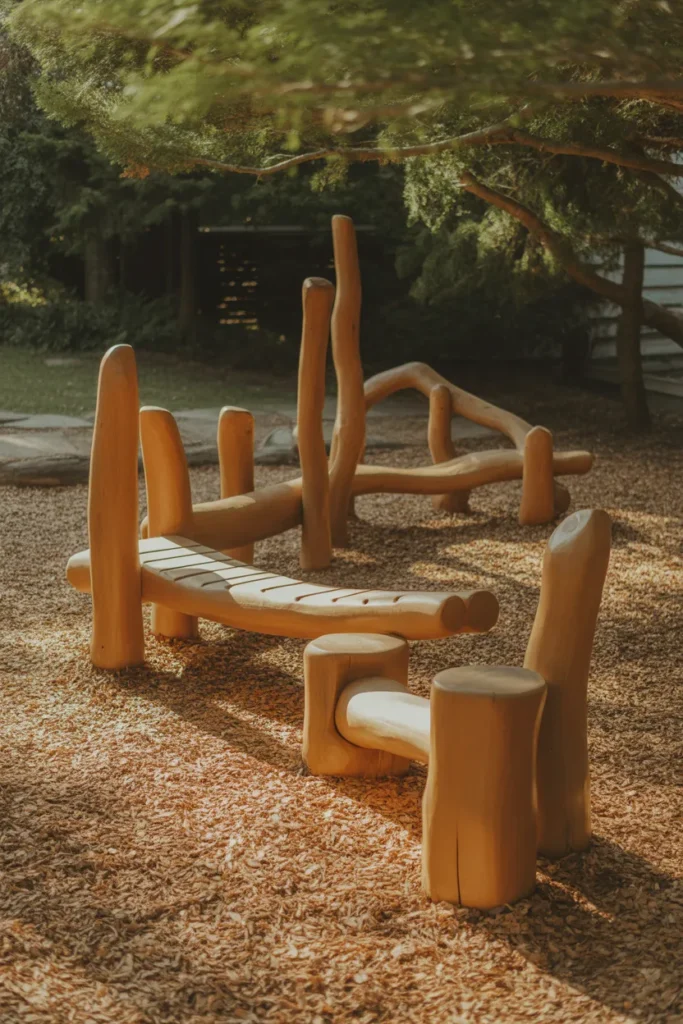
Designing a balance-focused play area supports physical development in a subtle and engaging way. I like arranging wooden beams and stepping logs at varying heights to encourage movement while keeping everything low and safe.
Maintaining a natural aesthetic helps the area blend beautifully with the outdoor environment. I often use soft ground coverings like mulch or rubber underneath, ensuring comfort and safety while preserving the clean and minimal look of the design.
11. Playhouse with Climbing Side
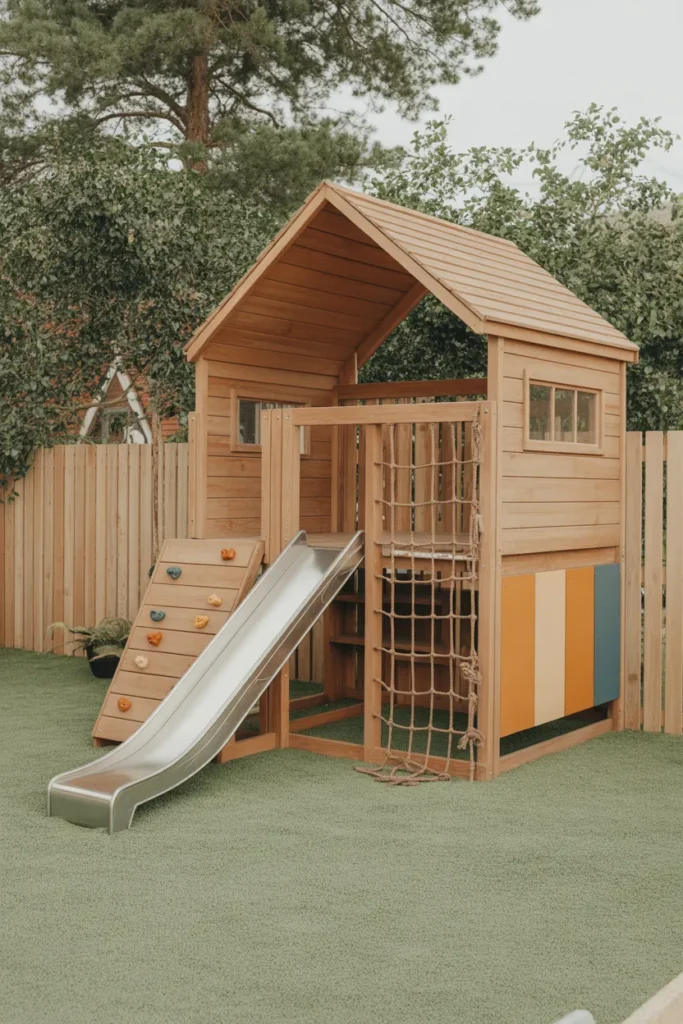
Adding a playhouse with a climbing feature combines imaginative and physical play in one structure. I like designing the playhouse to feel simple yet inviting, with just enough detail to spark creativity without making it overly themed.
Including a climbing wall on the side enhances the functionality of the space. I usually keep the colors balanced, using natural wood as a base and introducing playful tones through climbing holds or accessories to maintain a cohesive and modern look.
12. Open Lawn Play Space with Activity Corners
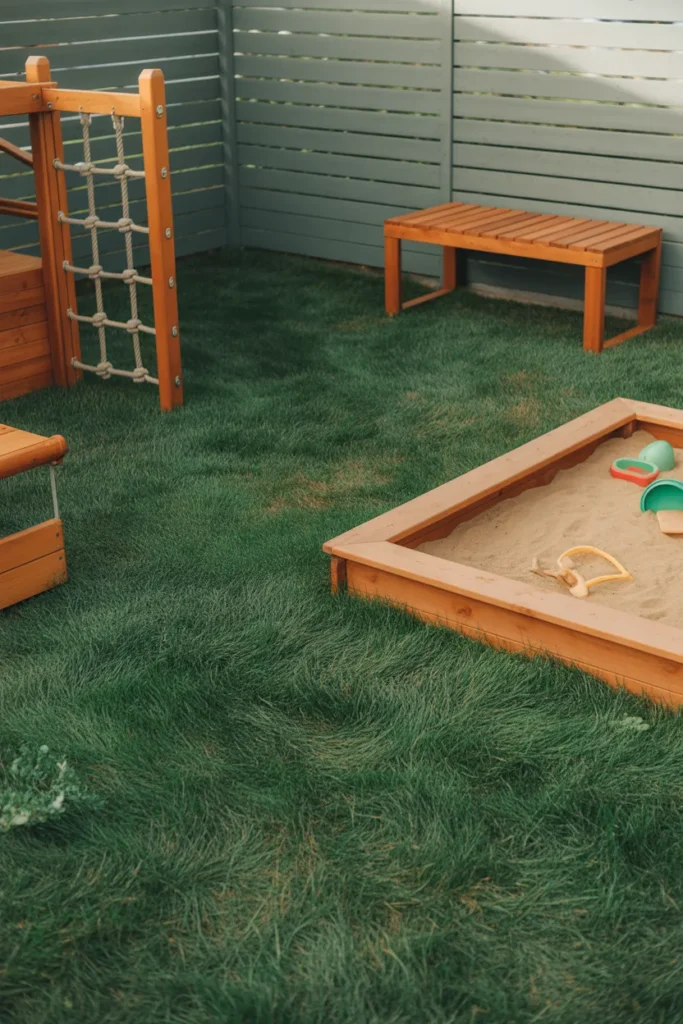
An open lawn with defined activity corners allows for flexibility and easy movement. I enjoy dividing the space into small zones, each offering a different type of play while keeping the center open for running and free movement.
Positioning features along the edges helps maintain a clean and organized layout. I typically include a mix of active and quiet elements, ensuring the space feels balanced and adaptable for different moods and activities throughout the day.
13. Raised Sandbox with Seating Edges
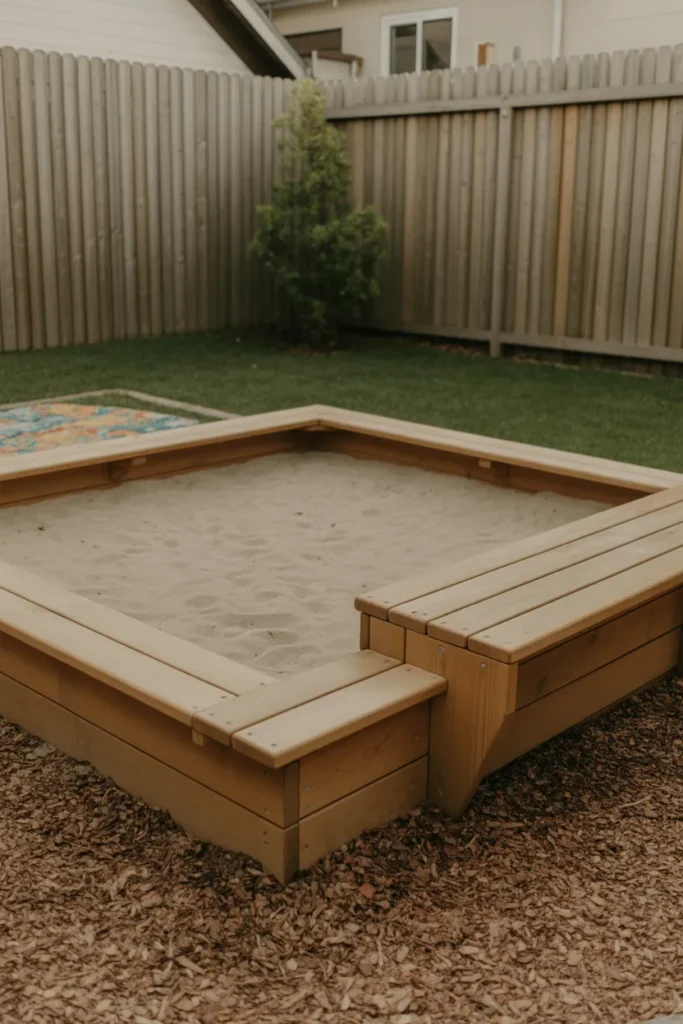
Designing a raised sandbox adds both structure and comfort to a classic play feature. I like incorporating wide wooden edges that double as seating, making it easy for kids to sit, play, and interact without needing additional furniture nearby.
Keeping the sandbox slightly elevated helps define the area clearly while improving drainage and cleanliness. I often surround it with mulch or soft ground cover to create a cohesive transition, ensuring the entire space feels intentional, safe, and visually balanced.
14. Rope Climbing Frame Zone
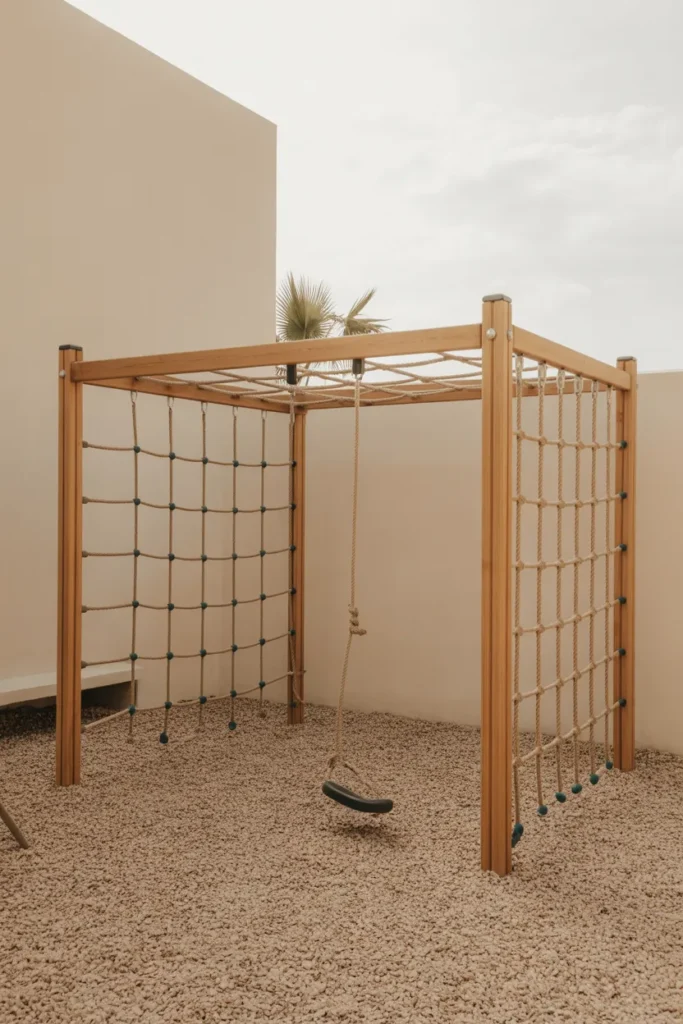
Introducing a rope climbing frame creates a lightweight yet highly engaging play feature. I prefer using open wooden frames combined with strong rope nets, allowing kids to climb freely while maintaining visibility and airflow throughout the space.
Balancing this feature with soft flooring underneath ensures safety without compromising style. I usually keep the surrounding design minimal so the climbing structure stands out, creating a focal point that feels both modern and inviting.
15. Mini Picnic and Play Area
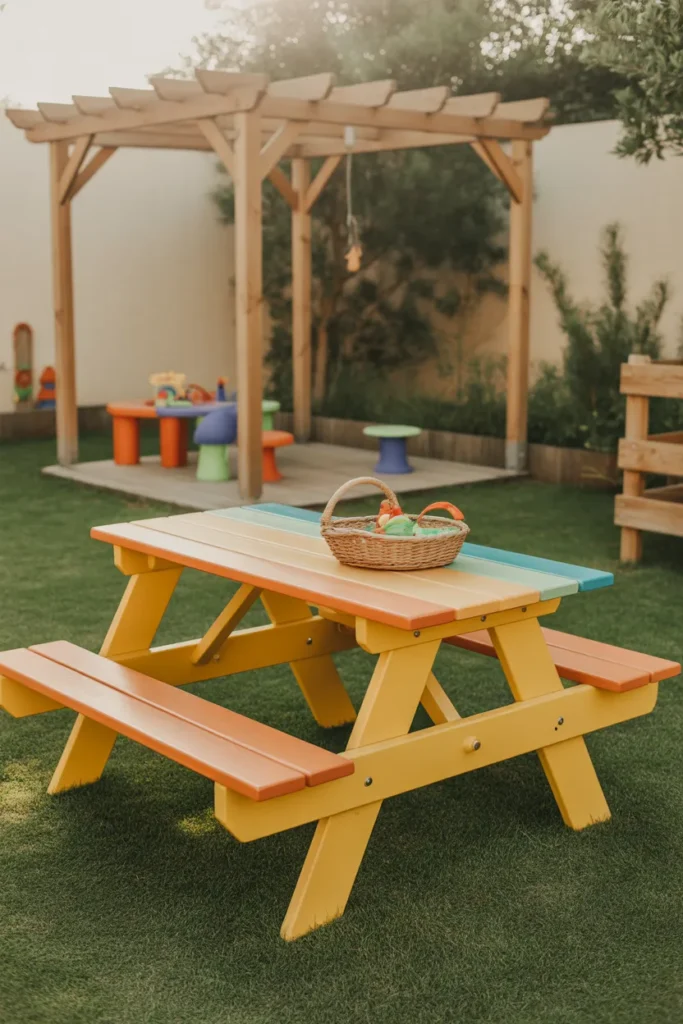
Adding a mini picnic area brings a social and relaxing element into the play space. I like choosing child-sized tables in soft, cheerful colors to create a welcoming spot for snacks, crafts, or group activities.
Positioning this area near active play features helps create a natural flow between movement and rest. I often include partial shade to make the space usable throughout the day, ensuring it feels comfortable and thoughtfully integrated into the overall layout.
16. Stepping Stone Activity Path
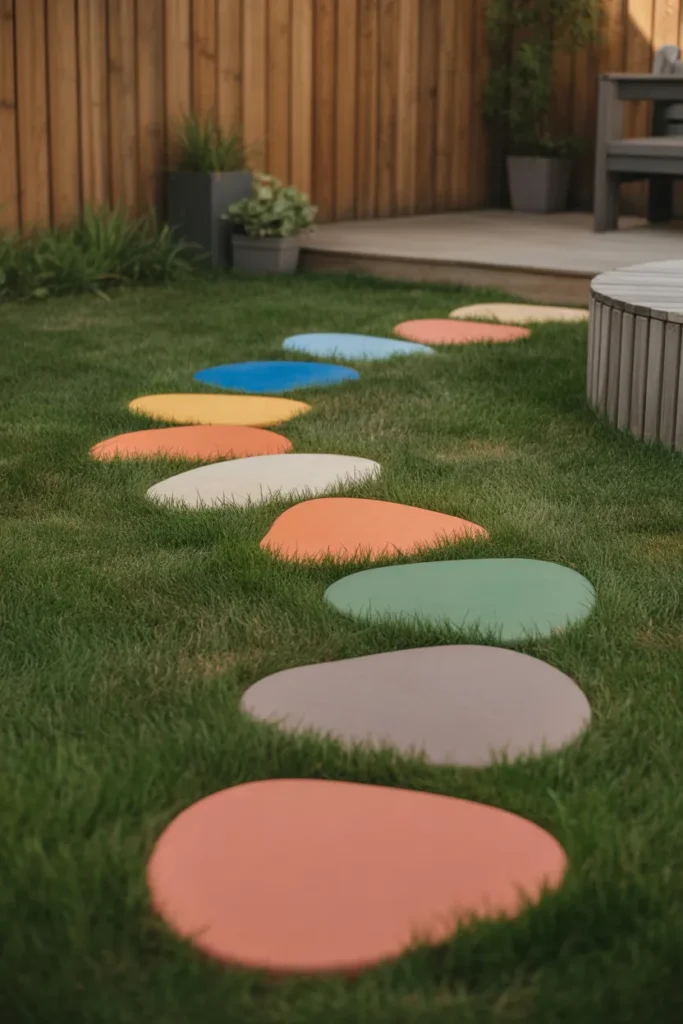
Designing a stepping stone path turns simple movement into an engaging activity. I enjoy arranging stones in irregular patterns that encourage jumping, balancing, and creative navigation across the yard.
Using a mix of colors adds a playful touch without overwhelming the design. I usually keep the surrounding area simple, allowing the path to stand out as both a functional walkway and a fun interactive feature within the space.
17. Low Slide and Tunnel Combo
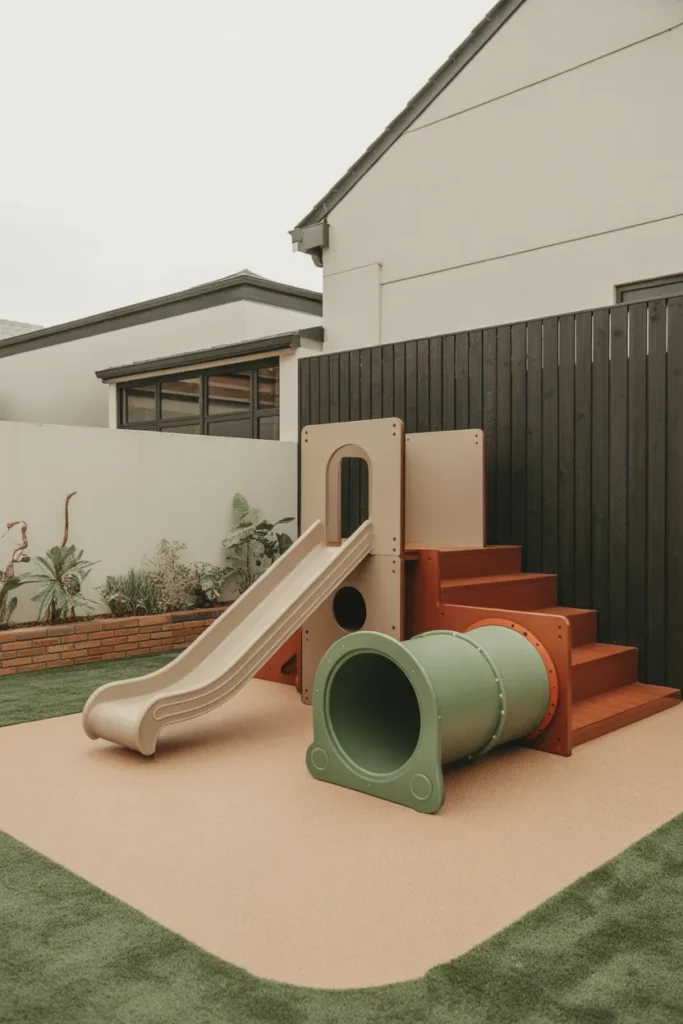
Combining a low slide with a crawl tunnel creates a fun and continuous play experience. I like keeping the structure close to the ground, making it suitable for younger children while still offering excitement and variety.
Arranging these elements in a compact layout helps maximize smaller spaces. I typically use subtle colors for the main structure and add brighter accents through details, ensuring the area feels lively while maintaining a clean and modern aesthetic.
18. Shaded Play Area with Canopy
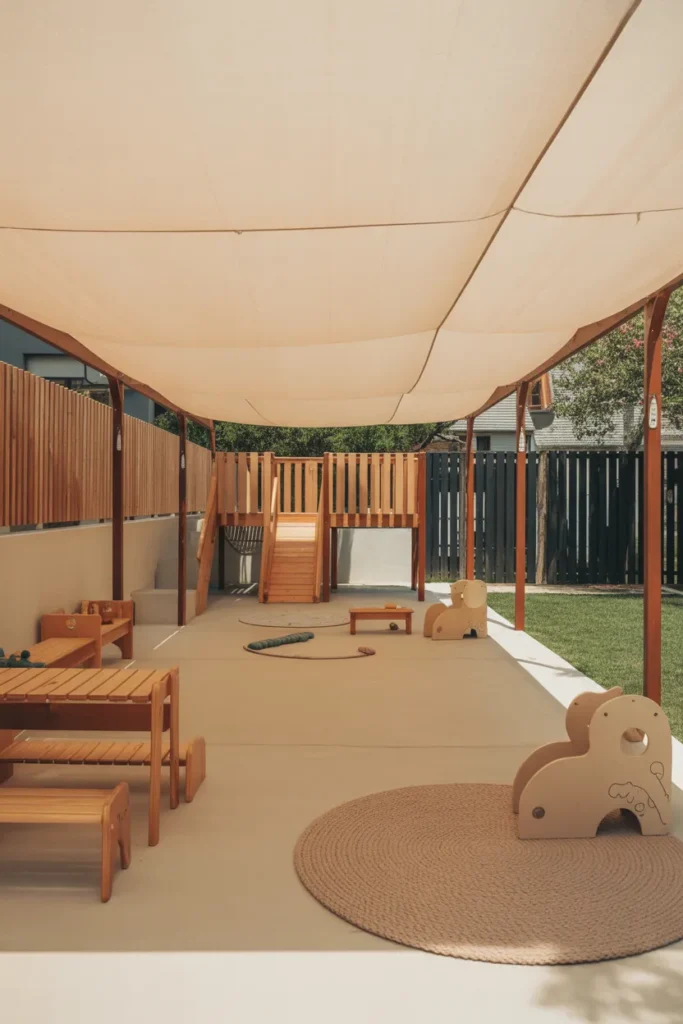
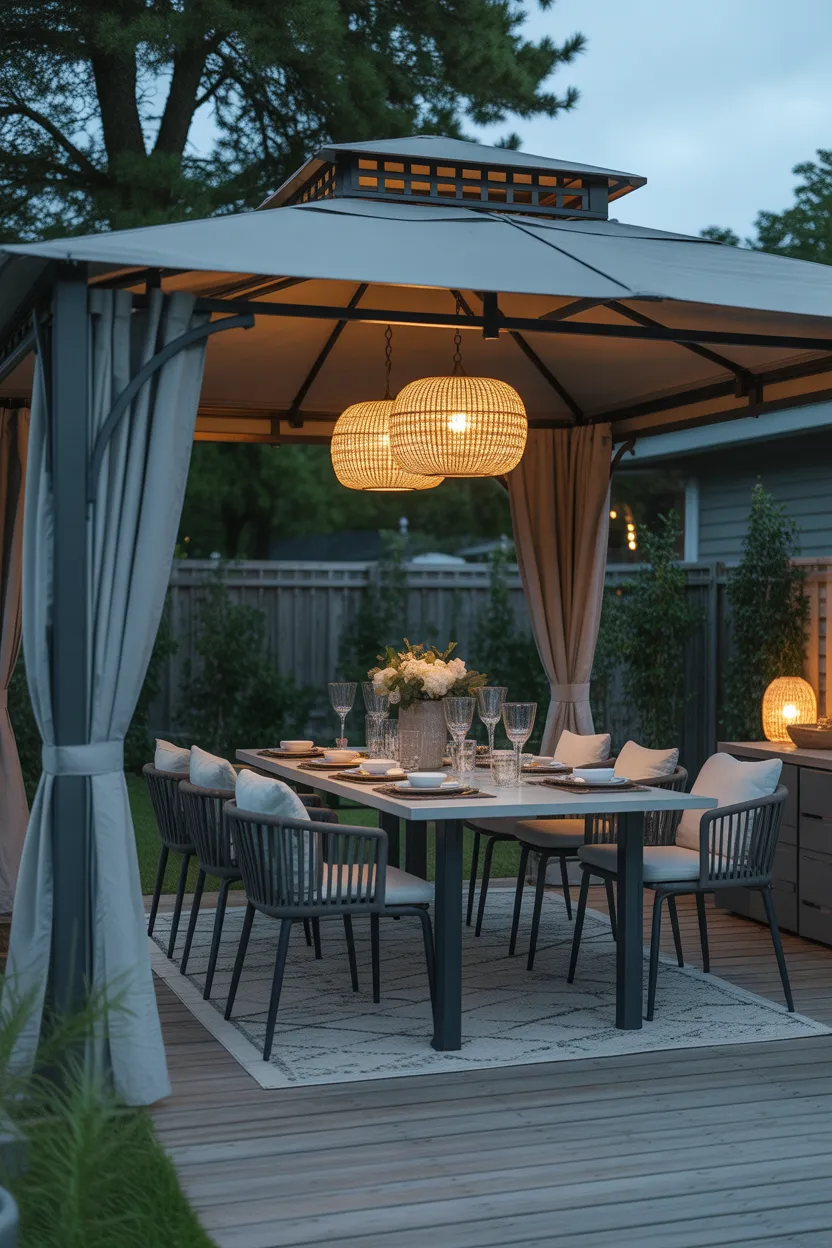
Adding a canopy transforms any play area into a more comfortable and usable space. I like using light fabric that allows filtered sunlight to pass through, creating a soft and inviting atmosphere underneath.
Positioning key play features within this shaded zone ensures kids can play longer without discomfort. I often combine natural wood elements with gentle color accents, creating a cohesive design that feels both practical and visually soothing.