21 Garden Wood Fence Ideas 2026
A thoughtfully designed wood fence can completely transform how a garden feels, adding warmth, structure, and personality while still blending naturally with outdoor surroundings. I like using wood because it offers endless flexibility, whether creating cozy enclosures, decorative backdrops, or functional dividers. These ideas focus on colorful, lively, and realistic garden settings inspired by charming backyard scenes, helping shape outdoor spaces that feel inviting, creative, and full of life.
1. Painted Slat Fence with Hanging Planters
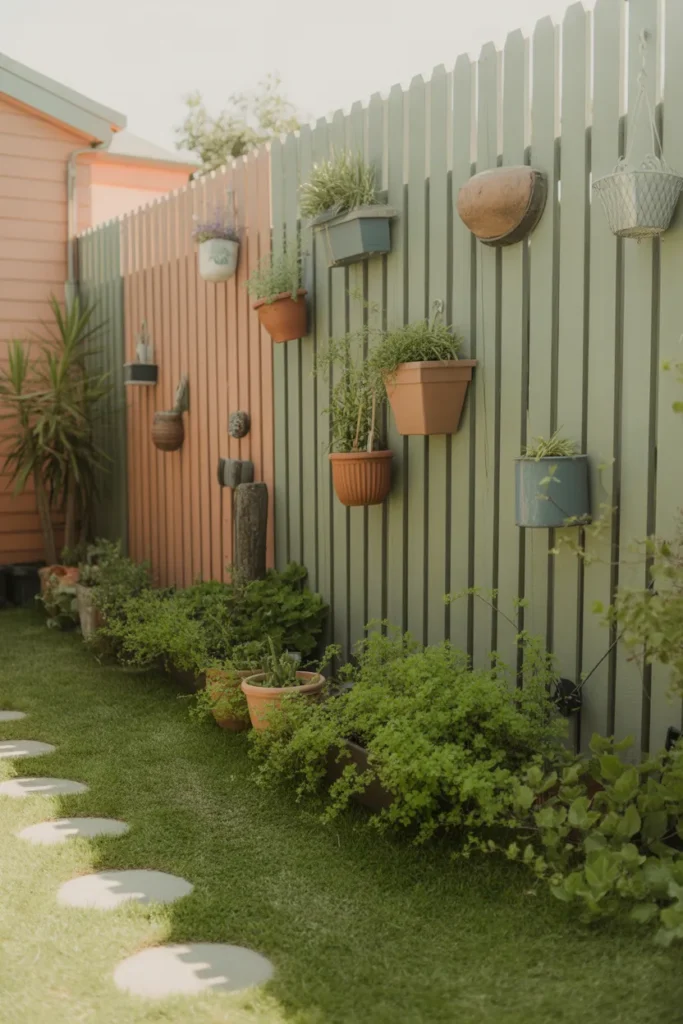
A soft color palette instantly changes the mood of a simple slat fence. I prefer using muted greens and dusty blues because they blend with plants while still adding subtle personality. Hanging planters at different heights create movement and make the fence feel alive, especially when filled with trailing greenery or small flowering plants that soften the structure.
Adding stepping stones along the base creates a natural flow through the space and draws attention to the fence without overwhelming it. I find that mixing terracotta pots with ceramic ones adds visual interest while keeping the look grounded. This setup works beautifully in smaller gardens where vertical space becomes an important design feature.
2. Rustic Gate Fence with Climbing Vines
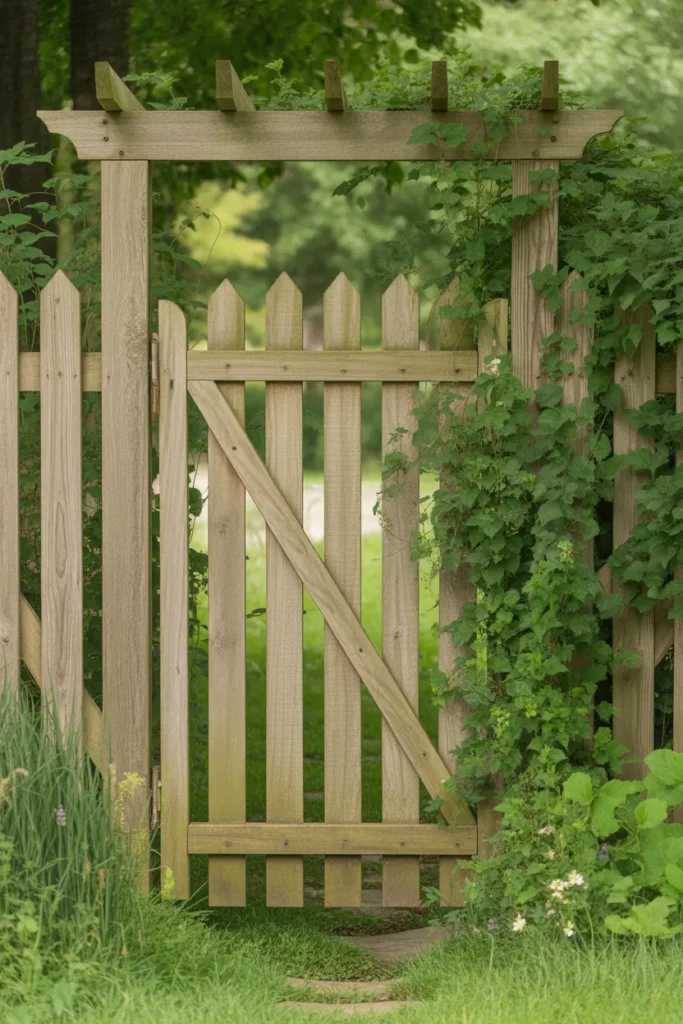
A rustic gate adds instant charm, especially when paired with natural wood tones. I like letting the wood age slightly instead of over-finishing it, allowing textures to stand out. Climbing vines growing organically around the gate bring softness and make the structure feel integrated into the garden rather than placed within it.
Surrounding the fence with wildflowers and soft grass enhances the relaxed, lived-in feeling. I usually guide vines early on, then let them grow freely for a natural look. This idea creates a welcoming entrance that feels like stepping into a peaceful retreat every time the gate opens.
3. Light Wood Fence with Built-In Garden Beds
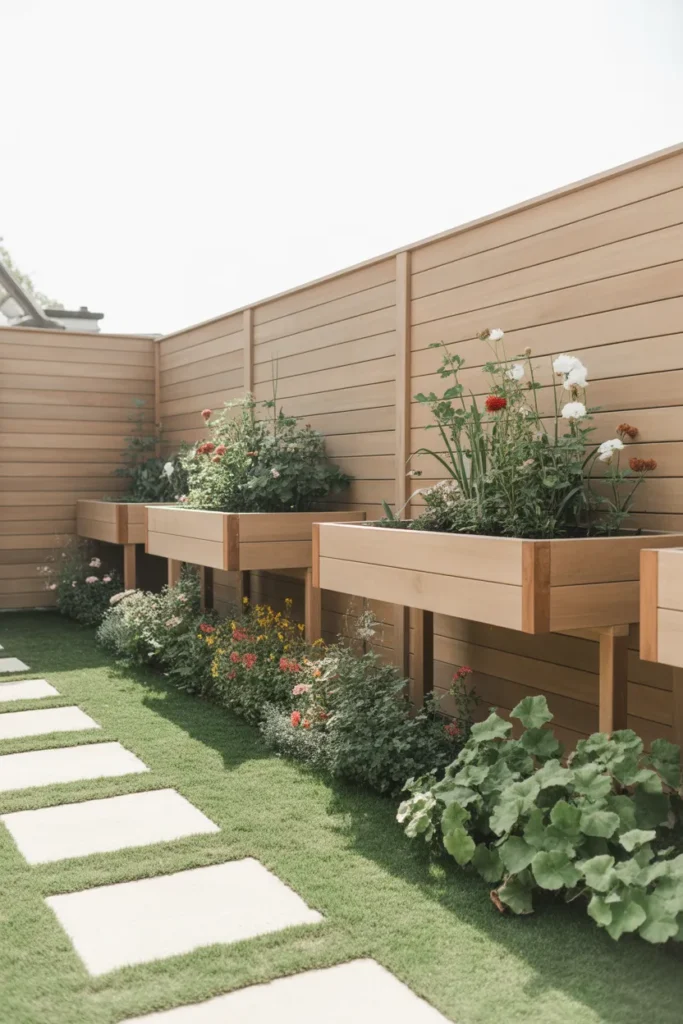
Combining fencing with built-in garden beds maximizes both function and beauty. I enjoy using light-toned wood for a clean, modern appearance that brightens the space. The integrated beds keep plants organized and make maintenance easier while adding layers of color directly against the fence.
A structured pathway between the beds creates balance and keeps the design from feeling crowded. I usually mix flowers with edible plants for a lively, productive space. This setup works especially well in narrow gardens where every inch needs to serve a purpose without sacrificing style.
4. Decorative Wood Fence with Mounted Garden Art
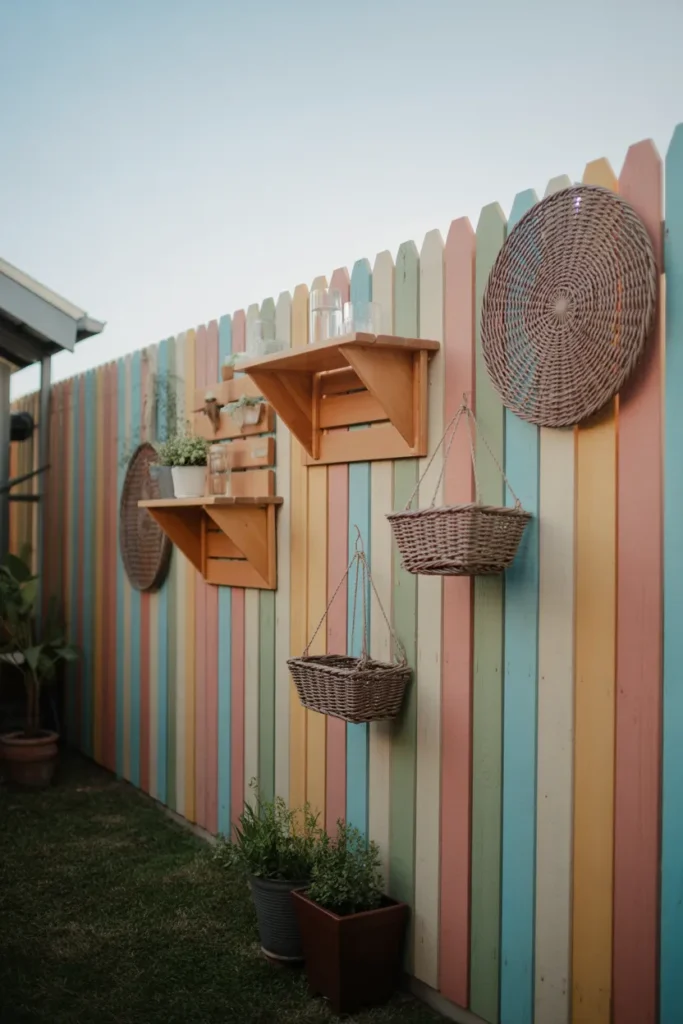
Turning a fence into a decorative wall adds personality instantly. I like using painted panels in soft pastel shades to create a cheerful backdrop without overwhelming the garden. Mounted elements like small shelves and hanging decor bring depth and make the fence feel curated rather than plain.
Layering different textures such as woven accents and wooden pieces keeps the design visually interesting. I often mix functional and decorative items so the space feels both practical and expressive. This idea works well when the goal is to make the garden feel like an extension of indoor living.
5. Pallet Wood Fence with Vertical Herb Garden
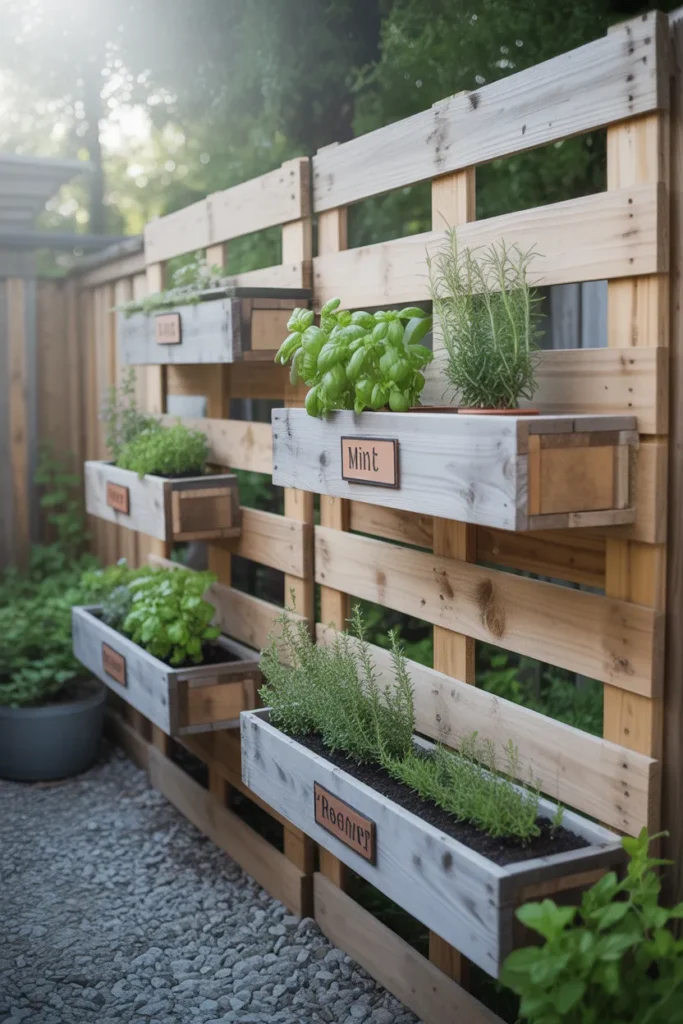
Using pallets creates an affordable and sustainable fence solution. I like keeping the wood natural to highlight its texture while adding vertical herb planters for functionality. Growing herbs directly on the fence makes the space feel interactive and useful without requiring extra ground space.
Labeling each herb adds a charming, organized touch while making it easier to maintain. I often place the fence near a pathway so the plants are easily accessible. This idea is perfect for compact gardens where maximizing vertical space can completely change usability.
6. Horizontal Wood Fence with Warm Lighting
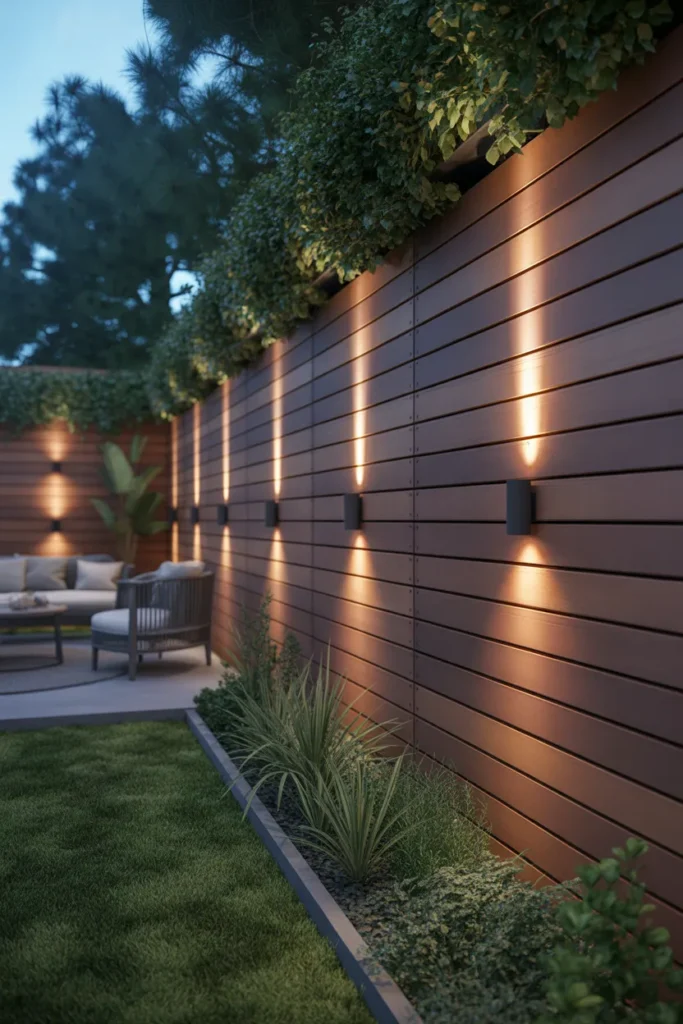
Lighting can completely transform how a fence looks after sunset. I prefer horizontal wood panels for a sleek, modern feel, then add warm lighting to highlight the natural grain. The glow creates depth and turns the fence into a feature rather than just a boundary.
Placing a small seating area nearby enhances the atmosphere and encourages evening use of the garden. I find that warm lighting works best with darker wood tones, creating a cozy, inviting vibe. This idea is ideal for anyone wanting a relaxing outdoor space that feels complete both day and night.
7. Classic Picket Fence with Colorful Flower Border
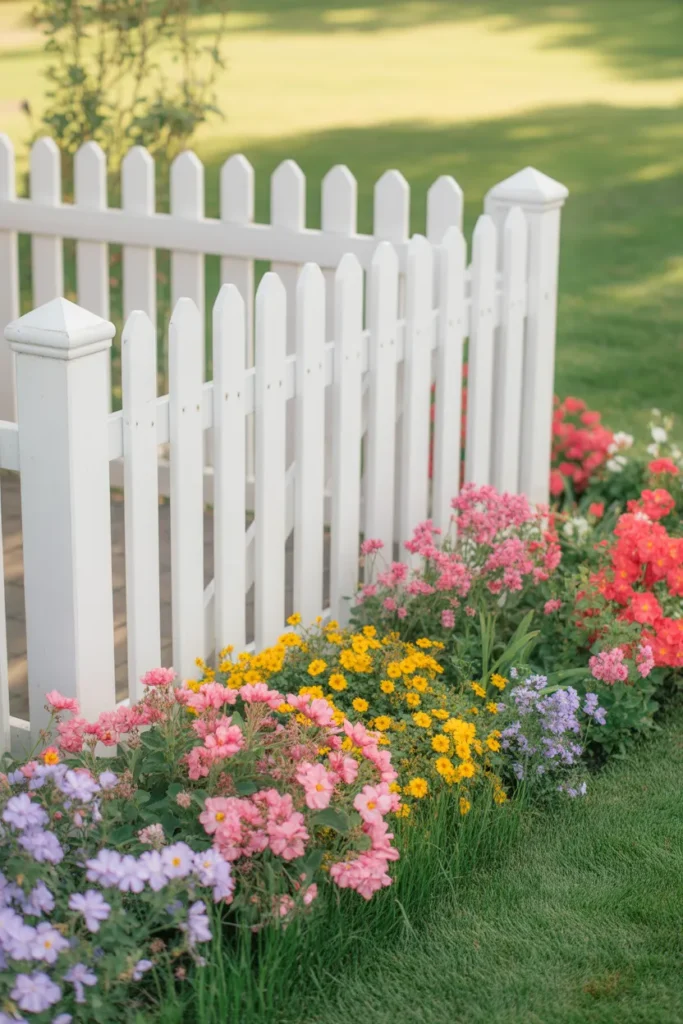
A classic picket fence never loses its charm. I enjoy pairing crisp white wood with a vibrant flower border to create contrast and energy. The bright blooms bring life to the structure and make the garden feel welcoming from every angle.
Keeping the lawn neat helps the colors stand out even more. I usually mix different flower heights for a layered effect that feels natural rather than rigid. This setup works beautifully for front gardens or spaces where a friendly, open atmosphere is important.
8. Wood and Wire Fence with Green Backdrop
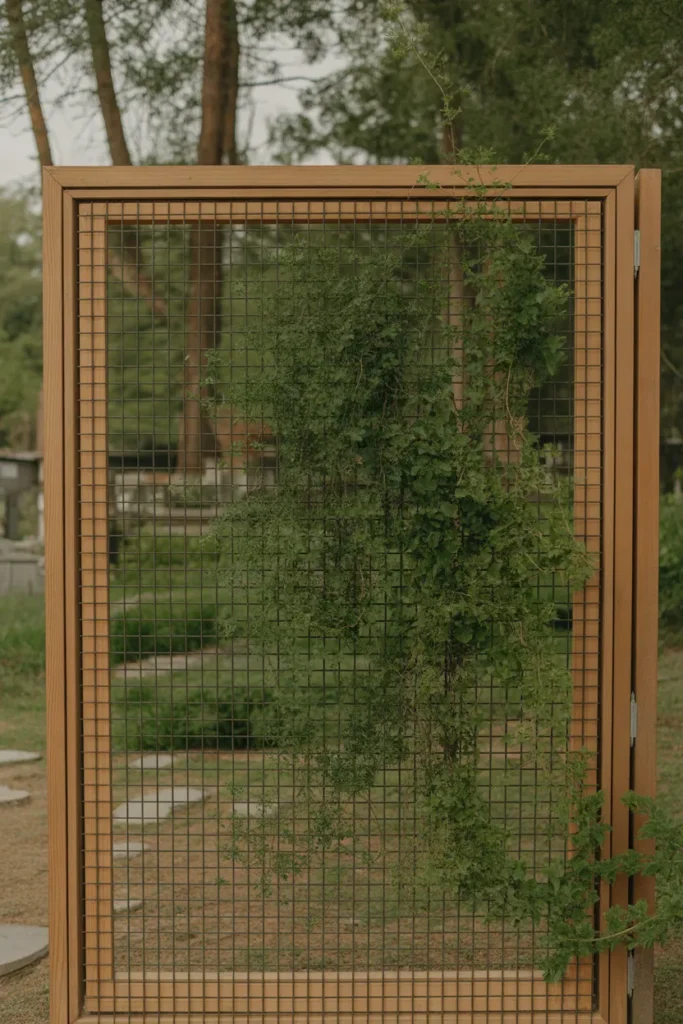
Combining wood with wire creates a lightweight yet structured design. I like using dark wire panels because they visually disappear once plants begin to grow over them. The wood frame keeps everything grounded while maintaining a natural appearance.
Allowing greenery to partially cover the wire softens the look and adds depth. I often place this style near tree-lined areas where it blends seamlessly into the surroundings. This idea is perfect for creating boundaries without blocking views or natural light.
9. Compact Fence with Stepping Stone Path
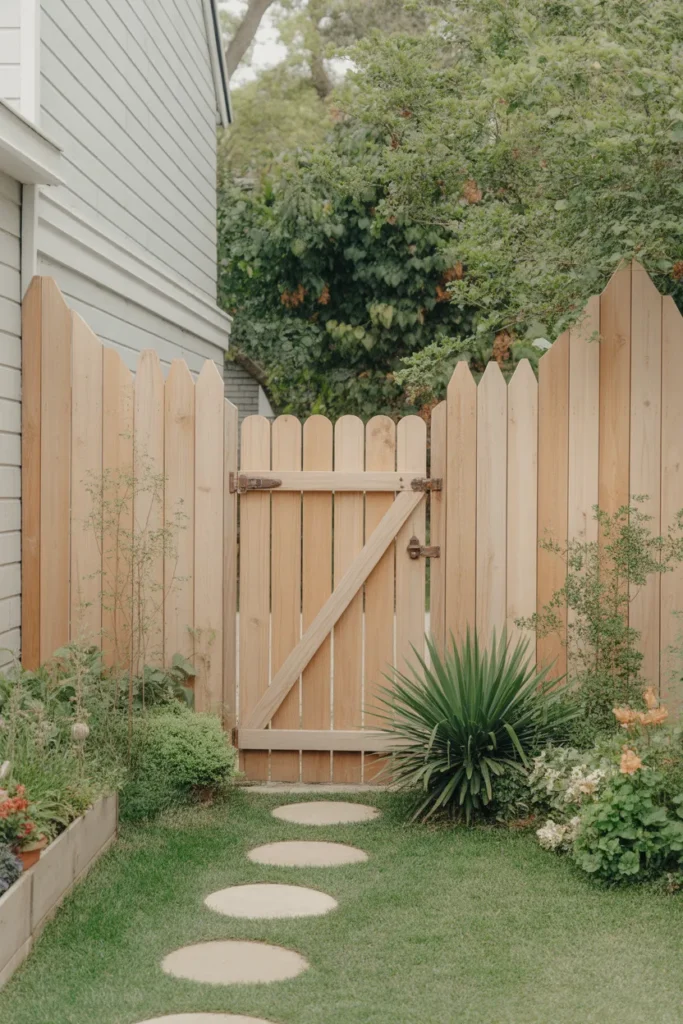
Short fences can still make a big impact in compact spaces. I like using lower panels to define areas without making the garden feel enclosed. Pairing this with a curved stepping stone path creates a sense of movement and guides the eye naturally.
Plants placed along the fence soften the edges and make the layout feel cohesive. I usually mix textures like leafy greens and flowering plants to add variety. This idea works well for smaller yards where openness and flow are key priorities.
10. Painted Fence Panels in Mixed Colors
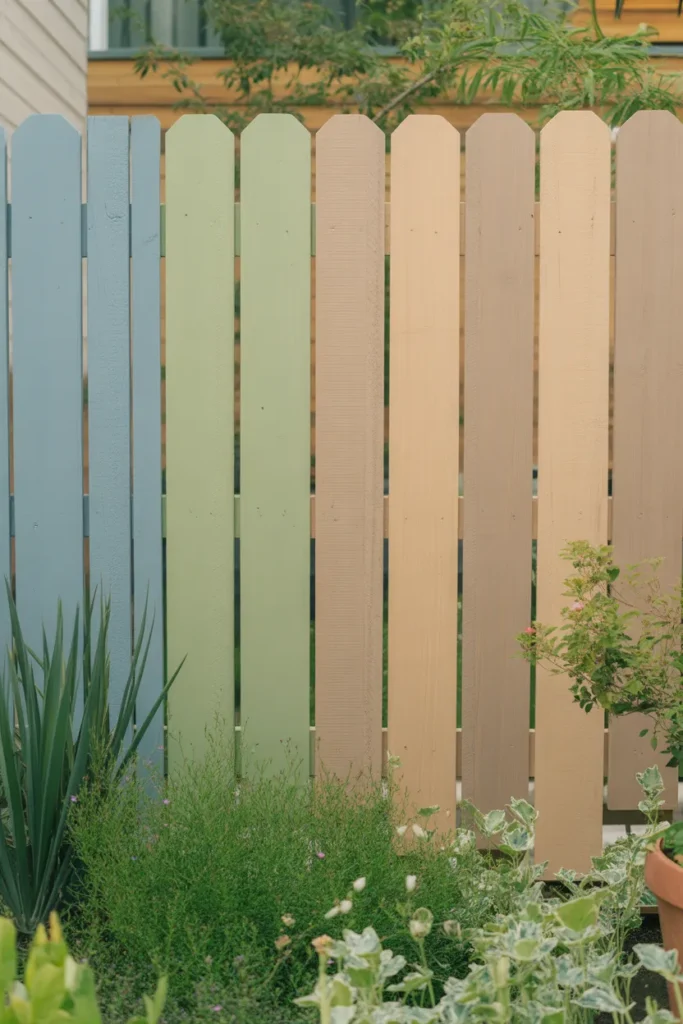
Mixing paint colors across fence panels creates a playful yet balanced look. I enjoy choosing tones that complement the garden rather than compete with it. Soft blues and greens feel calm, while warmer shades add subtle contrast without overwhelming the space.
Keeping the rest of the garden simple helps the fence stand out as a feature. I often repeat colors through planters or decor to tie everything together. This idea brings personality into the garden while still maintaining a clean and cohesive design.
11. Natural Wood Fence with Layered Flower Beds
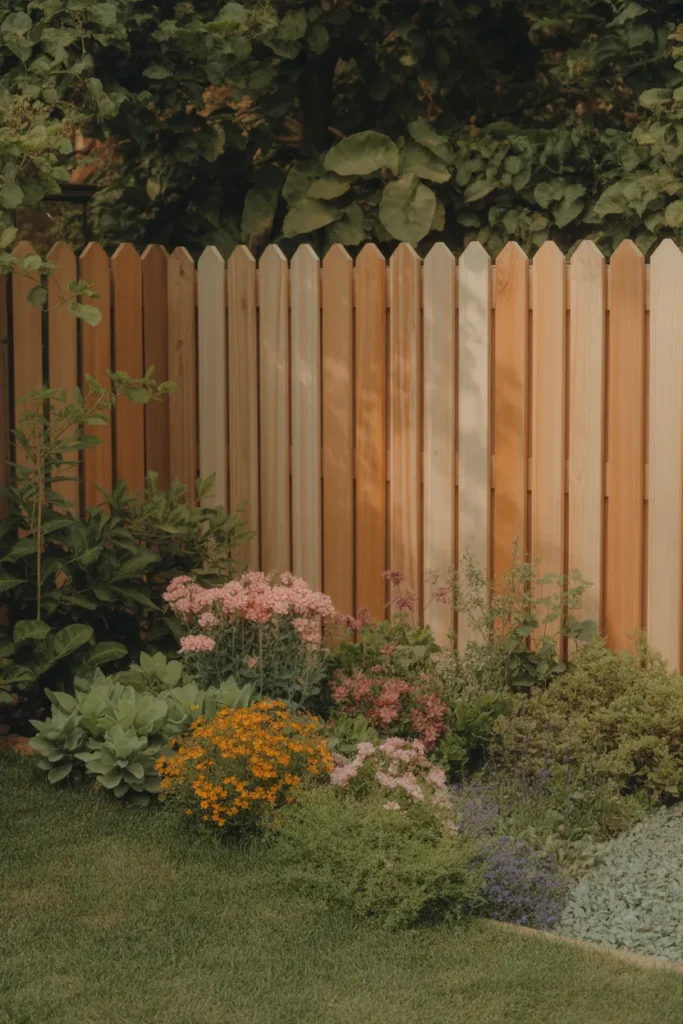
I like using a natural wood finish when the goal is to highlight colorful planting. The warm tones of the fence act as a neutral backdrop, allowing layered flower beds to take center stage. Arranging plants in tiers creates depth and makes even a small garden feel fuller and more thoughtfully designed.
Carefully mixing heights and colors keeps the display vibrant without feeling chaotic. I often place taller blooms toward the back and softer ground cover near the front for balance. This approach creates a lush, inviting scene that changes beautifully with the seasons.
12. Cozy Corner Fence with Built-In Bench
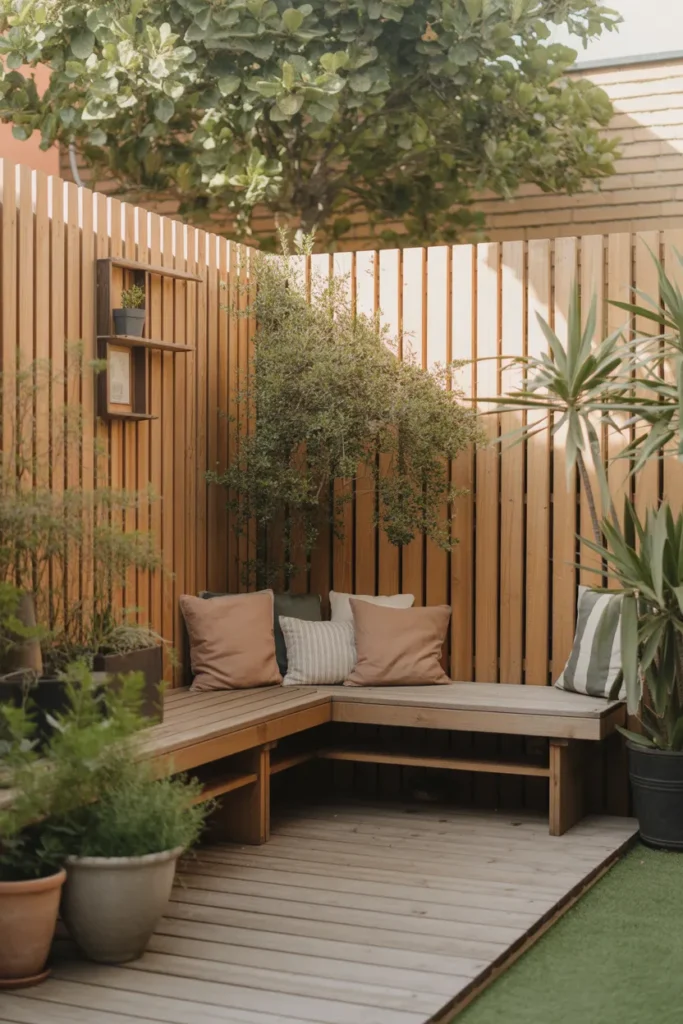
Creating a seating area directly into the fence makes the space feel intentional and cozy. I enjoy designing corner benches because they naturally define a quiet retreat within the garden. Using matching wood for both the fence and bench keeps everything visually connected.
Adding cushions in soft, earthy colors makes the area more inviting without overpowering the natural setting. I usually surround the bench with potted plants to soften the structure and create a private, enclosed feel perfect for relaxing moments outdoors.
13. Garden Path Fence with Arch Gate Detail
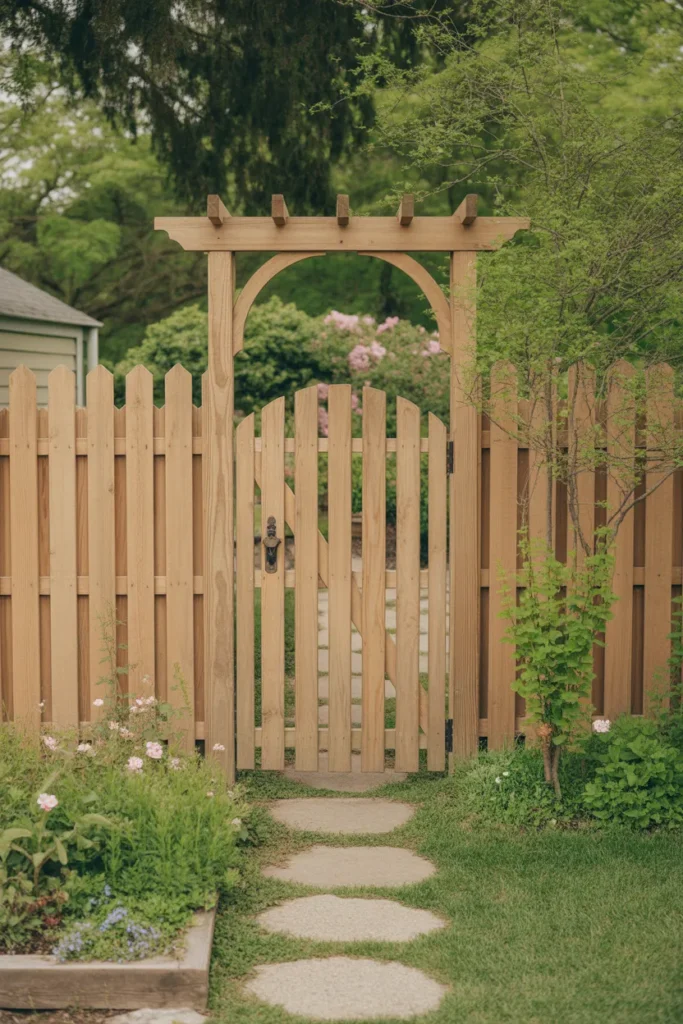
An arched gate instantly adds elegance to a simple fence design. I like pairing it with a straight stone pathway to create a strong visual line through the garden. The contrast between the structured path and soft planting brings balance and keeps the layout interesting.
Surrounding the entrance with greenery enhances the sense of transition from one space to another. I often plant flowers close to the gate to draw attention without overcrowding it. This idea works beautifully for creating a focal point in any garden layout.
14. Light Stained Fence with Minimal Plant Accents
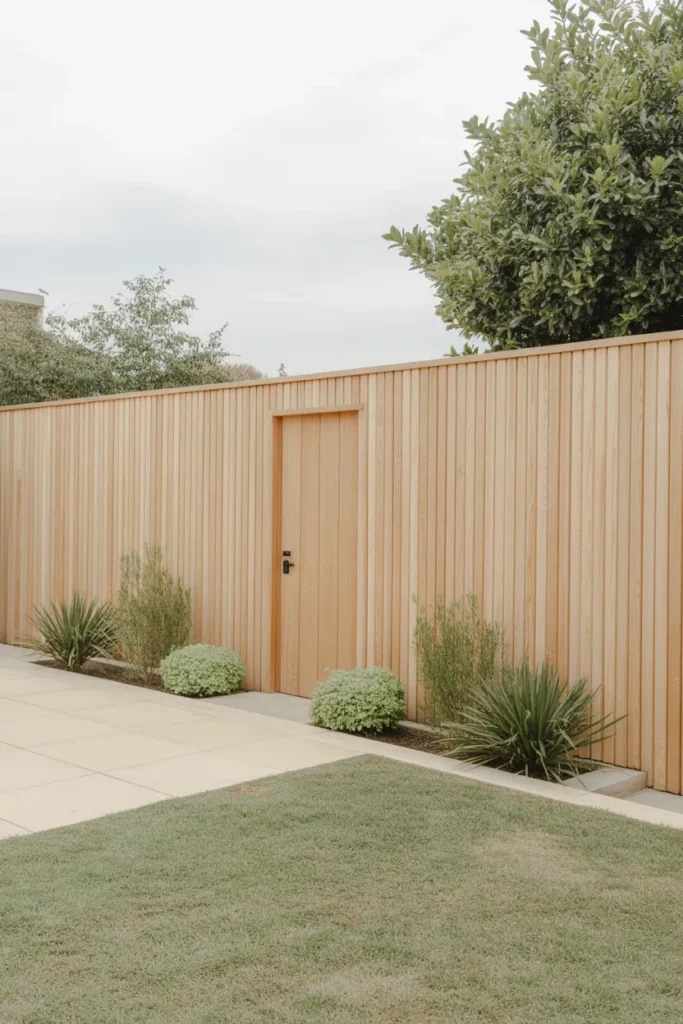
Keeping the design minimal allows the materials to stand out. I prefer light stains that brighten the wood and make the space feel open and fresh. Limiting plant choices to a few well-placed accents helps maintain a clean and uncluttered appearance.
Carefully spacing shrubs and grasses creates rhythm without overwhelming the fence. I often repeat similar plant shapes for consistency and visual flow. This approach is perfect for those who enjoy a calm, modern garden with a focus on simplicity.
15. Wooden Fence with Hanging Lantern Lights
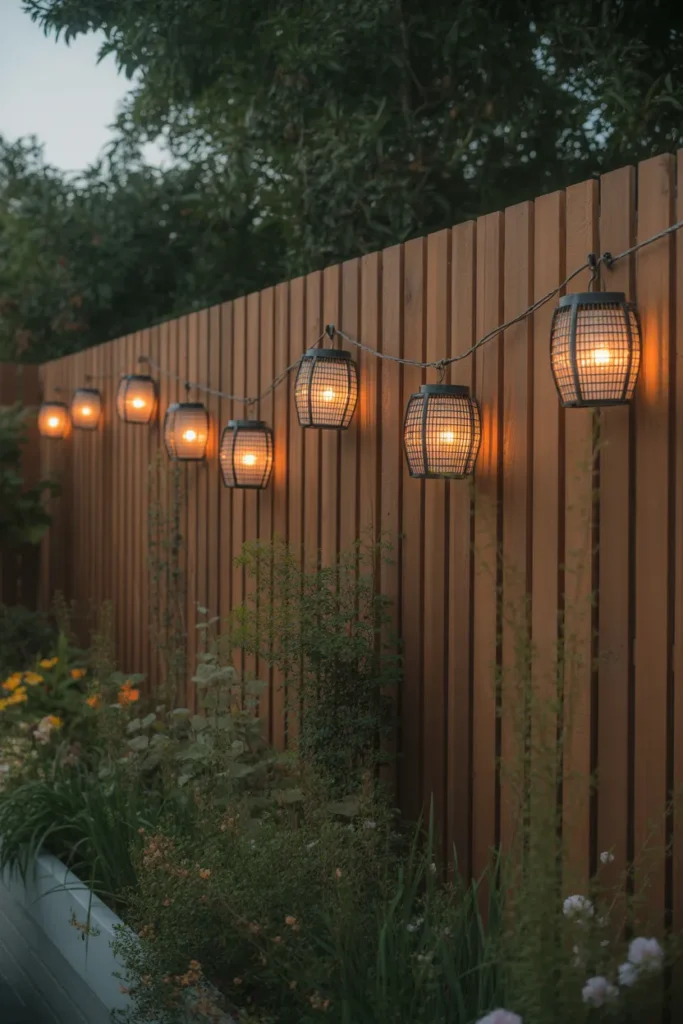
Adding lantern lighting transforms a fence into an evening feature. I like spacing them evenly to create a balanced rhythm along the panels. The warm glow highlights the wood texture while adding depth and softness to the overall space.
Positioning plants below the lanterns enhances the layered lighting effect. I usually choose simple greenery so the lights remain the focal point. This idea works especially well for creating a relaxing outdoor setting that feels welcoming after sunset.
16. Painted Fence with Bold Floral Planters
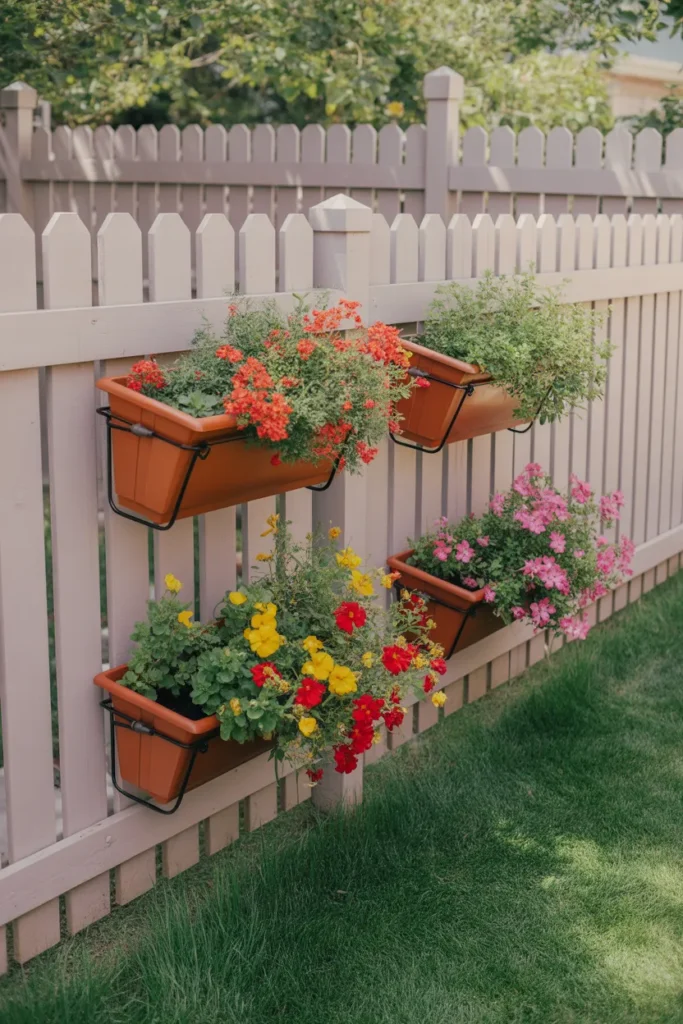
A neutral fence color allows bold flowers to stand out beautifully. I enjoy attaching planters directly onto the panels to bring color upward instead of keeping it at ground level. The result feels lively and full without needing a large garden space.
Choosing a mix of bright blooms creates a dynamic display that draws attention instantly. I often vary planter sizes to avoid a uniform look. This setup brings energy into the garden and makes even simple fences feel decorative and expressive.
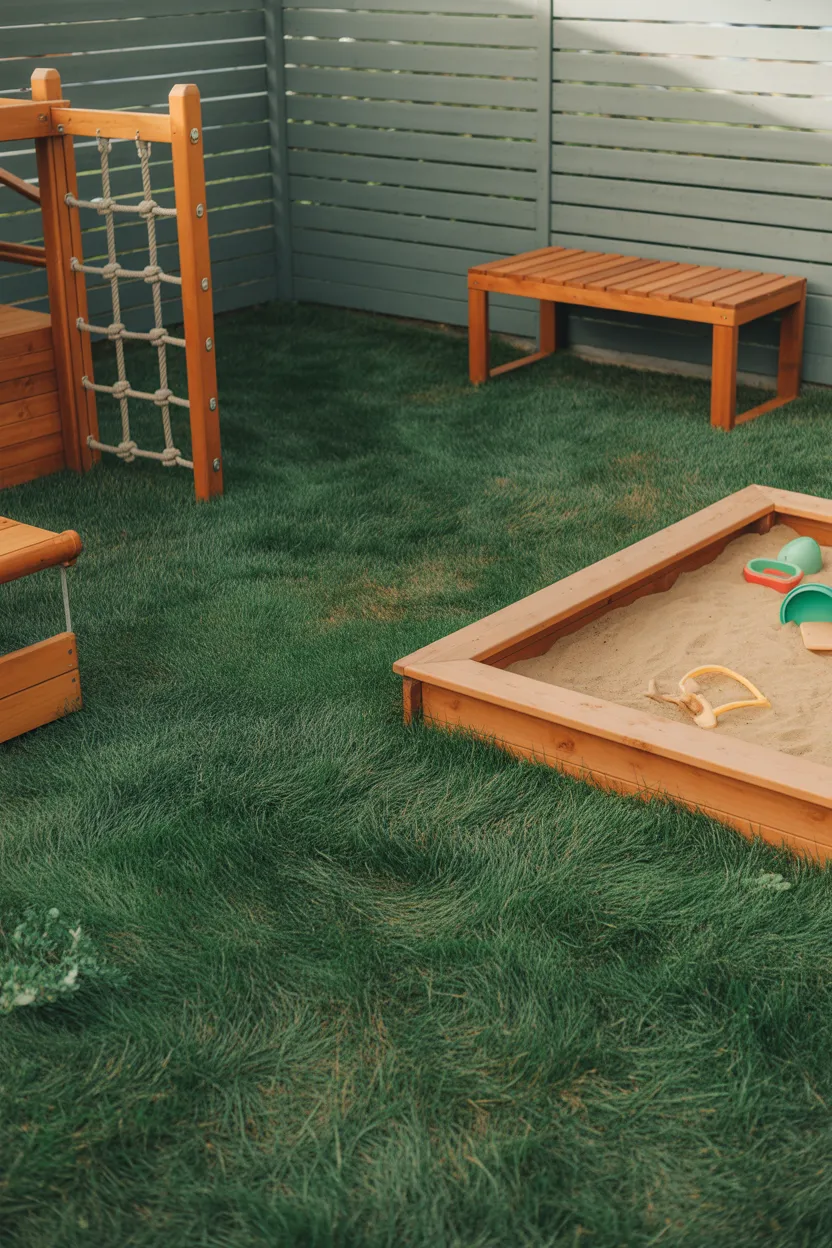
17. Garden Fence with Vertical Slat Pattern and Grass Path
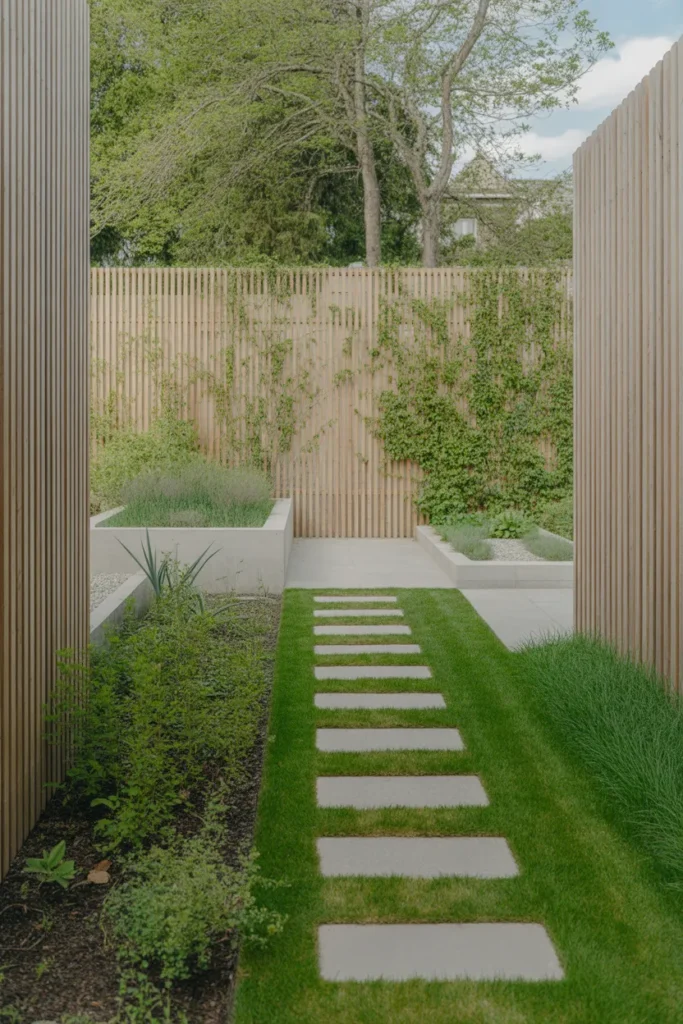
Vertical slats create a sense of height and openness, especially in narrow gardens. I like pairing this with a straight grass path to emphasize structure and direction. The combination feels organized while still maintaining a natural softness.
Adding evenly spaced stepping stones introduces rhythm and visual interest. I usually keep plantings minimal along this path to preserve the clean look. This idea is ideal for creating a tidy, modern garden that still feels welcoming.
18. Natural Fence with Mixed Potted Plants Display
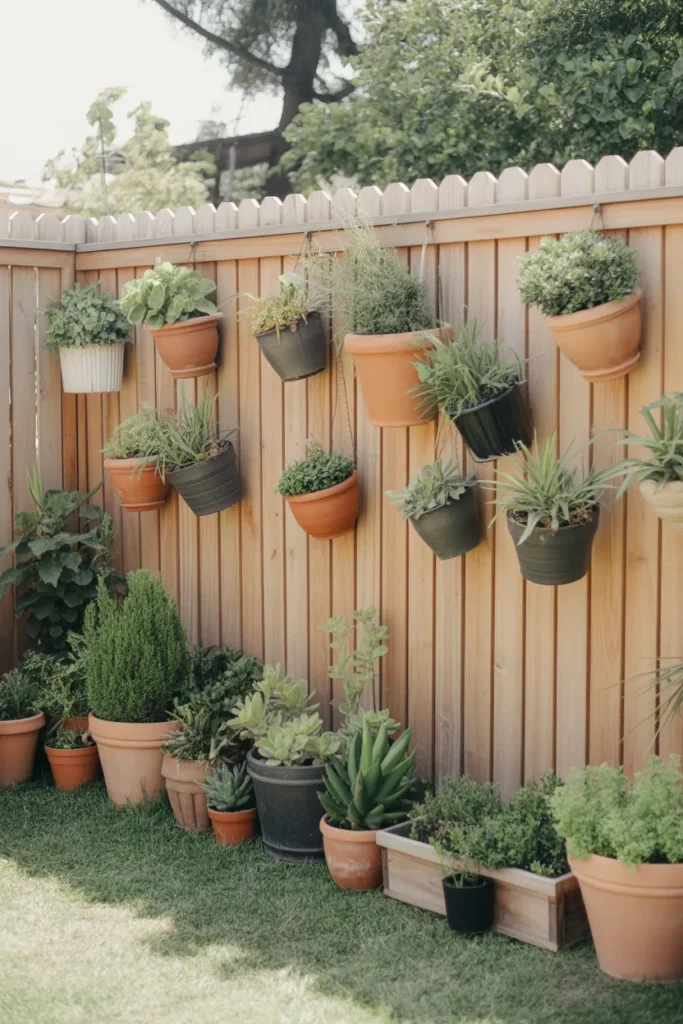
Displaying a variety of potted plants turns a simple fence into a dynamic backdrop. I like mixing pot styles to create texture while keeping colors cohesive. Arranging them both on the ground and on the fence adds layers and visual depth.
Rotating plants seasonally keeps the display fresh and interesting. I often group plants in small clusters rather than spreading them evenly. This approach creates a relaxed, collected look that feels organic and easy to maintain.
19. Wooden Fence with Subtle Color Wash Finish
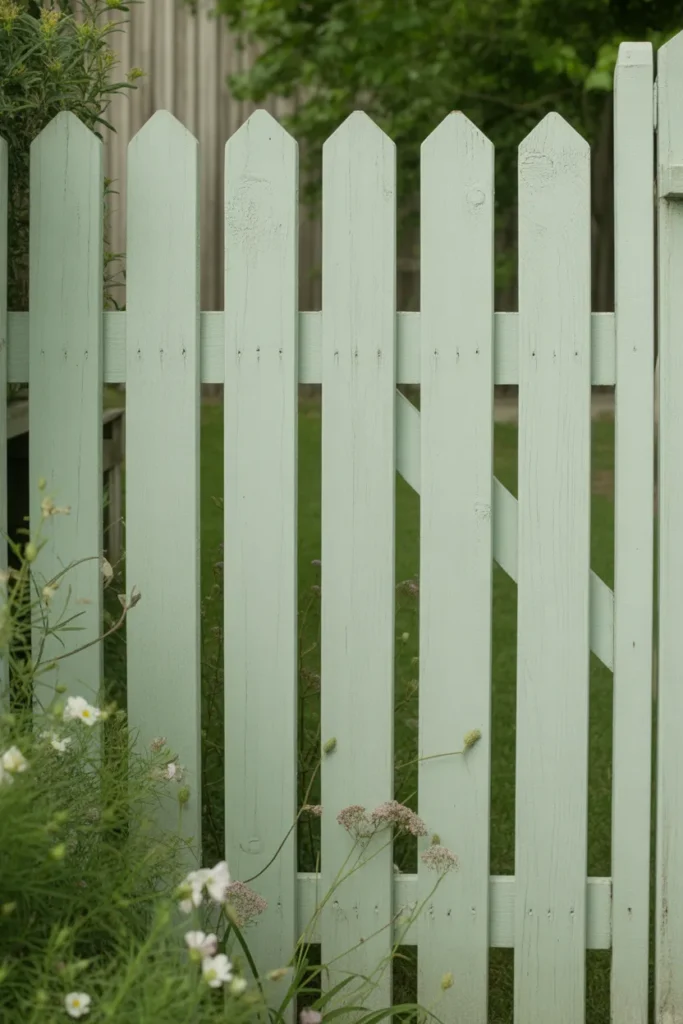
A color wash adds character without fully covering the wood grain. I enjoy using pale tones that blend gently with the garden environment. The slightly weathered effect creates a relaxed, lived-in feeling that enhances the overall charm.
Pairing this finish with soft planting keeps the look cohesive and calming. I usually avoid bold contrasts here to maintain the gentle aesthetic. This idea works well for creating a peaceful garden that feels timeless and understated.
20. Fence with Raised Planter Boxes and Pathway
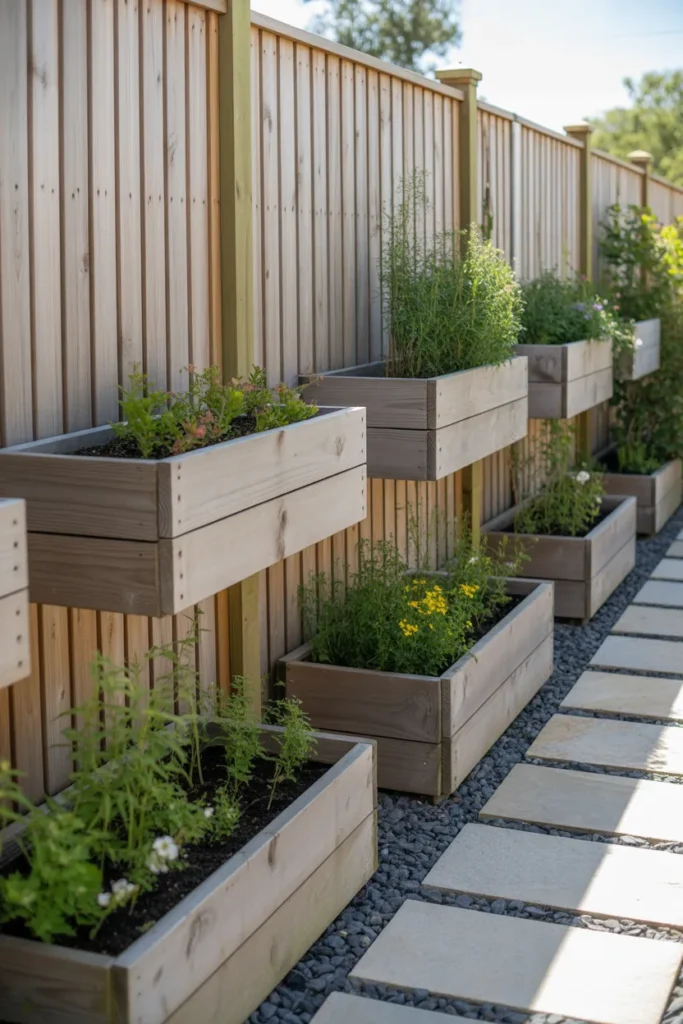
Combining fencing with planter boxes makes the most of available space. I like attaching them directly to the fence to create a continuous line of greenery. This setup keeps plants contained while adding color and life to the structure.
A parallel pathway enhances accessibility and keeps the layout practical. I often use stone for contrast against the wood and plants. This idea is perfect for gardens that need both function and visual appeal in a compact design.
21. Warm Wood Fence with Soft Garden Lighting and Flowers
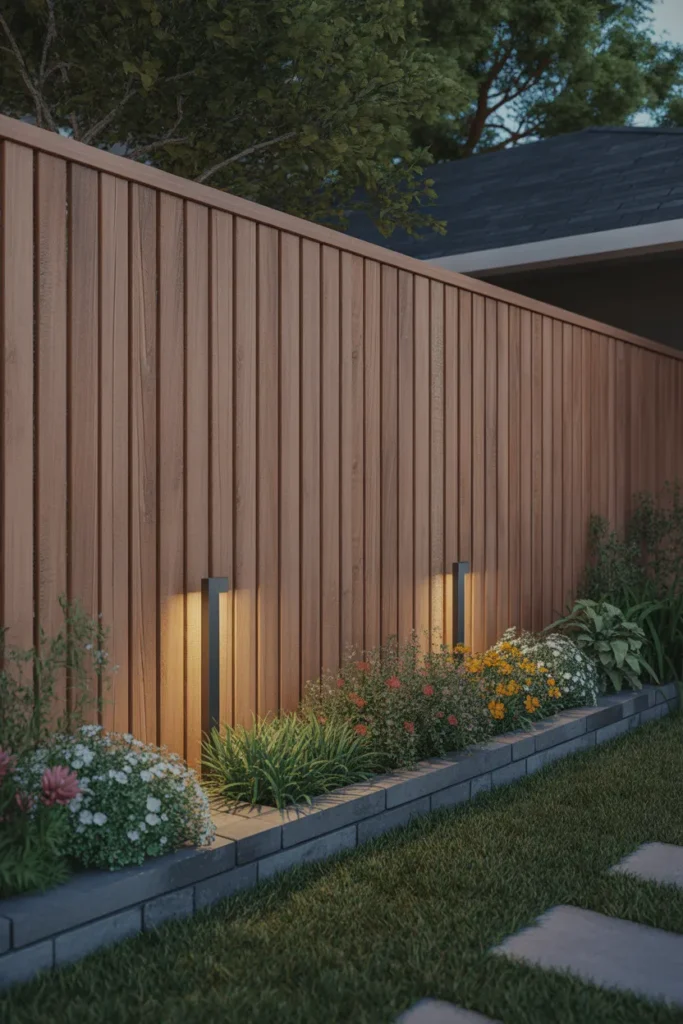
Soft lighting near the base of a fence creates a gentle glow that highlights both the structure and surrounding plants. I like using warm tones to enhance the natural color of the wood and create a welcoming ambiance.
Planting flowers along the edge completes the look by adding color during the day and texture at night. I often choose blooms that look good in both lighting conditions. This idea creates a balanced garden that feels beautiful at any time.