17 Kids Room Renovation Ideas 2026 for Modern and Creative Spaces
A child’s room in 2026 is no longer just a place to sleep. It becomes a colorful, flexible environment designed for imagination, learning, and comfort as children grow. Renovation ideas now focus on playful layouts, smart storage, cheerful colors, and furniture that adapts to daily routines. Thoughtful design can transform even a small space into an inspiring room that supports creativity, relaxation, and organization while still feeling warm, personal, and full of joyful character.
1. Built-In Bed Wall with Vertical Storage
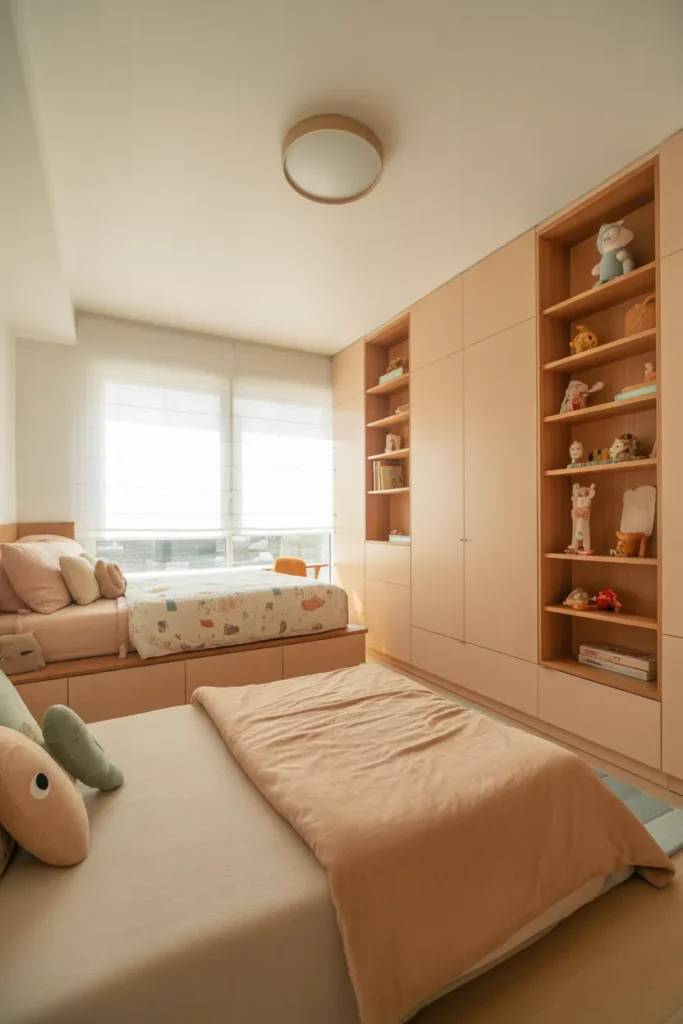
Creating a built-in bed wall instantly makes the room feel organized and calm. I like designing a low bed platform surrounded by tall cabinets and open shelves that reach toward the ceiling. This layout keeps toys, books, and storage boxes neatly arranged while leaving the center of the room open for play. Soft wood finishes and light neutral colors help the space feel warm and balanced rather than crowded.
Adding hidden drawers beneath the bed introduces extra storage without cluttering the room. I often style the shelves with colorful bins, small plants, and storybooks to make everything feel lively yet tidy. Natural daylight coming through a nearby window highlights the textures and colors beautifully, creating a modern children’s bedroom that feels both practical and visually relaxing.
2. Playful Wall Mural with Soft Color Shapes
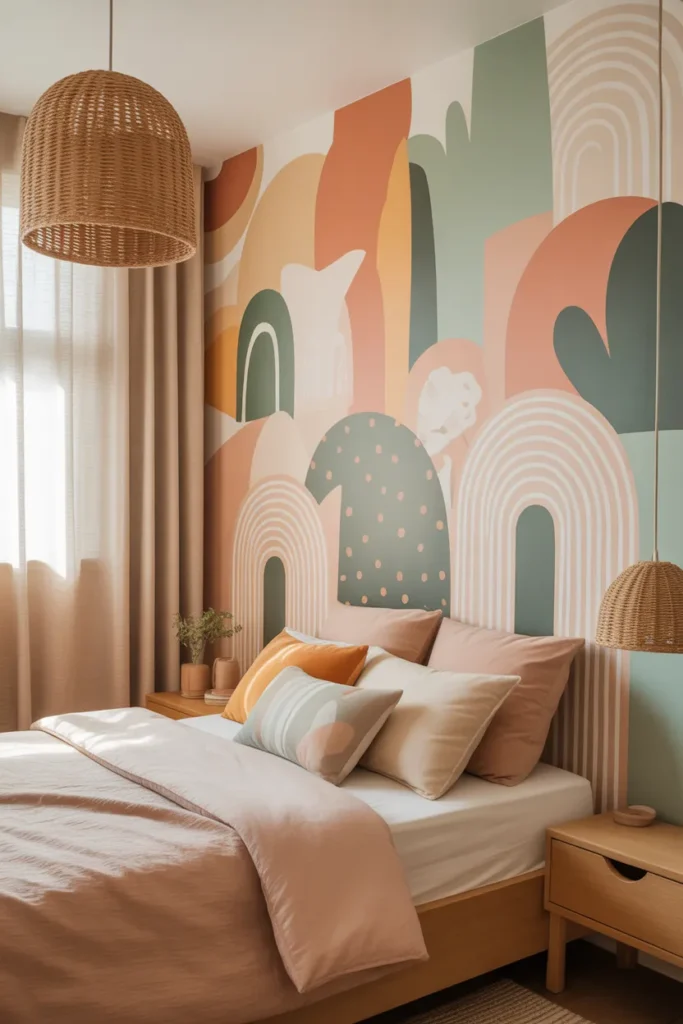
Painting a large mural is one of the easiest ways I add personality to a child’s room. Instead of complex illustrations, I prefer using oversized shapes, arches, and soft color blocks that feel playful yet modern. Warm peach, dusty blue, and sage green combinations instantly brighten the space while still keeping the room calm and cozy.
Furniture becomes simpler when the walls already carry visual interest. I usually combine neutral bedding, natural wood furniture, and a soft area rug so the mural remains the highlight. The result is a cheerful environment that encourages imagination while still looking stylish enough to grow with the child for many years.
3. Window Reading Nook with Hidden Drawers
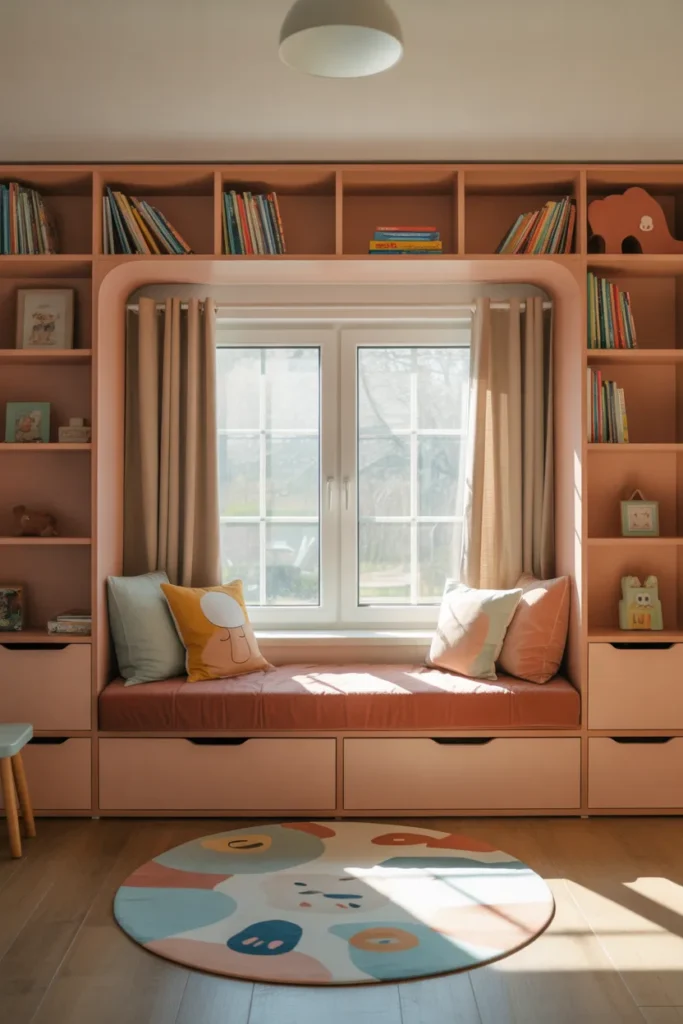
Designing a reading nook by the window turns an ordinary corner into a favorite daily retreat. I like building a cushioned bench directly under the window and surrounding it with small bookshelves. This creates a quiet little library corner where kids can relax with stories, draw, or simply watch the daylight fill the room.
Storage drawers under the bench keep toys and blankets organized without needing extra cabinets. I often layer soft cushions in warm colors to make the area inviting and comfortable. When natural light pours in during the afternoon, the nook becomes one of the most peaceful and charming spots in the entire room.
4. Soft Color Zoning for Sleep and Play Areas
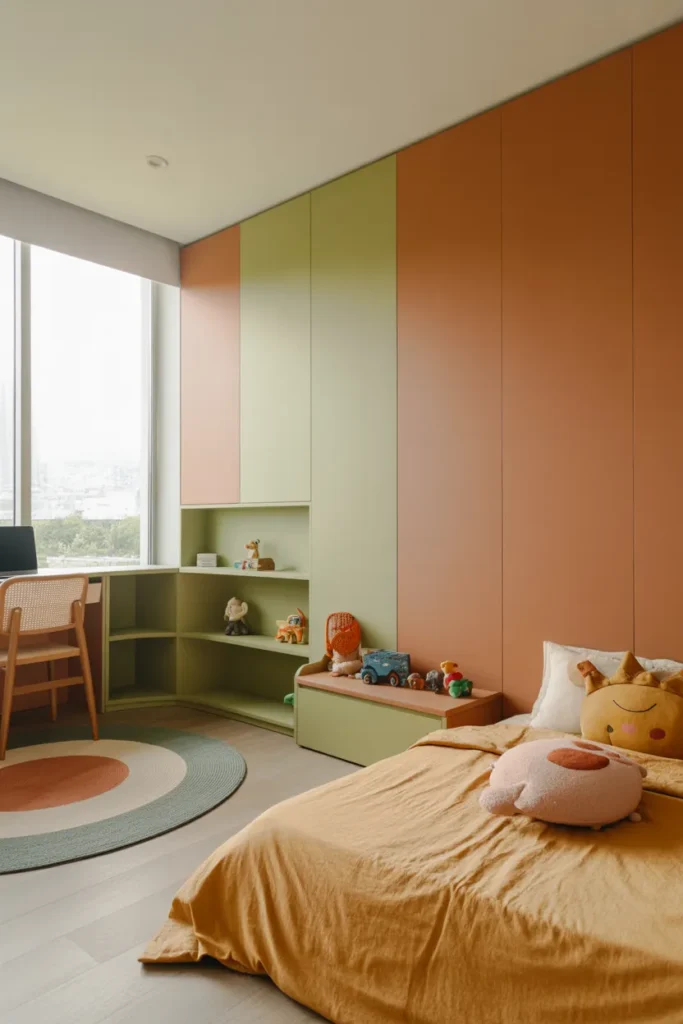
Dividing a room into visual zones helps children understand how to use their space. I often create one calm corner dedicated to sleeping and another brighter area for play and creativity. Gentle color changes on walls or rugs can clearly separate these areas without adding physical barriers.
The sleeping area usually features soft neutral bedding and simple lighting that encourages rest. Meanwhile the play zone includes colorful rugs, toy storage, and open shelves that invite activity. This approach keeps the room organized while allowing kids to move naturally between relaxing, studying, and playing throughout the day.
5. Study Desk Wall with Floating Shelves
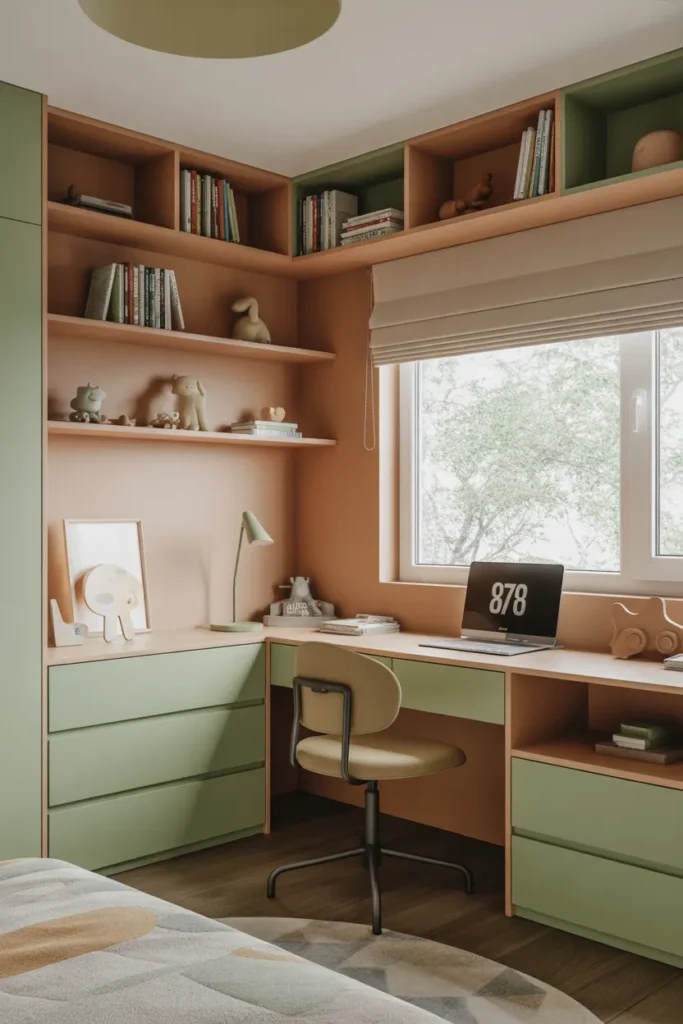
A dedicated study wall makes homework time feel more comfortable and focused. I usually place a desk near the window so natural light supports reading and drawing. Floating shelves above the desk create easy storage for books, art supplies, and favorite objects without making the room feel heavy.
Decorating this area with small colorful containers keeps pencils and craft tools organized. I prefer mixing soft wood tones with gentle greens or blues to maintain a calm atmosphere. Over time the study wall becomes a place where creativity and learning grow naturally within the child’s daily routine.
6. Soft Pattern Rugs that Add Playful Energy
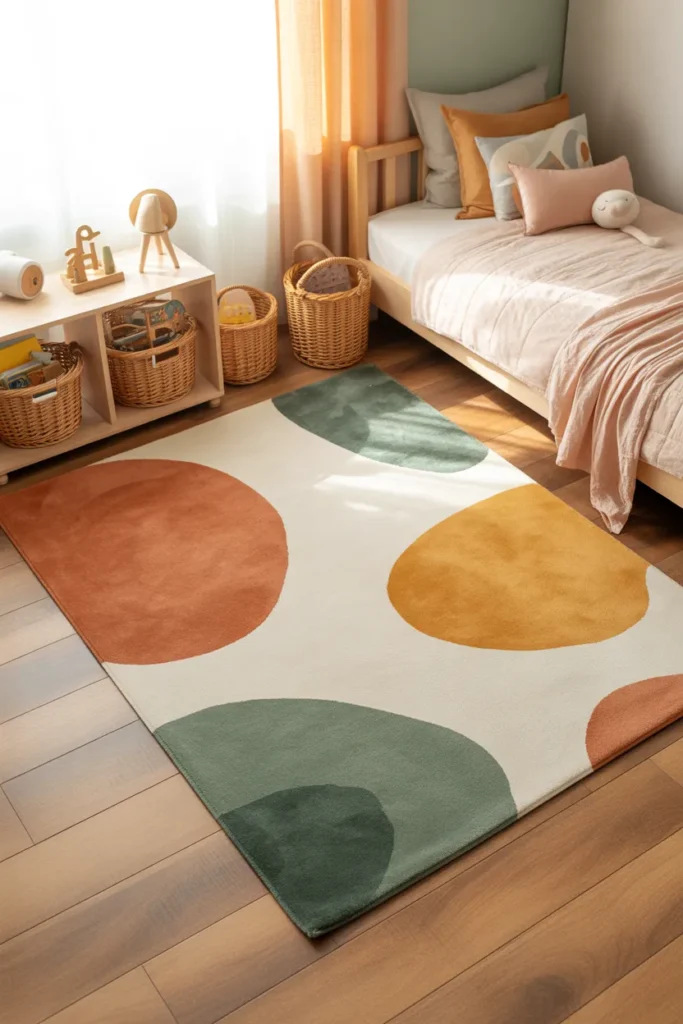
A bold rug instantly transforms the mood of a kid’s room. I like choosing large rugs with abstract shapes or soft color patches that feel playful without overwhelming the space. The rug becomes a central play surface where kids can build toys, read books, or relax comfortably.
Furniture stays simple so the rug becomes the visual highlight. Light wood floors paired with warm pastel colors create a bright and friendly atmosphere. When sunlight moves across the room during the day, the rug’s colors add movement and energy that keeps the space lively and inviting.
7. Colorful Open Shelving for Toys and Books
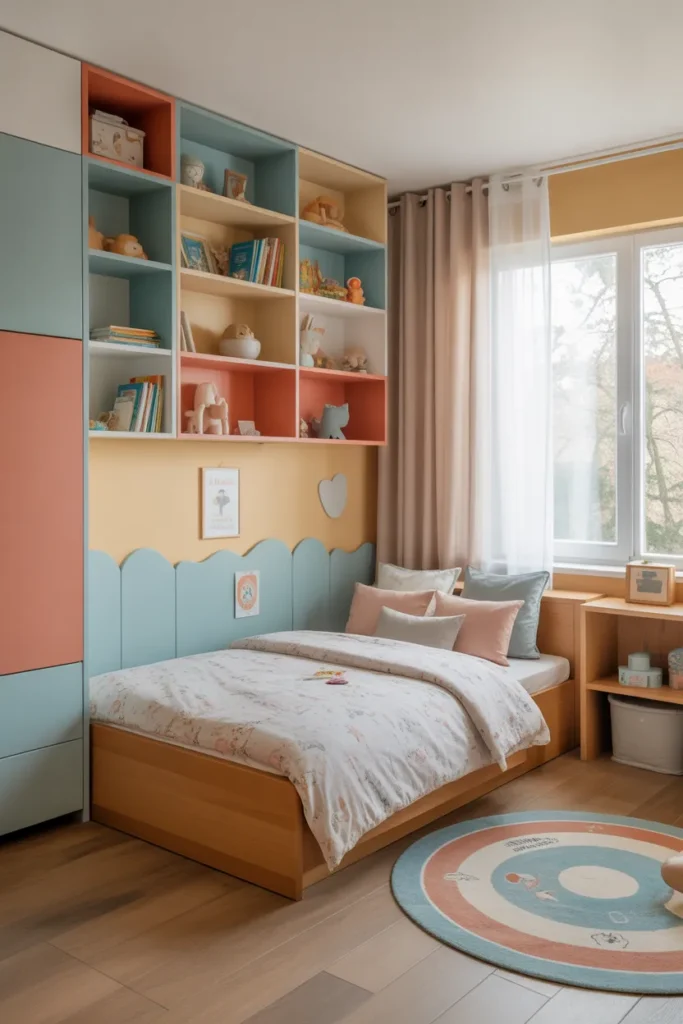
Colorful open shelving makes it easier for children to see and reach their favorite things. I like arranging wooden shelves along one wall and filling them with baskets, books, and small toys organized by color. This approach keeps the room visually lively while helping kids learn how to keep their belongings tidy.
Using pastel storage boxes or woven baskets adds texture and softness to the design. I usually balance bright shelving with neutral bedding and light wood furniture so the space feels cheerful but not overwhelming. The result is a practical and vibrant room where everything feels accessible, organized, and fun to explore.
8. Soft Pastel Bed Canopy for a Cozy Corner
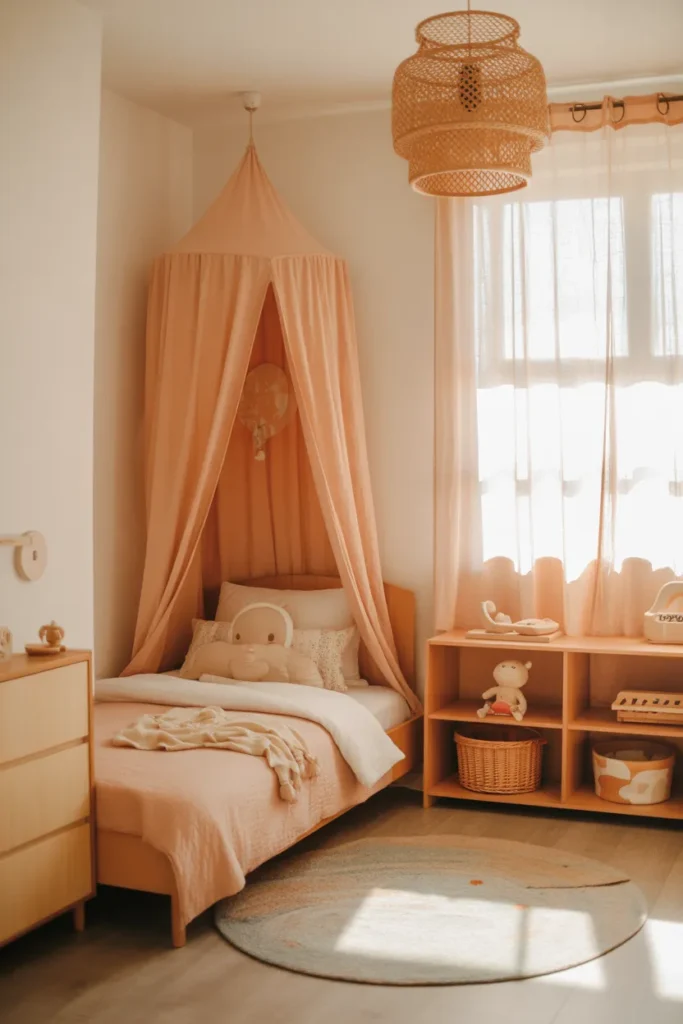
A gentle bed canopy instantly creates a magical sleeping corner without needing complicated furniture. I often hang a lightweight fabric canopy above a low bed to give the room a dreamy and comforting feeling. Soft pastel colors such as blush, mint, or pale peach add warmth while keeping the space light and calm.
Layering cushions and textured blankets inside the canopy corner makes bedtime feel special and relaxing. I usually keep the surrounding furniture simple so the canopy becomes the visual highlight. With warm lighting and soft fabrics, the sleeping area feels cozy while still blending naturally with the rest of the room.
9. Bright Accent Wall Behind the Bed
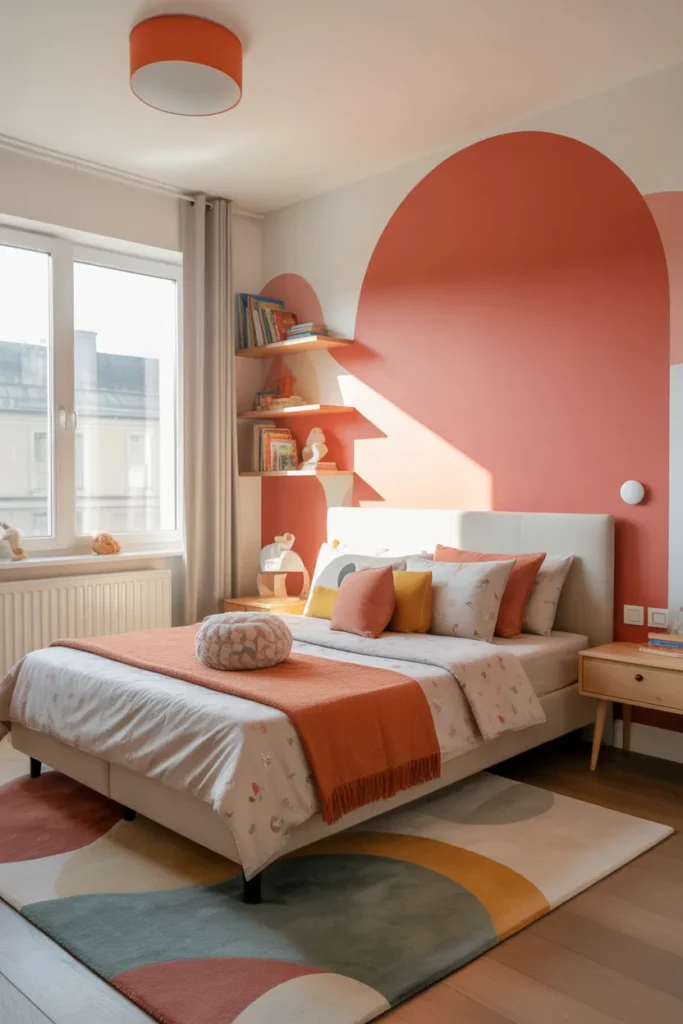
Painting a bold accent wall is one of the easiest ways I refresh a kid’s bedroom. Choosing a vibrant shade like coral, sky blue, or soft sunshine yellow instantly energizes the space without requiring a full renovation. The bed placed against the colorful wall naturally becomes the focal point of the room.
Balancing the bright wall with simple furniture helps the design feel modern and clean. I prefer neutral bedding with a few colorful pillows that echo the wall color. This small design choice creates a cohesive look while still leaving plenty of room for playful decor and evolving tastes.
10. Low Montessori Style Furniture Layout
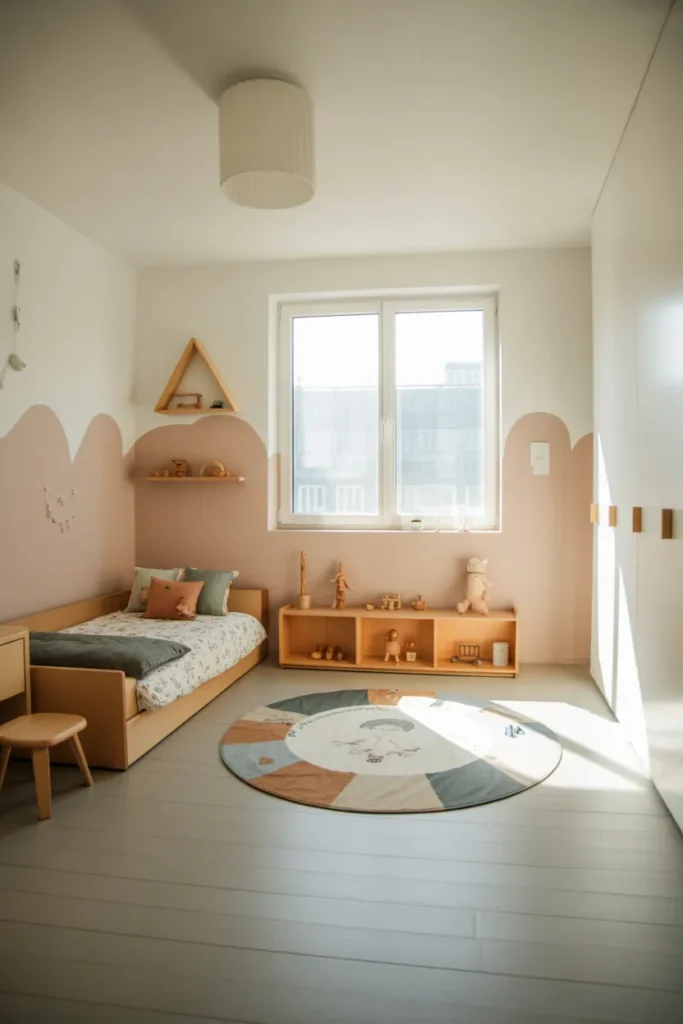
A Montessori-inspired layout focuses on independence and accessibility for children. I like placing a low bed, small open shelves, and reachable toy baskets so kids can move around the room freely. This design encourages them to choose activities independently while keeping the environment calm and uncluttered.
Open floor space becomes just as important as furniture in this layout. I usually place a soft rug in the center where children can play comfortably. With simple wooden furniture and soft color accents, the room feels peaceful while still supporting creativity and daily exploration.
11. Soft Lighting Layers for a Calm Evening Atmosphere
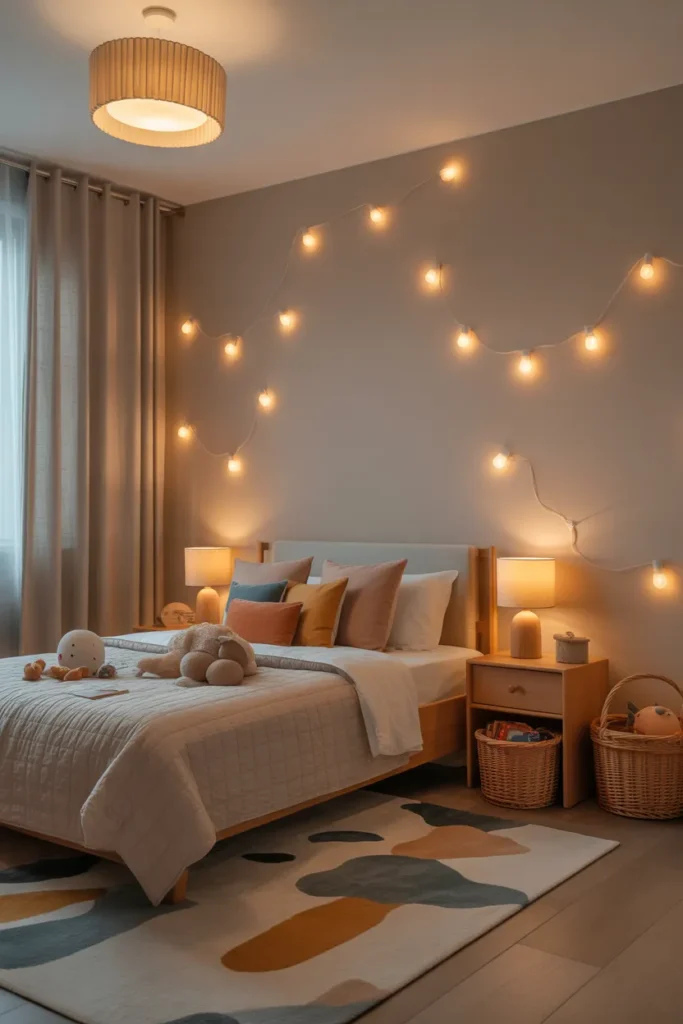
Lighting plays a big role in how comfortable a child’s room feels throughout the day. I like combining different types of lighting such as a soft ceiling light, a bedside lamp, and gentle wall lights. These layers allow the room to shift easily from bright daytime activity to calm evening relaxation.
Warm lighting tones help the space feel peaceful before bedtime. I often place small lamps near reading areas so children can enjoy quiet moments with books. When all the lighting works together, the bedroom becomes a soothing place that supports both playful afternoons and restful nights.
12. Soft Neutral Base with Colorful Decor Layers
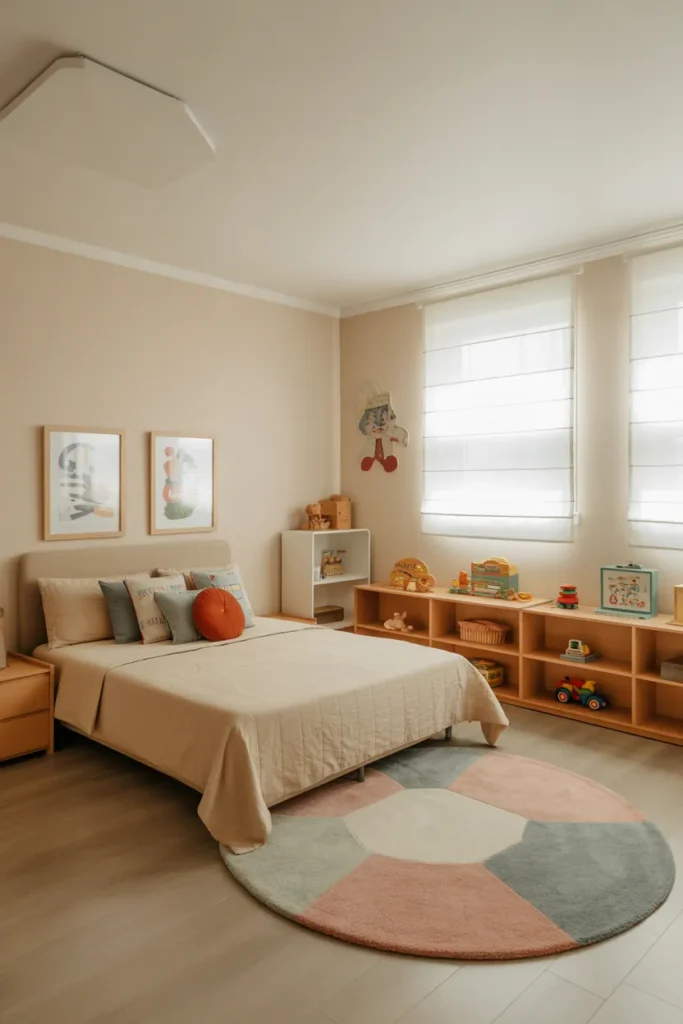
Starting with a neutral base makes it easier to refresh a kid’s room over time. I usually begin with soft beige walls, light wood furniture, and simple bedding that creates a calm foundation. This neutral backdrop allows colorful decor pieces to stand out without overwhelming the room.
Adding vibrant pillows, playful artwork, and bright toy baskets gradually brings personality into the space. I like switching these accents as children grow or seasons change. The room always feels fresh, lively, and adaptable while maintaining a clean and modern design style.
13. Fun Pattern Wallpaper for a Playful Feature Wall
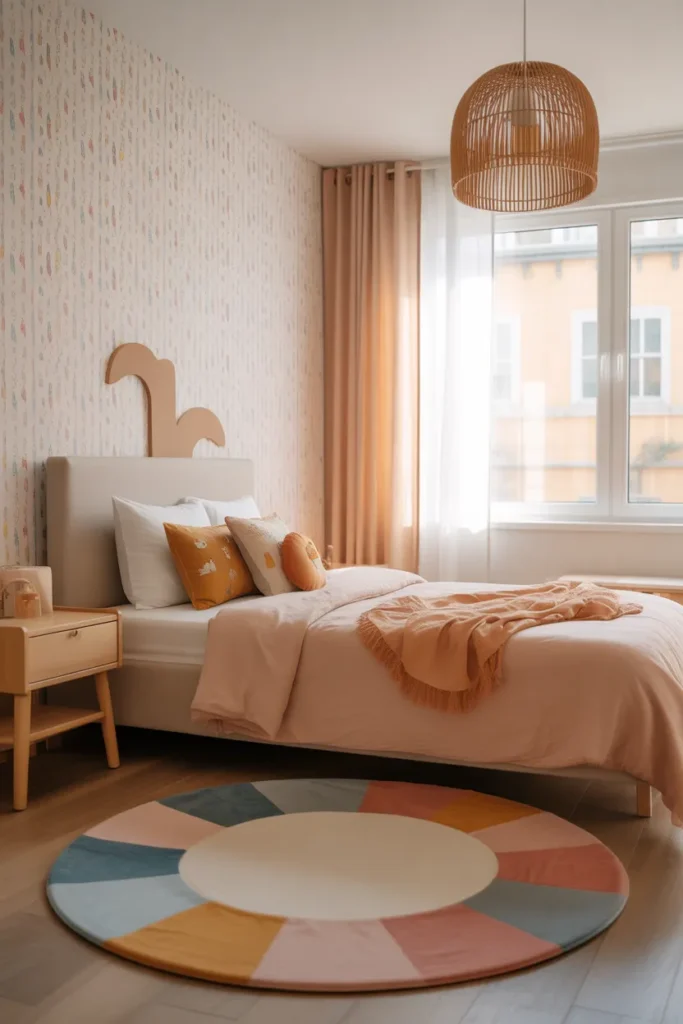
Introducing patterned wallpaper instantly adds personality to a children’s bedroom. I enjoy choosing playful patterns with geometric shapes, soft rainbows, or abstract color spots that make the room feel lively. Using wallpaper on just one wall behind the bed keeps the design balanced while still bringing energy and creativity into the space.
Simple furniture allows the wallpaper to shine without making the room feel busy. I usually combine neutral bedding with a few colorful pillows that reflect the pattern on the wall. The overall result is a cheerful feature wall that creates a fun atmosphere while keeping the room visually calm and welcoming.
14. Multifunctional Bed with Storage and Study Space
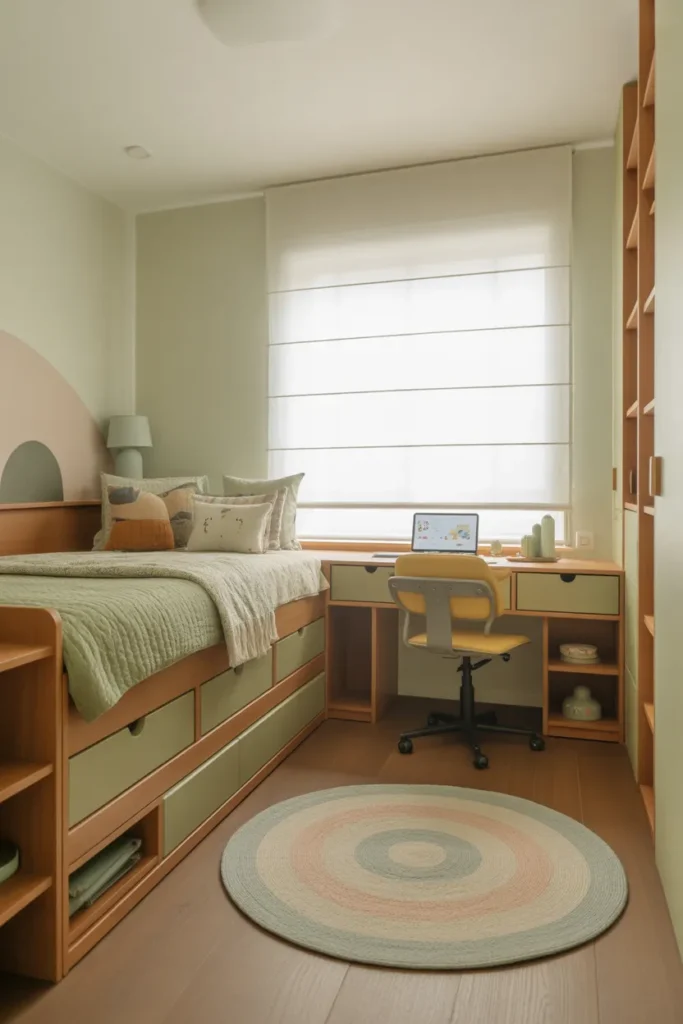
Combining several functions into one piece of furniture helps maximize space in a child’s bedroom. I like designing a bed platform with drawers underneath and a small desk attached to one side. This setup keeps the room organized while allowing children to easily switch between sleeping, studying, and creative activities.
Carefully chosen colors help the multifunctional furniture feel light instead of bulky. I often pair warm wood finishes with soft green or beige walls to maintain a relaxed atmosphere. The room feels tidy, efficient, and modern while still leaving plenty of open space for play and movement.
15. Colorful Ceiling Light as a Design Statement
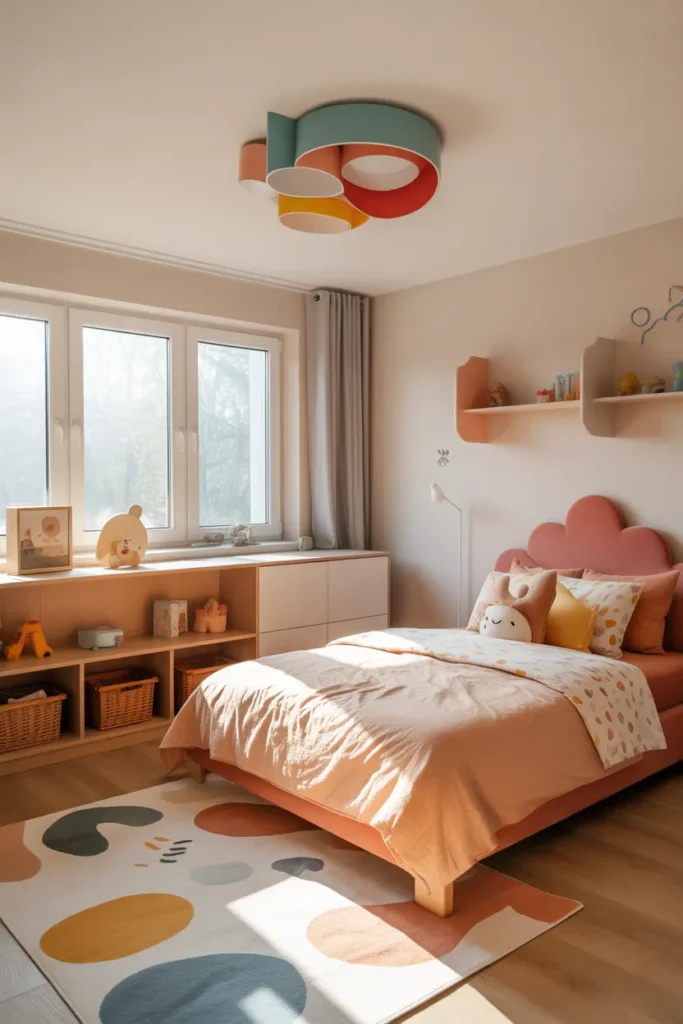
A statement ceiling light can transform the mood of a child’s room without changing the entire design. I enjoy installing a colorful pendant or round lamp that becomes a playful focal point overhead. Soft materials like woven rattan or painted metal add texture while keeping the lighting warm and inviting.
The rest of the room can remain simple so the light fixture stands out naturally. I usually pair it with neutral walls and colorful accents like pillows or rugs. This small design detail adds character and brightness while keeping the overall atmosphere calm and balanced.
16. Soft Nature-Inspired Color Palette
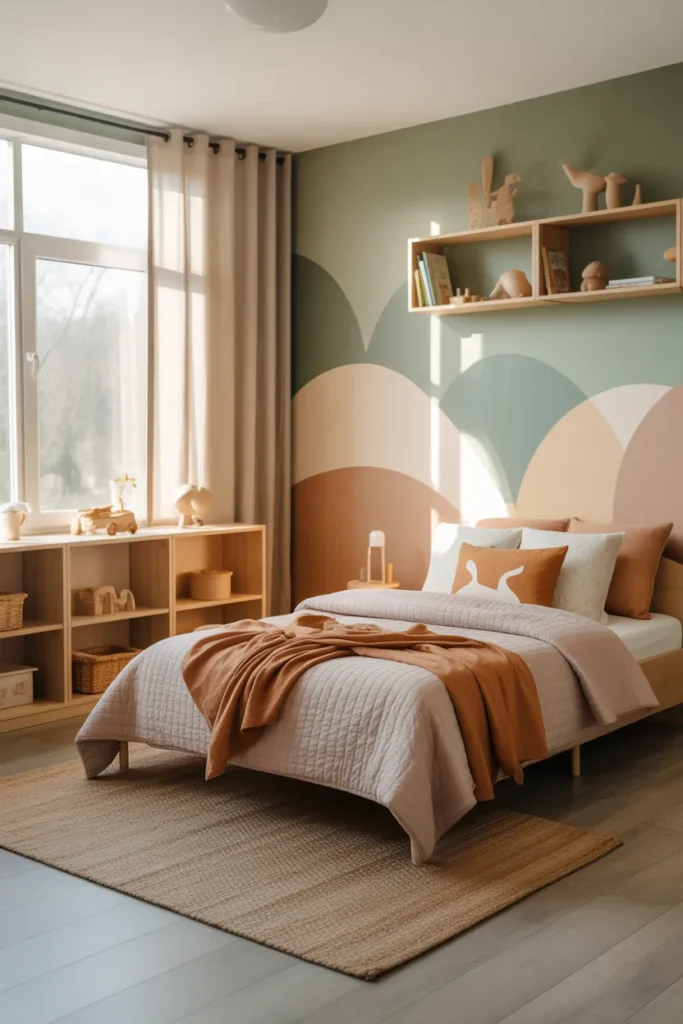
Nature-inspired colors create a peaceful and comforting environment for children. I like blending gentle greens, sandy beige tones, and soft clay colors to reflect natural landscapes. These colors feel warm and grounding while still bringing a refreshing sense of brightness into the room.
Wood furniture and woven textures help reinforce the natural feeling of the space. I often decorate shelves with books, small plants, and simple toys to maintain a relaxed look. The room becomes a calm retreat that supports rest, creativity, and everyday comfort.
17. Flexible Layout for a Growing Child
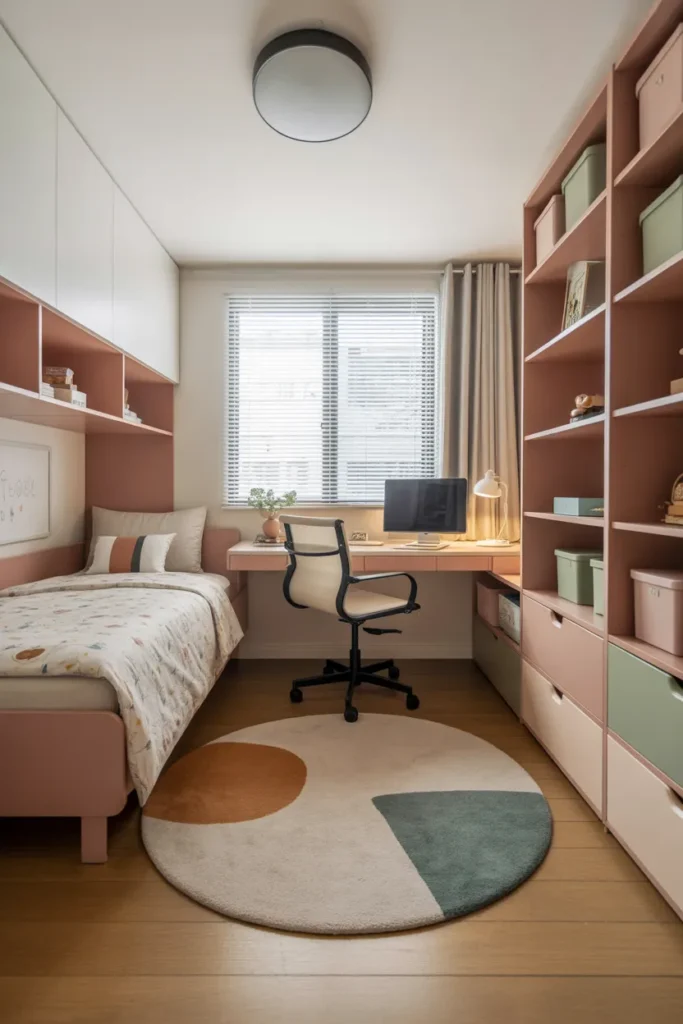
Designing a flexible layout helps the room adapt as children grow and their needs change. I prefer using movable furniture pieces like modular shelves, rolling desks, and lightweight storage units. This approach allows the room to evolve easily from a play-focused space into a study-friendly environment.
Keeping the center of the room open encourages creativity and movement. I usually place larger furniture along the walls while leaving space for activities in the middle. Over time the layout can shift without major renovations, allowing the bedroom to remain practical, organized, and enjoyable for many years.