15 Living Room Wall Decoration Ideas 2026
Modern living room walls in 2026 focus on warmth, texture, and intentional styling that feels curated yet effortless. Wall décor moves beyond simple artwork, blending architectural details, layered materials, and balanced compositions that elevate everyday spaces. Neutral palettes, organic finishes, and thoughtful spacing define this approach, creating walls that support comfort while adding visual depth. Each idea below reflects contemporary styling rooted in timeless design principles and livable elegance.
Oversized Statement Wall Clock Styling
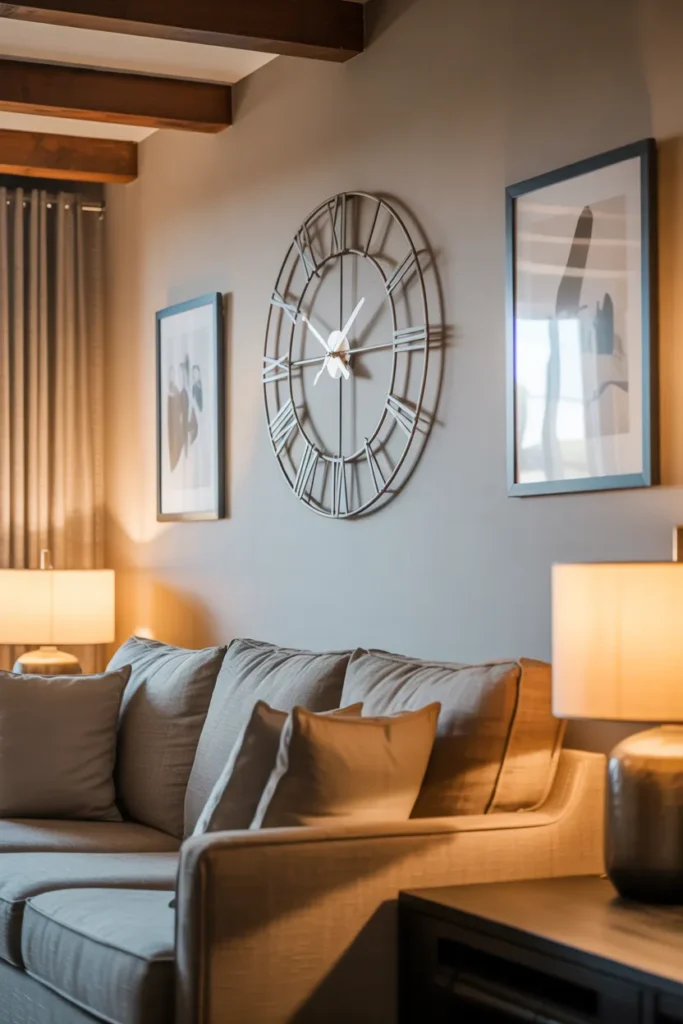
Anchoring a living room wall with an oversized clock introduces both scale and function without overwhelming the space. Carefully positioning it above seating creates a focal point that feels intentional and balanced. Paired with complementary framed art and soft furnishings, this approach adds structure while maintaining a relaxed atmosphere suited to everyday living.
Visual harmony comes from coordinating finishes and tones across the wall elements. Metal clock details connect subtly with lamp bases or furniture accents, while neutral backgrounds allow the clock to stand out. This setup works especially well in rooms that favor classic silhouettes with modern restraint.
Warm Earth-Tone Accent Wall Decor
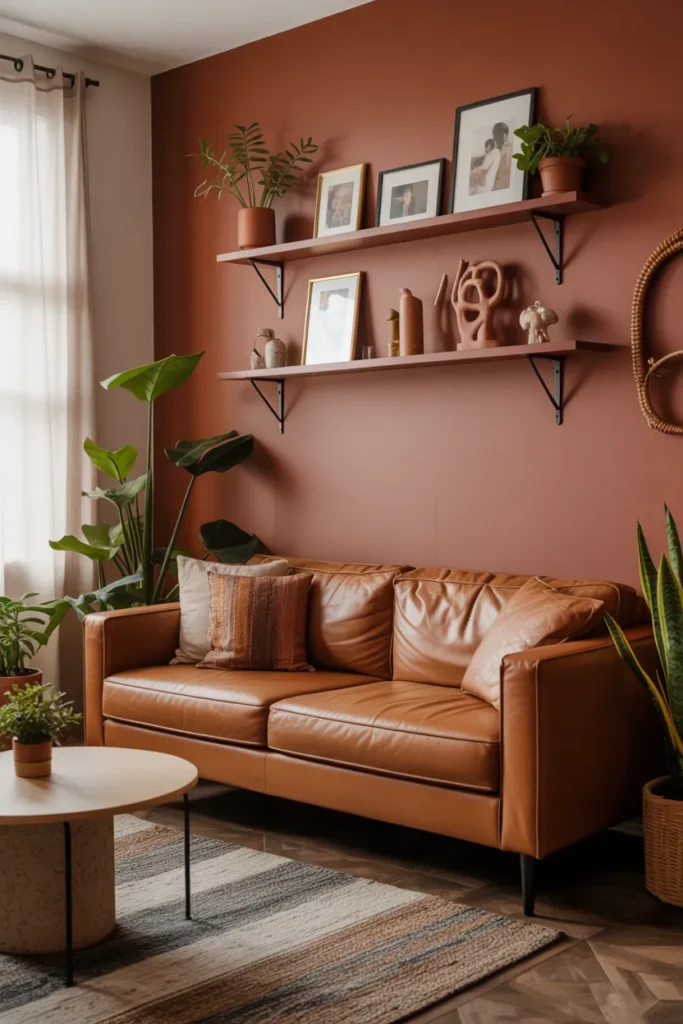
Introducing an earth-toned wall instantly adds warmth and character to a living room. Terracotta and clay-inspired hues create a grounding backdrop that pairs beautifully with natural materials. Floating shelves allow decorative elements to feel curated without clutter, giving the wall both personality and breathing room.
Layering textures is key to keeping the wall visually engaging. Mixing greenery, framed art, and handcrafted objects softens the bold color while maintaining balance. This approach suits interiors aiming for relaxed sophistication with a tactile, welcoming presence.
Minimalist Panel Wall with Integrated Decor
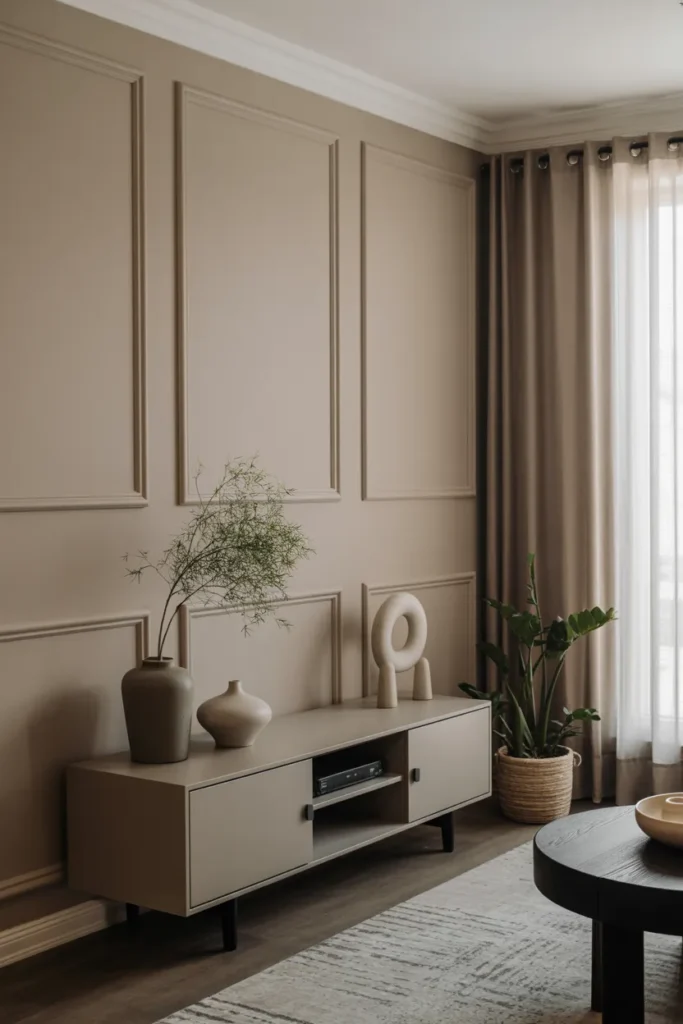
Panel molding introduces architectural interest without relying on bold color or heavy ornamentation. Vertical lines visually elongate the wall, making the room feel taller and more structured. When paired with minimalist décor, the effect feels refined rather than decorative.
The restrained styling allows materials and proportions to take center stage. Neutral tones, clean-lined furniture, and carefully spaced accessories ensure the wall enhances the room without dominating it. This idea works particularly well in modern interiors seeking quiet elegance.
Layered Frame Gallery Above Seating
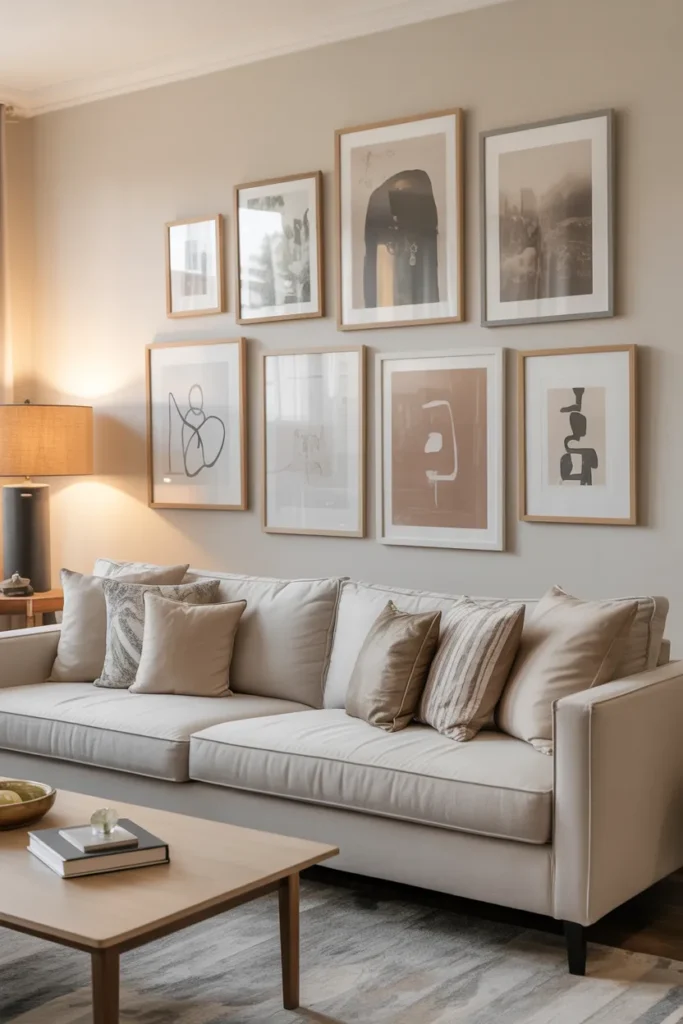
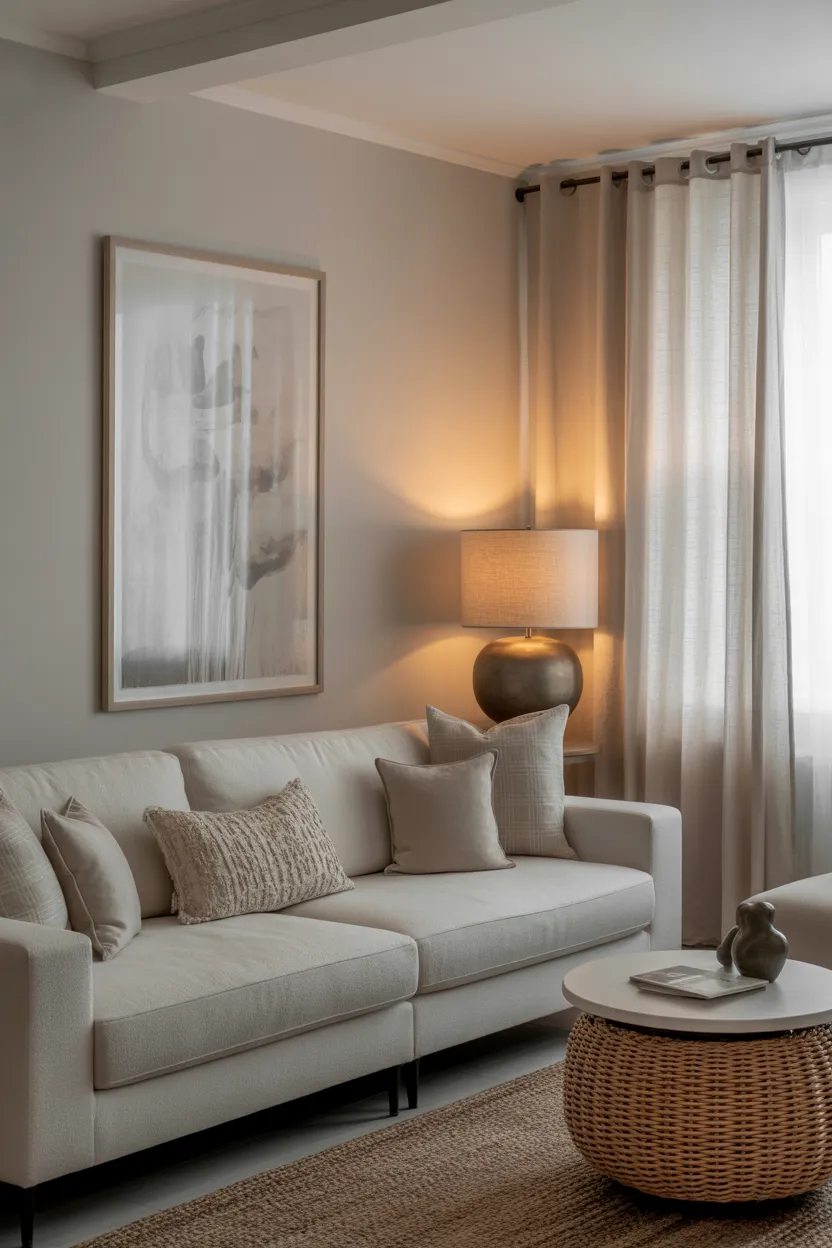
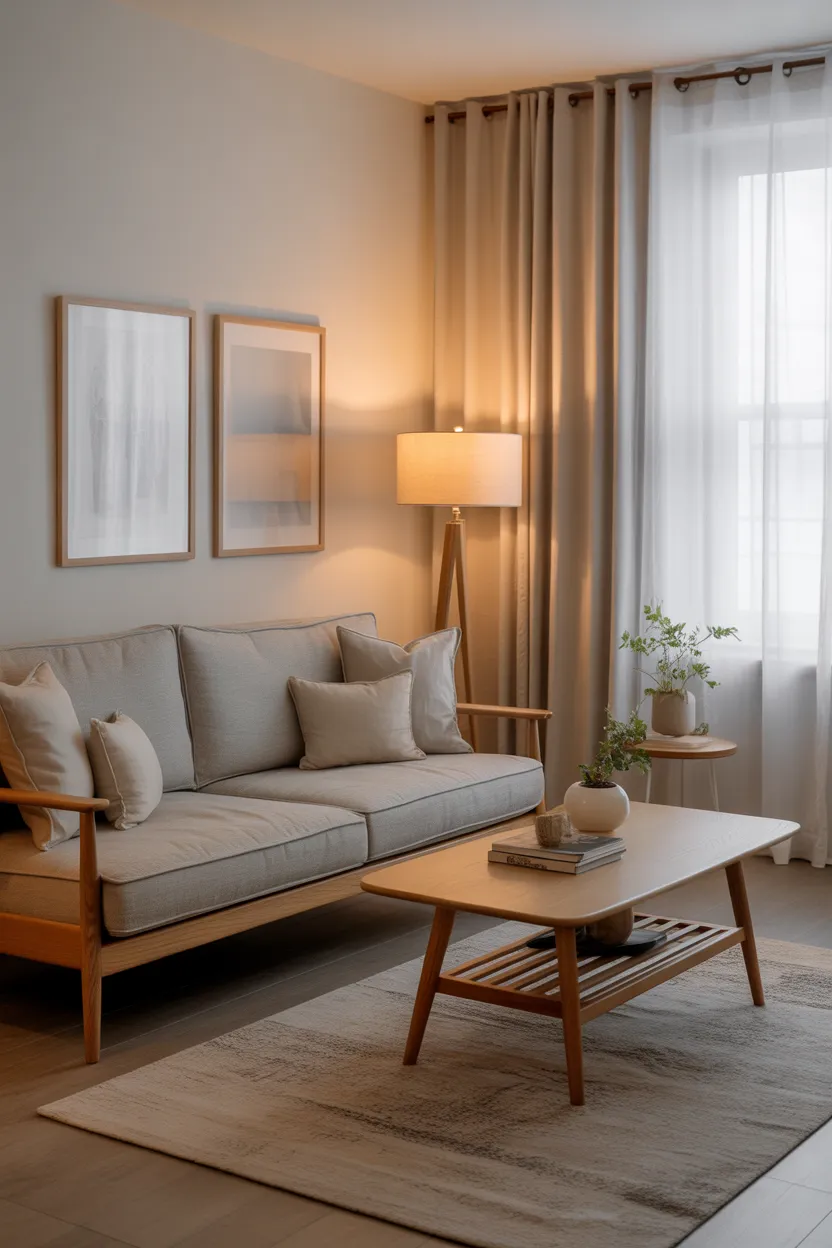
Creating a gallery wall above seating adds personality while maintaining structure through alignment and spacing. Using a restrained color palette keeps the arrangement cohesive and prevents visual overload. This approach allows individual pieces to shine while contributing to a unified display.
Thoughtful placement ensures the gallery complements furniture proportions. Frames positioned slightly above eye level maintain comfort and flow. This idea suits living rooms that value storytelling through art while preserving a clean, contemporary feel.
Sculptural Wall Art as a Focal Feature
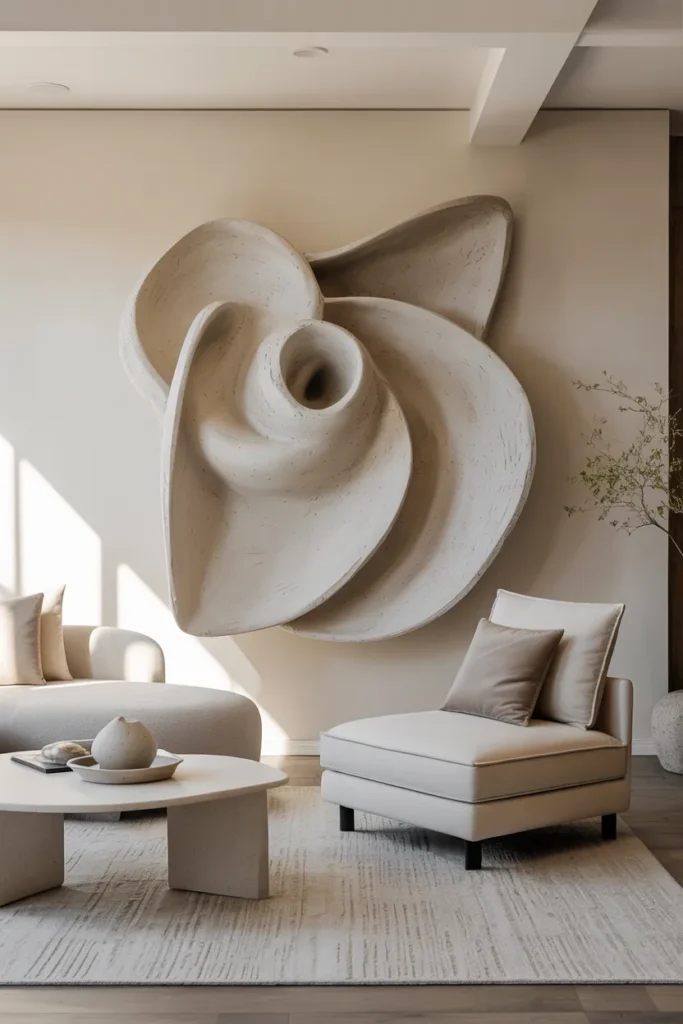
Sculptural wall art introduces depth and movement, transforming flat surfaces into tactile features. Choosing a single impactful piece avoids clutter and allows the artwork to command attention naturally. Neutral finishes ensure longevity and versatility.
Lighting plays a crucial role in enhancing dimensionality. Soft shadows highlight contours while maintaining a relaxed mood. This concept works well in spaces where simplicity is prioritized but visual interest remains essential.
Floating Shelf Wall Composition
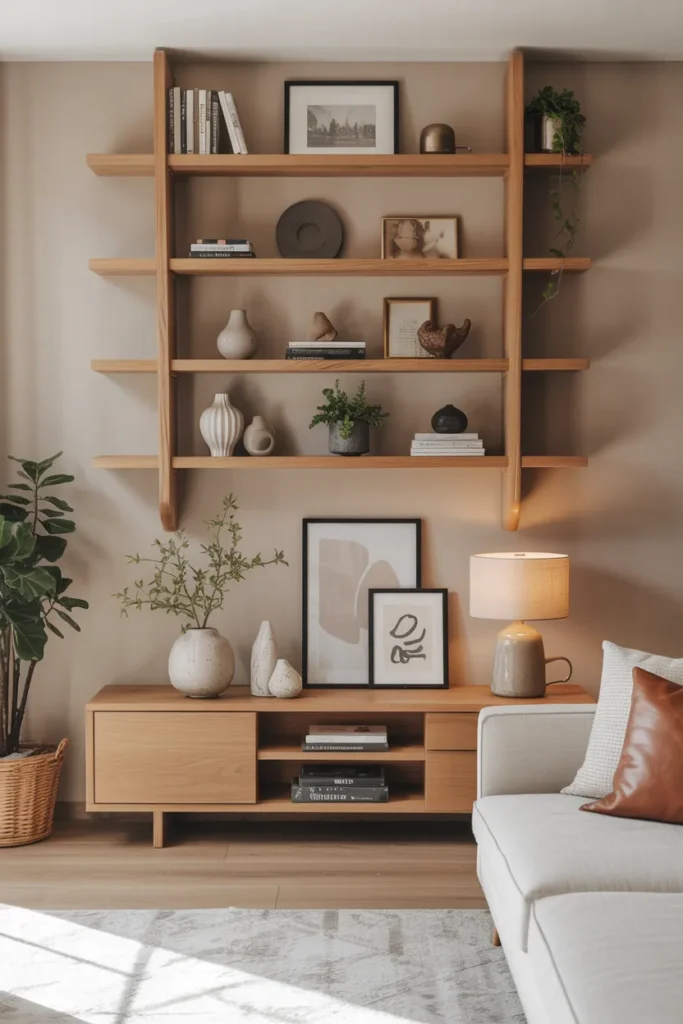
Floating shelves provide flexible décor opportunities while keeping the wall visually light. Staggered placement introduces rhythm without overwhelming the surface. Carefully edited styling ensures each shelf contributes to the overall composition.
Negative space is just as important as displayed items. Leaving breathing room between objects maintains a clean look. This approach suits evolving interiors where décor can change without redesigning the entire wall.
Textured Wall Panels for Depth
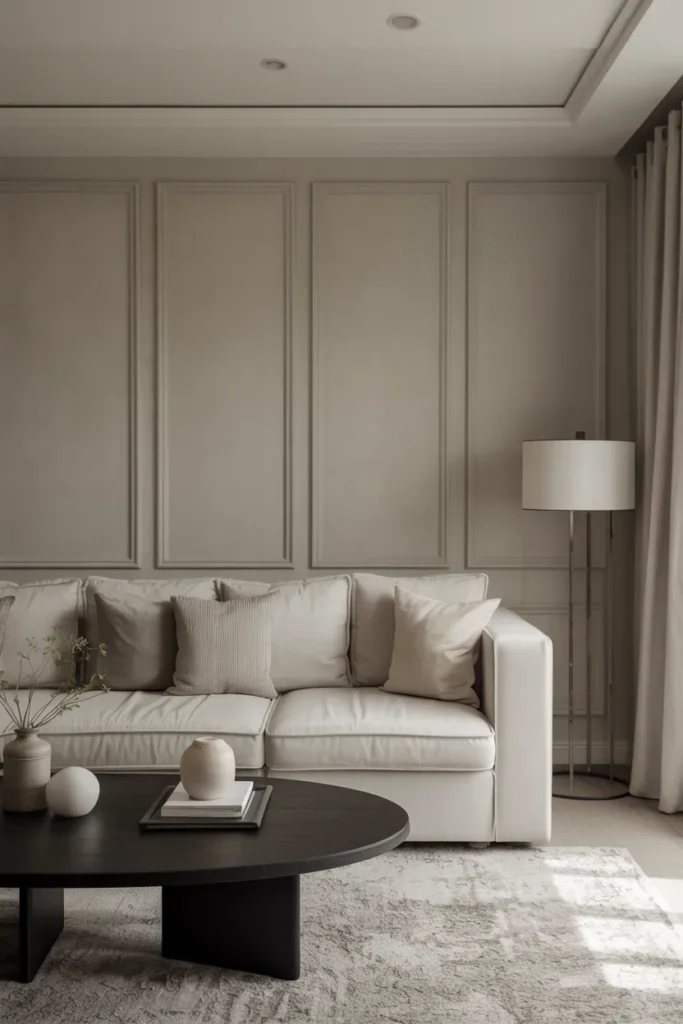
Textured wall panels add depth through material rather than color. Soft relief patterns create visual interest while maintaining a calm, cohesive palette. This technique elevates the wall without relying on artwork.
The understated texture pairs beautifully with plush furnishings and soft lighting. Together, they create a space that feels both modern and comfortable. This idea works well in living rooms aiming for quiet luxury.
Large-Scale Abstract Artwork
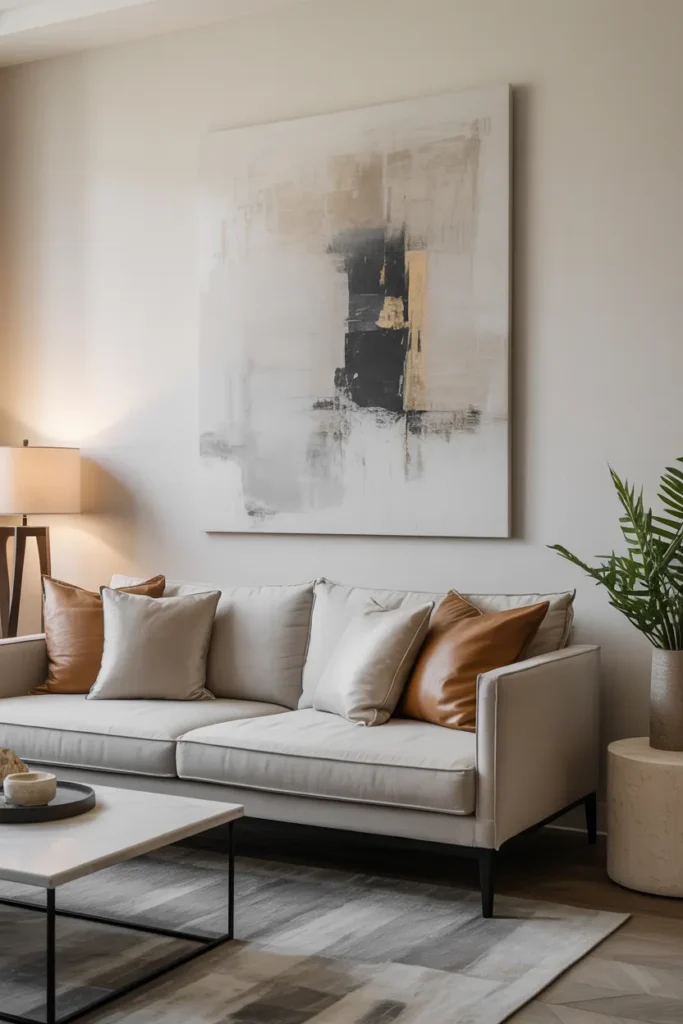
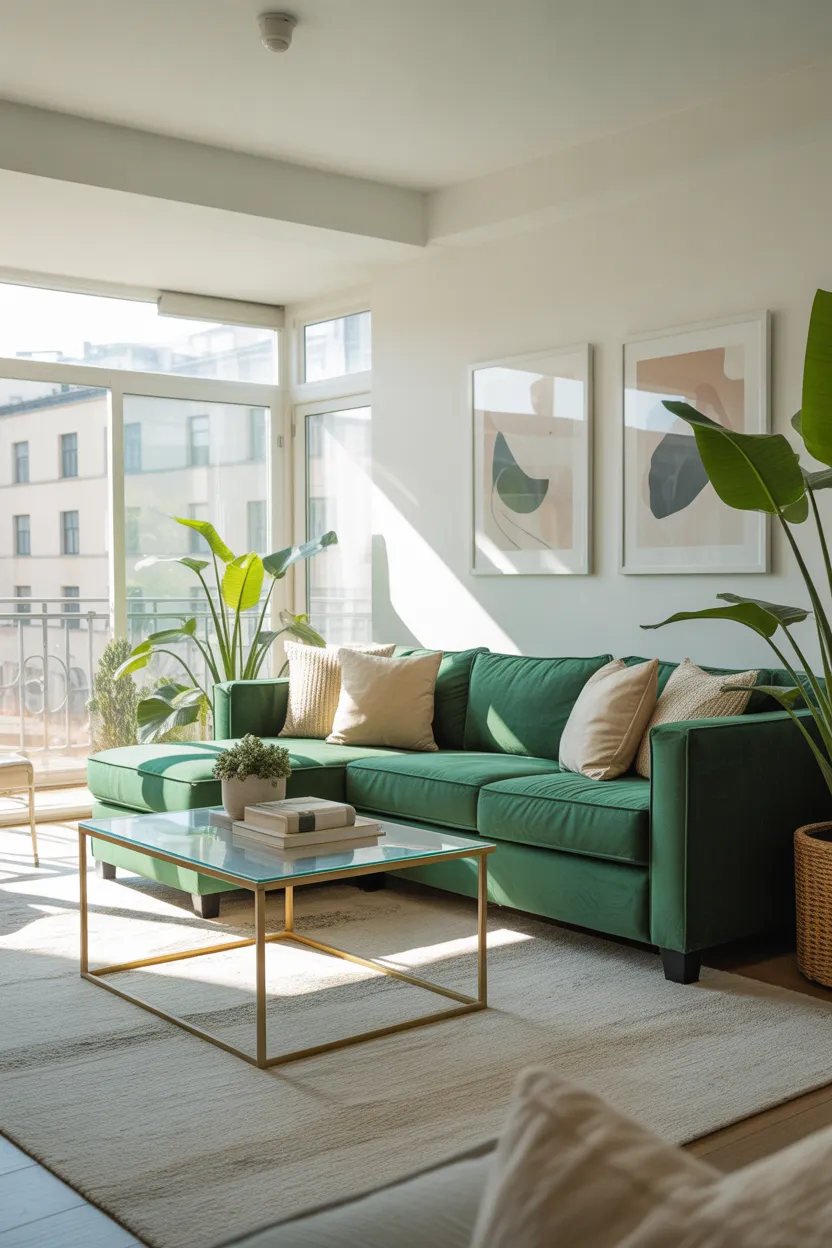
Large-scale artwork makes a bold statement while simplifying wall décor decisions. One substantial piece can replace multiple smaller elements, reducing visual noise. Abstract designs offer flexibility and timeless appeal.
Proper scaling is essential to achieve balance. Centering the artwork relative to furniture grounds the composition. This idea suits interiors that favor expressive design with minimal layering.
Wall-Mounted Storage with Style
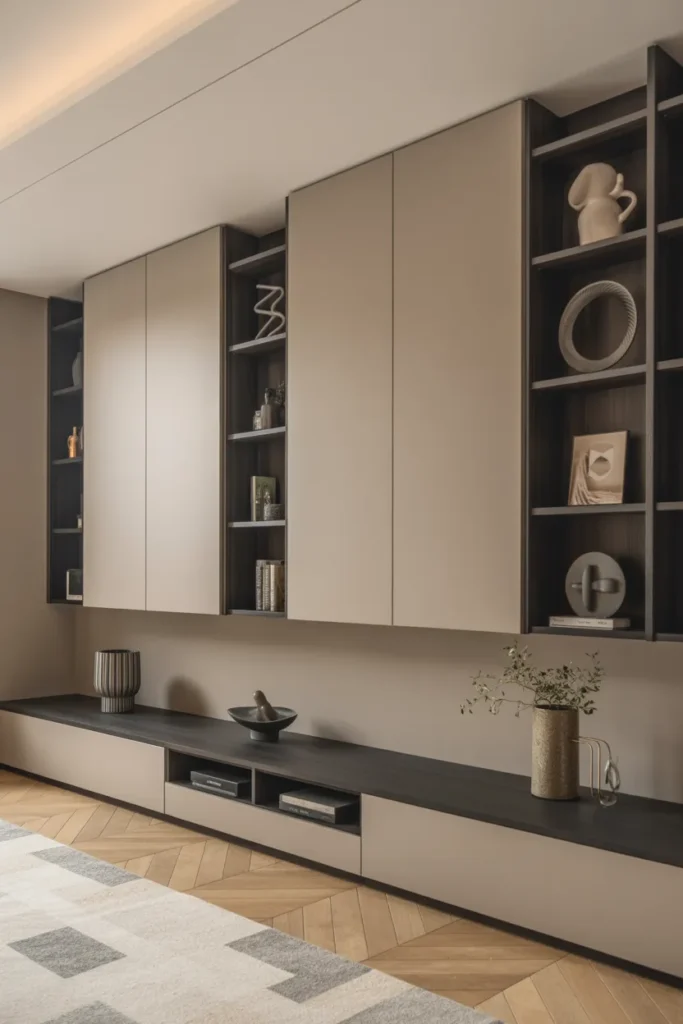
Wall-mounted storage combines practicality with clean aesthetics. Elevating cabinets off the floor creates visual lightness while maximizing usable space. Integrated décor keeps the wall from feeling purely utilitarian.
Choosing finishes that match the wall color enhances cohesion. This approach works well in modern homes where storage needs to blend seamlessly into the design.
Natural Material Wall Accents
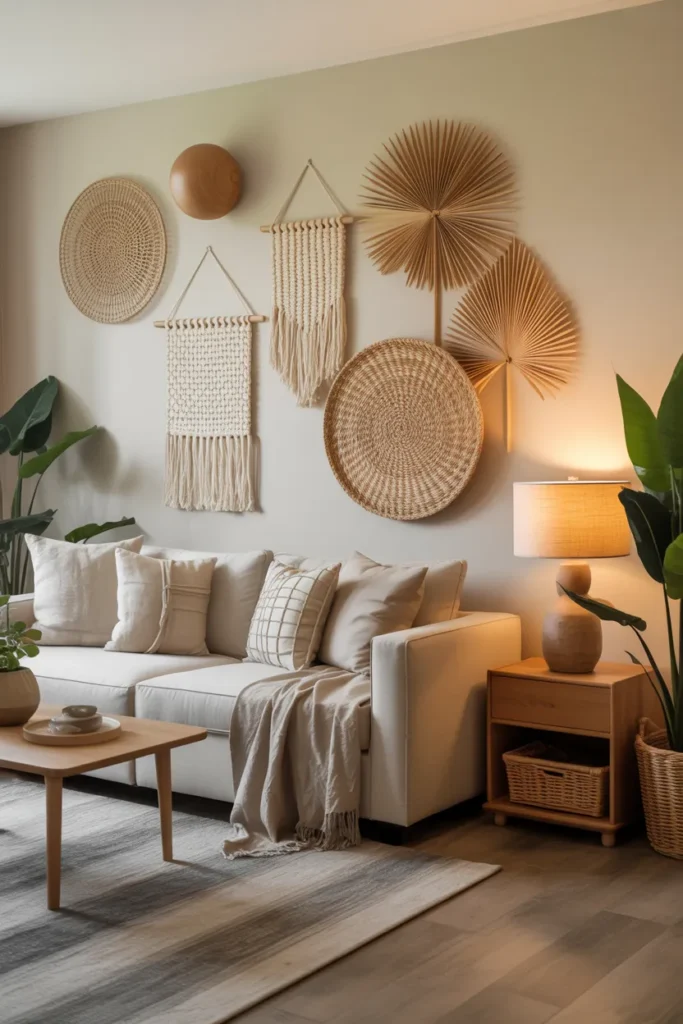
Natural materials introduce warmth and authenticity to living room walls. Woven textures and wood elements soften modern interiors while maintaining a curated appearance. This balance creates visual comfort without heaviness.
Consistency in tone ensures harmony across elements. Keeping finishes within a similar color range allows textures to stand out subtly. This idea suits interiors inspired by organic modern design.
Symmetrical Wall Styling Arrangement
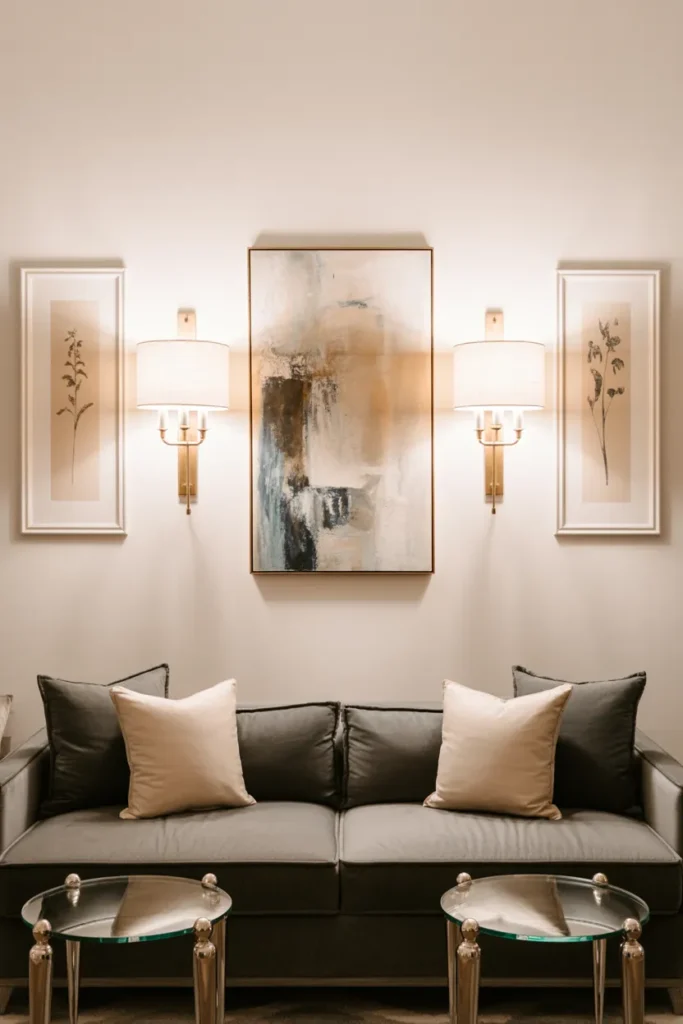
Symmetry brings a sense of order and calm to living room walls. Matching elements create visual balance, making the space feel intentional and polished. This approach works especially well in formal or transitional interiors.
Maintaining proportion is key to success. Elements should align with furniture scale to avoid stiffness. When executed thoughtfully, symmetry feels timeless rather than rigid.
Integrated Lighting Wall Design
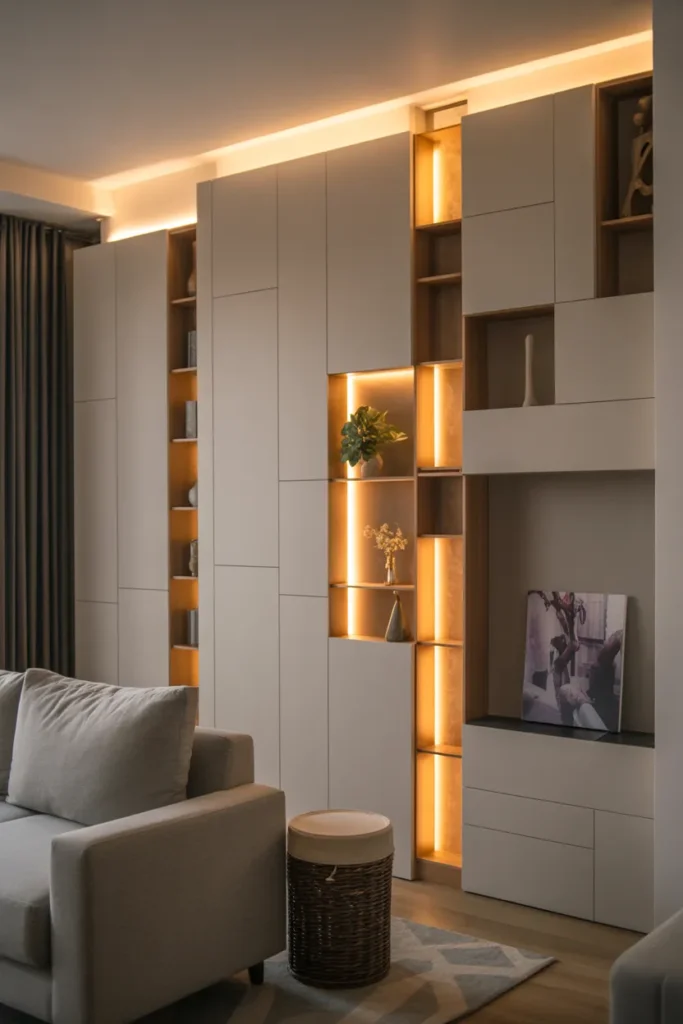
Integrated lighting transforms walls into functional design features. Subtle illumination highlights materials and adds depth without visible fixtures. This creates a layered lighting scheme that enhances comfort.
Warm light temperatures maintain a welcoming atmosphere. Combined with neutral finishes, the wall becomes a focal point without dominating the room. This idea suits contemporary interiors emphasizing mood and ambiance.
Mixed Material Feature Wall
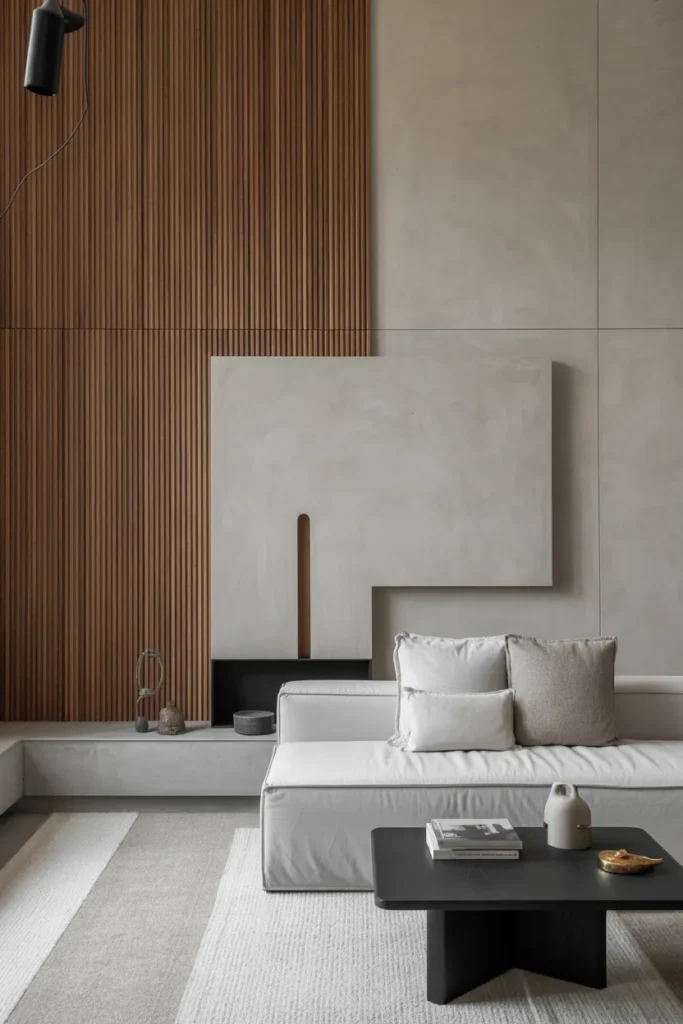
Mixing materials adds complexity and interest while maintaining restraint through a limited palette. Each surface contributes a distinct texture, creating depth without visual chaos.
Careful alignment and spacing ensure cohesion. When materials are thoughtfully balanced, the wall feels architectural rather than decorative. This approach works well in modern living spaces seeking character.
Neutral Mural or Soft Pattern Wall
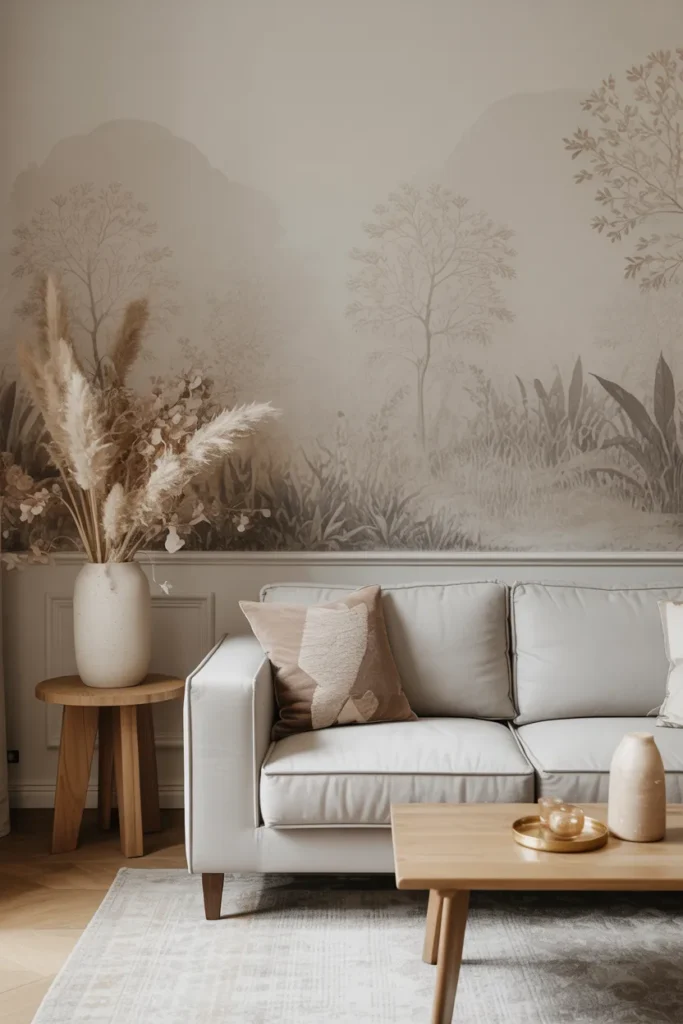
Soft murals and patterns introduce visual interest without overpowering the room. Neutral tones ensure longevity and adaptability as décor evolves. This approach adds character while remaining versatile.
Keeping furnishings minimal allows the wall to breathe. The result is a refined backdrop that enhances the space quietly. This idea suits living rooms aiming for understated sophistication.
Statement Mirror Wall Placement
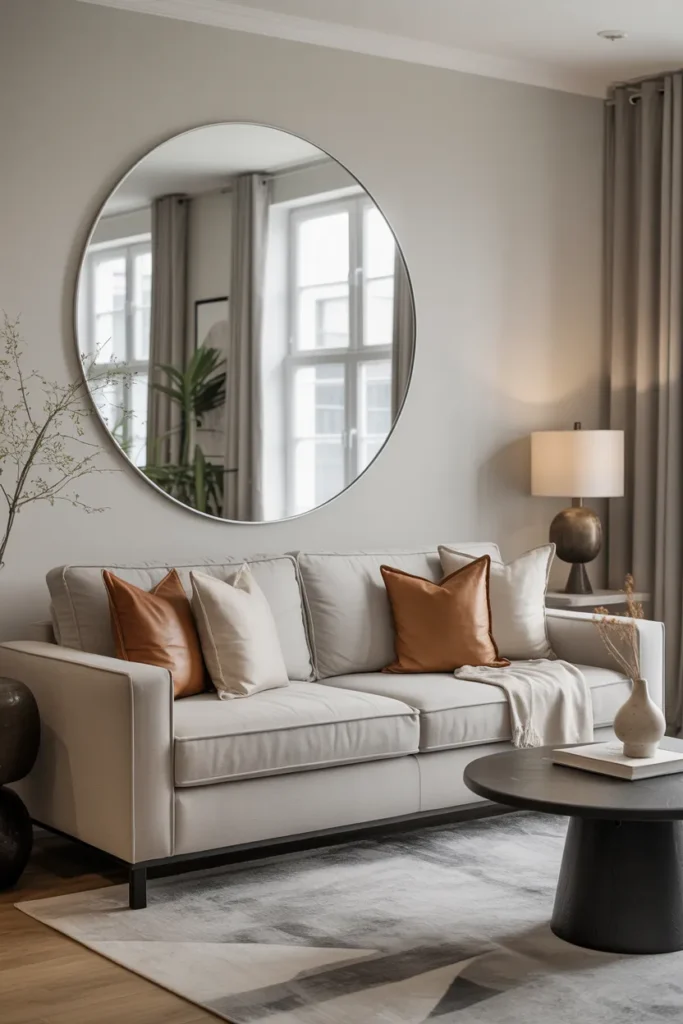
Statement mirrors amplify light and visually expand living rooms. A single oversized mirror creates impact while maintaining simplicity. Thin frames keep the look modern and unobtrusive.
Strategic placement enhances brightness and openness. When paired with restrained décor, the mirror becomes both functional and decorative. This idea works especially well in smaller or low-light spaces.